- This topic is empty.
-
AuthorPosts
-
2026-10-29 at 6:00 pm #12643
Selecting suitable piston rings is an important step when rebuilding a Toyota engine. The correct ring set helps restore cylinder sealing, regulate oil consumption, and support stable engine operation. For automotive repair shops, engine rebuilders, and spare parts distributors, however, choosing the right product involves more than matching a vehicle model to a catalog listing. Engine specifications, cylinder wear, piston groove dimensions, and supplier reliability all need to be considered.
A mismatch between the replacement rings and the engine can lead to installation difficulties, additional repair costs, and unsatisfactory results. By checking several key factors before ordering, buyers can improve fitment accuracy and make the sourcing process more efficient.
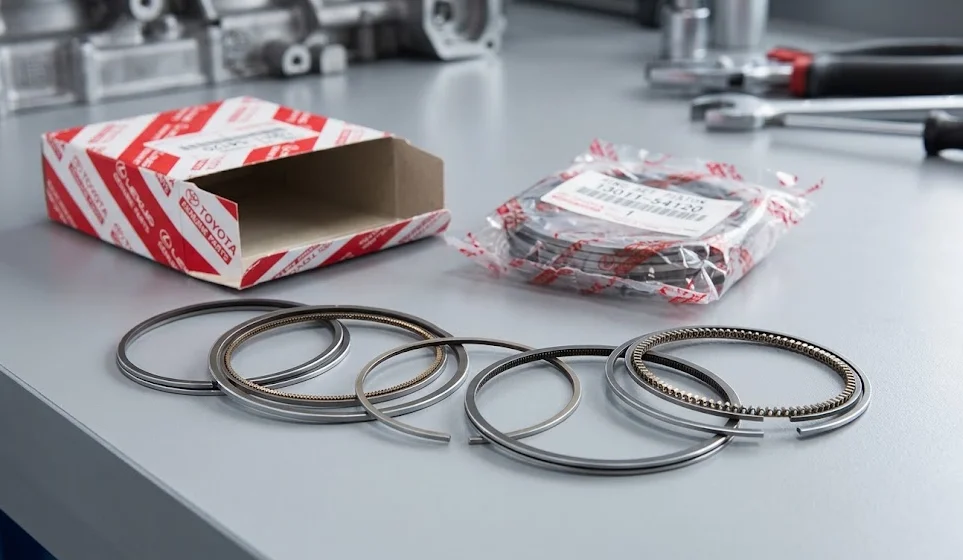
1. Confirm the Toyota Engine Code and Application
Toyota vehicles are available with different engine configurations depending on the model year, market, and production version. As a result, two vehicles with similar names may require different piston ring specifications.
Searching for replacement parts by vehicle model alone can therefore be unreliable. Whenever possible, buyers should identify the exact engine code and compare it with the original equipment part number before selecting a replacement.
JYPR's Fit for TOYOTA piston ring range covers applications including the 4K-E, 1NZ-FE, 1NZ-FXE, 2NZ-FE, 3S-FE, 4AFE, 4AG, and 4E/5E engine families. These references provide a useful starting point for identifying potential products, although the precise engine version and ring specifications should still be verified.
When requesting a quotation, provide the engine code, vehicle application, and any available original part references. Clear identification helps suppliers check compatibility and reduces the risk of ordering an unsuitable ring set.
2. Verify Ring Dimensions and Cylinder Wear
Correct engine identification is only the first step. The dimensions of the replacement piston rings must also correspond to the piston grooves and cylinder bore.
Several technical details require attention during the selection process:
-
Cylinder bore size: Determine whether standard-size or an appropriate oversize ring set is required after inspection or machining.
-
Ring thickness and width: The dimensions must match the piston grooves to allow proper installation and movement.
-
Ring end gap: Check the gap between the ring ends against the specifications for the particular engine.
-
Ring groove clearance: Measure the clearance between each ring and its groove to identify excessive wear or an unsuitable fit.
These values are engine-specific, so the relevant Toyota service documentation should be used rather than applying general measurements across different models.
The condition of the cylinder bore is equally important. Wear, taper, out-of-round conditions, and surface damage can prevent new rings from sealing correctly. If these problems are present, installing replacement rings without addressing the underlying cylinder or piston condition may not resolve compression loss or excessive oil consumption.
A thorough inspection before ordering helps determine whether a standard replacement set is appropriate or whether machining and additional parts are needed.
3. Consider the Role of Piston Rings in Engine Operation
Piston rings contribute to several essential functions within an internal combustion engine. Compression rings help limit combustion-gas leakage, while the oil control ring regulates the lubricant film on the cylinder wall. Rings also provide a heat-transfer path from the piston to the cylinder.
When rings become worn, damaged, or incorrectly installed, possible symptoms include reduced compression, increased blow-by, excessive oil consumption, and unstable engine performance. These symptoms are not exclusive to ring problems, however. Worn cylinder walls, damaged pistons, valve-related faults, and other mechanical issues can produce similar results.
For this reason, engine diagnosis should precede parts replacement. Rebuilders need to assess the overall condition of the cylinder assembly before deciding which components to replace.
For Toyota engine rebuilding, the objective is not simply to install a new ring set. It is to select components that match the original engine design and suit the measured condition of the engine.
4. Evaluate Material Selection and Surface Treatment
Piston ring materials and surface treatments affect wear resistance, friction characteristics, and suitability for different operating conditions. Depending on the engine design and ring position, manufacturers may use cast iron, alloyed materials, or steel, together with application-specific surface treatments.
There is no single material or coating that is automatically suitable for every Toyota engine. The correct choice depends on the original specifications, the cylinder surface, and the intended operating conditions.
When purchasing Toyota engine piston rings, buyers should ask the supplier to confirm the material, surface treatment, and applicable product specifications. Similar dimensions alone do not establish that two ring sets are interchangeable.
JYPR offers piston ring options for different engine applications. Where additional verification is necessary, buyers can discuss product details with the supplier and provide technical drawings or reference samples for evaluation. Material options and customization requirements should be confirmed for the specific application.
5. Assess the Supplier's Technical and Supply Capabilities
For automotive aftermarket businesses, supplier selection affects more than the initial purchase. Consistent product specifications, accurate part identification, and reliable communication are also important for maintaining inventory and serving repeat customers.
Before choosing a Toyota piston ring supplier, consider these factors:
-
Application matching: Can the supplier identify the relevant ring set using the engine code and part reference?
-
Technical documentation: Are product dimensions, material information, and other applicable specifications available?
-
Quality control: Does the manufacturer have inspection procedures for checking relevant dimensions and product consistency?
-
Supply arrangements: Can the supplier clarify minimum order quantities, availability, and expected lead times?
-
Packaging and labeling: Can products be supplied with identification and packaging suitable for distribution?
-
Custom requirements: Is it possible to review drawings or samples when a standard catalog item does not meet the application?
JYPR, operated by Wuxi Jinyang Piston Ring Factory, supplies piston rings for various engine applications, including selected Toyota engine families. Buyers should confirm the current product range, specifications, production arrangements, and delivery details directly with the supplier before placing an order.
6. Prepare Application Details Before Requesting a Quotation
Providing accurate purchasing information helps suppliers identify suitable products more efficiently and reduces unnecessary clarification during the ordering process.
Before requesting a quotation for Toyota piston rings, prepare the following information:
-
Engine code and vehicle application.
-
Original part number, if available.
-
Required standard-size or oversize specification.
-
Relevant dimensions, technical drawings, or reference samples.
-
Required quantity and anticipated repeat-order volume.
-
Packaging, labeling, and delivery requirements.
For distributors managing multiple Toyota engine applications, keeping part numbers and compatibility records organized can also improve stock management and simplify future orders.
Toyota Piston Ring Options from JYPR
JYPR's Fit for TOYOTA piston ring range includes products for various engine applications in the automotive aftermarket. For workshops, engine rebuilders, and parts distributors, the most effective approach is to verify engine compatibility, dimensional requirements, and product specifications before selecting a replacement set.
Discussing these details with the supplier can help buyers narrow down suitable options and establish clearer purchasing requirements.
Conclusion
Selecting the right Toyota piston rings requires a combination of accurate engine identification, dimensional verification, cylinder inspection, and supplier evaluation. A replacement set should match the specific engine application and the condition of the components with which it will operate.
By checking these factors before purchasing, repair professionals and aftermarket distributors can reduce fitment errors, avoid preventable delays, and make more informed decisions when sourcing Toyota engine piston rings.
http://www.jy-pr.com
Wuxi Jinyang Piston Ring Factory / Yizheng Jinyang Locomotive Parts Co., Ltd. -
-
AuthorPosts

- You must be logged in to reply to this topic.