- This topic is empty.
-
AuthorPosts
-
2025-12-01 at 11:39 am #5536
Nanomaterials have revolutionized the field of science and technology over the past few decades, offering unique physical, chemical, and biological properties due to their extremely small size and high surface area. These materials are widely used in electronics, medicine, energy storage, environmental applications, and more. One of the most effective and versatile tools for nanomaterials research is the ultrasonic generator, also known as an ultrasonicator. This multifunctional instrument employs the cavitation effect of high-frequency ultrasound to process samples at the nanoscale, providing precise control over dispersion, mixing, and chemical reactions.
In this article, we will explore the various applications of ultrasonic generators in nanomaterials research, including their principles, advantages, and practical use cases.
Understanding Ultrasonic Generators
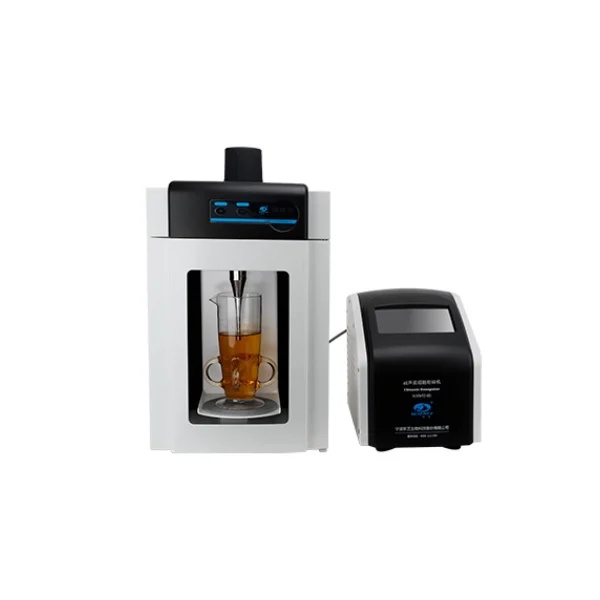
An ultrasonic generator is a device that converts electrical energy into high-frequency ultrasonic waves, typically ranging from 20 kHz to several MHz. These waves are transmitted through a probe or horn into the sample, generating cavitation bubbles—tiny voids that form and collapse rapidly in the liquid medium. The collapse of these bubbles produces intense localized pressure and temperature changes, creating mechanical shear forces that can break, mix, or chemically activate the material.
The key features of ultrasonic generators that make them suitable for nanomaterials research include:
-
Adjustable ultrasonic power and time: Researchers can fine-tune the intensity of cavitation to achieve precise results without damaging sensitive materials.
-
Versatility with sample volume: From microliters to liters, ultrasonic generators can handle different volumes by selecting the appropriate probe or model.
-
Multifunctional applications: They can disperse nanoparticles, emulsify mixtures, extract compounds, and accelerate chemical reactions.
Applications in Nanomaterials Research
1. Nanoparticle Synthesis
One of the primary applications of ultrasonic generators in nanomaterials research is nanoparticle synthesis. The cavitation effect can induce nucleation and growth of nanoparticles with uniform size distribution. For example:
-
Metal nanoparticles: Ultrasonic cavitation can reduce metal salts in solution to form nanoparticles such as gold, silver, or platinum. The process is faster and more controllable compared to conventional chemical methods.
-
Metal oxide nanoparticles: Ultrasonication can facilitate the formation of metal oxide nanostructures, including titanium dioxide (TiO₂), zinc oxide (ZnO), and iron oxide (Fe₃O₄), which are widely used in catalysis and electronics.
By controlling the ultrasonic parameters such as power, frequency, and duration, researchers can achieve nanoparticles with desired sizes, shapes, and crystallinity.
2. Dispersion of Nanomaterials
Nanomaterials tend to agglomerate due to van der Waals forces, which can limit their effectiveness in applications. Ultrasonic generators are highly effective for dispersing nanoparticles in solvents, polymers, or other matrices.
-
Carbon-based nanomaterials: Graphene, carbon nanotubes (CNTs), and fullerenes can be uniformly dispersed in aqueous or organic solutions using ultrasonication, enhancing their electrical conductivity and mechanical properties.
-
Polymer nanocomposites: Incorporating nanoparticles into polymer matrices often requires ultrasonic dispersion to ensure uniformity, which improves the thermal, mechanical, and barrier properties of the composite.
Ultrasonic dispersion helps prevent aggregation, ensuring stable suspensions suitable for further processing or characterization.
3. Exfoliation of Layered Materials
Ultrasonic generators are widely used to exfoliate layered nanomaterials such as graphene, molybdenum disulfide (MoS₂), and hexagonal boron nitride (h-BN). The intense shear forces produced during cavitation can separate individual layers from bulk materials, producing nanosheets with high surface area and superior properties.
-
Graphene exfoliation: Ultrasonication in appropriate solvents can produce single-layer or few-layer graphene nanosheets, which are essential for electronic, energy storage, and sensor applications.
-
Transition metal dichalcogenides (TMDs): MoS₂ and WS₂ nanosheets prepared via ultrasonic exfoliation show promising catalytic and optoelectronic properties.
The advantages of ultrasonication over mechanical or chemical exfoliation include higher efficiency, better control over thickness, and reduced chemical contamination.
4. Functionalization of Nanomaterials
Ultrasonic generators can assist in functionalizing nanomaterials, which involves modifying their surface to enhance compatibility, reactivity, or stability. For example:
-
Surface modification of nanoparticles: Ultrasonication facilitates the binding of functional groups, polymers, or biomolecules onto nanoparticles, improving their dispersion in solvents or matrices.
-
Covalent and non-covalent functionalization: Both covalent attachment and physical adsorption can be enhanced by ultrasonic cavitation, which increases reaction efficiency and uniformity.
Functionalized nanomaterials are crucial for applications in drug delivery, catalysis, and sensor development.
5. Acceleration of Chemical Reactions
Ultrasonic generators can significantly accelerate chemical reactions at the nanoscale. The localized high pressure and temperature generated by cavitation enhance reaction kinetics, leading to faster synthesis and higher yields.
-
Sonochemical reactions: Ultrasonication can drive reactions that are slow or inefficient under conventional conditions, including nanoparticle formation, polymerization, and oxidation-reduction reactions.
-
Green chemistry applications: Ultrasonic-assisted synthesis often requires fewer chemicals, lower temperatures, and less time, aligning with sustainable and environmentally friendly practices.
This capability is particularly valuable for producing nanomaterials in a controlled and reproducible manner.
6. Emulsification and Solvent Exchange
In some nanomaterials research, emulsification and solvent exchange are critical for stabilizing nanoparticles or preparing hybrid materials. Ultrasonic generators produce fine emulsions and facilitate the transfer of nanoparticles between solvents without causing aggregation.
-
Oil-in-water emulsions: Ultrasonication creates uniform droplets at the nanoscale, useful for nanoparticle encapsulation or drug delivery systems.
-
Solvent exchange for nanomaterials: Ultrasonic treatment helps transfer hydrophobic nanoparticles into polar solvents or polymer matrices, expanding their application range.
7. Environmental and Safety Considerations
While ultrasonic generators provide powerful tools for nanomaterials research, it is essential to consider safety and environmental factors. High-intensity ultrasound can generate heat, aerosolized nanoparticles, and noise, which require proper protective equipment and ventilation. Researchers should also select compatible solvents and adjust ultrasonic parameters to minimize sample degradation or unwanted reactions.
Advantages of Ultrasonic Generators in Nanomaterials Research
The use of ultrasonic generators offers several advantages in the field of nanomaterials:
-
Precision and Control: Adjustable power and time allow researchers to fine-tune the process for specific materials and desired outcomes.
-
Efficiency: Ultrasonication accelerates reactions and reduces processing time compared to conventional methods.
-
Versatility: Suitable for synthesis, dispersion, exfoliation, functionalization, and more.
-
Scalability: From small laboratory samples to larger volumes, ultrasonic generators can accommodate different scales of research.
-
Eco-friendly Process: Reduced chemical consumption, lower temperatures, and higher yields contribute to greener nanomaterials synthesis.
Conclusion
Ultrasonic generators have become indispensable tools in nanomaterials research, offering multifunctional capabilities that enhance synthesis, dispersion, functionalization, and reaction kinetics. Their precision, efficiency, and versatility make them suitable for a wide range of applications, from graphene and carbon nanotubes to metal and metal oxide nanoparticles. As nanotechnology continues to advance, the role of ultrasonication will expand, enabling researchers to create more sophisticated, high-performance nanomaterials for electronics, medicine, energy, and environmental solutions.
For any laboratory working with nanomaterials, investing in a high-quality ultrasonic generator and understanding its operating principles can dramatically improve research outcomes and accelerate scientific discovery
http://www.dscientz.com
dscientz -
-
AuthorPosts

- You must be logged in to reply to this topic.