- This topic is empty.
-
AuthorPosts
-
2026-10-23 at 2:54 pm #12401
When planning signage for an office park, shopping center, hotel, residential community, or industrial facility, material selection is one of the first decisions that can affect long-term performance. A pylon sign needs to remain visible, withstand outdoor exposure, and communicate information clearly during both daytime and nighttime hours.
Modern illuminated wayfinding pylon signs combine several functions. They help visitors find entrances, parking areas, buildings, and service facilities while reinforcing the visual identity of a property. However, a sign that looks attractive in a design rendering may not perform well outdoors if its materials, structure, lighting, or drainage are poorly specified.
For architects, property developers, contractors, and purchasing teams, the key is to select materials according to their specific functions rather than expecting one material to meet every requirement.
1. Stainless Steel for a Refined Architectural Appearance
Stainless steel is frequently used in architectural signage where appearance and surface durability are important. Its metallic finish works well with contemporary building materials such as glass, concrete, aluminum cladding, and stone.
Grade 304 stainless steel is commonly considered for outdoor signage in many general commercial environments. It can be fabricated into panels, trims, decorative features, and lettering, with brushed or satin finishes providing a restrained, professional appearance.
The installation environment should always be considered before specifying a grade. Signs located near the coast or in areas exposed to deicing salts and aggressive pollutants may require a more corrosion-resistant option, such as grade 316, depending on the exposure conditions.
Fabrication quality also matters. Poorly finished welds, trapped moisture, unsuitable fasteners, and inadequate drainage can contribute to corrosion or visible deterioration even when stainless steel is used.
Stainless steel is particularly suitable for:
-
Premium office and commercial developments.
-
Hotel entrances and upscale residential communities.
-
Projects with metallic branding or architectural detailing.
-
Signage that needs to coordinate with stainless steel building features.
Because stainless steel can add considerable weight, its use should be coordinated with the internal frame, foundation, transportation plan, and installation method.
2. Aluminum Alloy for Lightweight Sign Structures
Aluminum alloy is another practical material for large freestanding pylon signs. Compared with many steel constructions, aluminum can reduce overall weight while providing flexibility in cutting, forming, and finishing.
This is useful for signs with customized shapes, large panel areas, or multiple directional sections. Aluminum panels can also be finished in different colors to match a property's visual identity.
Nevertheless, aluminum is not automatically suitable for every structural application. Thin panels may dent or deform, and tall signs still require an appropriately engineered support system. The alloy, panel thickness, reinforcement, fixing points, and coating system should be specified according to the sign's dimensions and expected environmental loads.
For outdoor projects, buyers should ask the manufacturer how the aluminum surfaces will be treated and how the finish will resist weather exposure. Powder coating or other suitable exterior finishing systems may be appropriate, depending on the project requirements.
Aluminum is often worth considering when the project requires a large sign cabinet, customized geometry, or efficient transportation and installation.
3. Acrylic for Illuminated Graphics and Lettering
Acrylic plays a different role from metal. Rather than providing the primary structural support, suitable translucent acrylic allows light to pass through the sign face, making it useful for illuminated logos, lettering, and information panels.
The final appearance depends on more than the acrylic itself. Its thickness, color, light-transmission characteristics, and diffusion properties must work with the selected LED modules and their arrangement.
If the LEDs are positioned too far apart or the face material does not diffuse light effectively, the illuminated surface may show bright spots and uneven areas. A well-designed lighting layout helps create a more consistent appearance and improves readability after dark.
Outdoor suitability is another consideration. Buyers should confirm the acrylic's UV resistance, impact performance, and compatibility with the intended installation conditions. Properly designed joints and enclosure details are also important to reduce moisture intrusion.
Before mass production, a sample or illuminated mock-up can help verify:
-
Color consistency between the approved design and finished sign.
-
Brightness and illumination uniformity.
-
Readability from the expected viewing distance.
-
Appearance under both daylight and nighttime conditions.
For projects with illuminated branding, acrylic can be combined with metal panels to balance visual quality and structural requirements.
4. Aluminum Composite Panels for Clean, Flat Surfaces
Aluminum composite panels, commonly known as ACP, are used in many signage applications because they offer a relatively lightweight, smooth surface for graphics and decorative finishes.
For a pylon sign, ACP may be suitable for non-structural exterior panels, background surfaces, and directional information areas. It can help maintain a consistent appearance across several signs within the same development.
However, ACP should not be assumed to replace the internal support frame. Its suitability depends on the panel construction, core material, thickness, support spacing, and fixing method.
Fire-performance requirements should also be checked against local building regulations and project specifications. Different ACP products can have different core constructions and performance characteristics, so the exact product needs to be identified before approval.
When reviewing a proposal, buyers should ask how the panels will be attached, how the edges will be finished, and how the design will manage water around joints and openings.
5. Lighting and Weather Protection Need to Be Designed Together
Material selection alone cannot guarantee a reliable illuminated sign. Electrical components, enclosure design, cable routing, heat management, and maintenance access are equally important.
Outdoor pylon signs may use LED modules because they can provide controlled illumination in a compact format. However, the complete lighting system must be selected for the expected temperature, humidity, rain exposure, and operating schedule.
Several details deserve attention during design review.
Weather protection: Cable entries, access doors, joints, and other openings need suitable sealing and drainage provisions. The specified protection level should match the actual installation environment.
Lighting consistency: The LED layout and sign-face material should be tested together to identify uneven illumination before production is completed.
Electrical safety: Wiring, grounding, protection devices, and installation practices must comply with applicable local requirements.
Maintenance access: Power supplies and other serviceable components should be accessible without damaging finished panels or illuminated graphics.
A sign enclosure should not simply be described as waterproof without a clear specification. Buyers should request details of the intended environmental protection level and the inspection or testing procedures used by the manufacturer.
6. How to Match Materials to Different Projects
There is no single material combination that suits every pylon sign. The most appropriate configuration depends on sign height, design complexity, exposure conditions, lighting requirements, and maintenance expectations.
The following table provides a starting point for project discussions.
Sign component Potential material Main consideration Main cabinet and exterior panels Aluminum alloy Weight, rigidity, fabrication, and finish Decorative metal surfaces Stainless steel Appearance and corrosion resistance Illuminated lettering and graphics Outdoor-suitable acrylic Light transmission and color consistency Flat background panels Suitable ACP Surface finish, panel support, and fire performance Internal frame Engineered metal structure Wind loading, mounting, and overall stability Lighting assembly Outdoor-rated LED components Brightness, heat management, and serviceability For example, a business park may use an aluminum cabinet with illuminated acrylic lettering to keep the design relatively lightweight. A luxury hotel entrance may incorporate brushed stainless steel to complement the building's exterior materials.
A coastal installation may require more careful corrosion-resistance planning than an inland site. Similarly, a tall, narrow sign exposed to strong winds requires structural analysis that a small sign sheltered beneath a canopy may not need to the same extent.
The material schedule should therefore be developed alongside the structural and lighting designs, not as an isolated purchasing decision.
7. Questions to Ask Before Ordering a Pylon Sign
A quotation that identifies only “stainless steel,” “aluminum,” or “acrylic” does not provide enough information to evaluate long-term performance.
Before approving a design, request a specification covering the following points:
-
Material details: Confirm metal grades, panel thicknesses, acrylic type, coating system, and relevant component specifications.
-
Structural design: Review the internal frame, mounting details, foundation interface, and applicable wind-load requirements.
-
Lighting performance: Confirm the lighting method, color requirements, expected appearance, and access for repairs.
-
Fabrication quality: Check weld finishing, panel alignment, edge protection, and consistency of visible surfaces.
-
Installation requirements: Clarify foundation preparation, lifting arrangements, electrical connections, and site coordination.
-
Maintenance planning: Identify replaceable components, cleaning requirements, and access for inspection.
-
Project approval: Review material samples, color samples, shop drawings, and illuminated prototypes where necessary.
These checks are especially useful for projects involving multiple signs. Establishing consistent specifications before production can help reduce differences in color, finish, illumination, and overall appearance across the site.
8. Why Manufacturer Coordination Matters
A pylon sign is a complete fabricated assembly. Its performance depends on how the frame, panels, graphics, lighting, electrical components, and installation details work together.
Shenzhen Micang Advertising provides services covering advertising design, printing, signage fabrication, event services, and engineering installation. Founded in 1996, the company offers customized signage solutions for different project requirements.
For developers and contractors, early coordination with a signage manufacturer helps resolve practical questions before fabrication begins. These include the available installation space, sign dimensions, directional information, brand guidelines, illumination requirements, material finishes, and site-specific environmental conditions.
When discussing modern illuminated wayfinding pylon signs, buyers should provide as much project information as possible. This allows the manufacturer to propose a more suitable combination of materials and fabrication methods rather than relying on a generic design.
Conclusion
Choosing materials for modern illuminated wayfinding pylon signs requires a balanced assessment of appearance, structural requirements, outdoor durability, lighting performance, and maintenance.
Aluminum alloy can be practical for many large sign cabinets, stainless steel can provide a refined architectural finish, acrylic can support illuminated graphics, and suitable aluminum composite panels can create clean exterior surfaces. The final selection should depend on the specific role of each component and the conditions at the installation site.
For project teams, the most reliable approach is to review the complete signage system, confirm material specifications, assess structural and electrical requirements, and approve samples before production. This helps ensure that the finished sign supports clear navigation, consistent branding, and dependable long-term operation.
Add an SEO metadata packageStrengthen the manufacturer call to action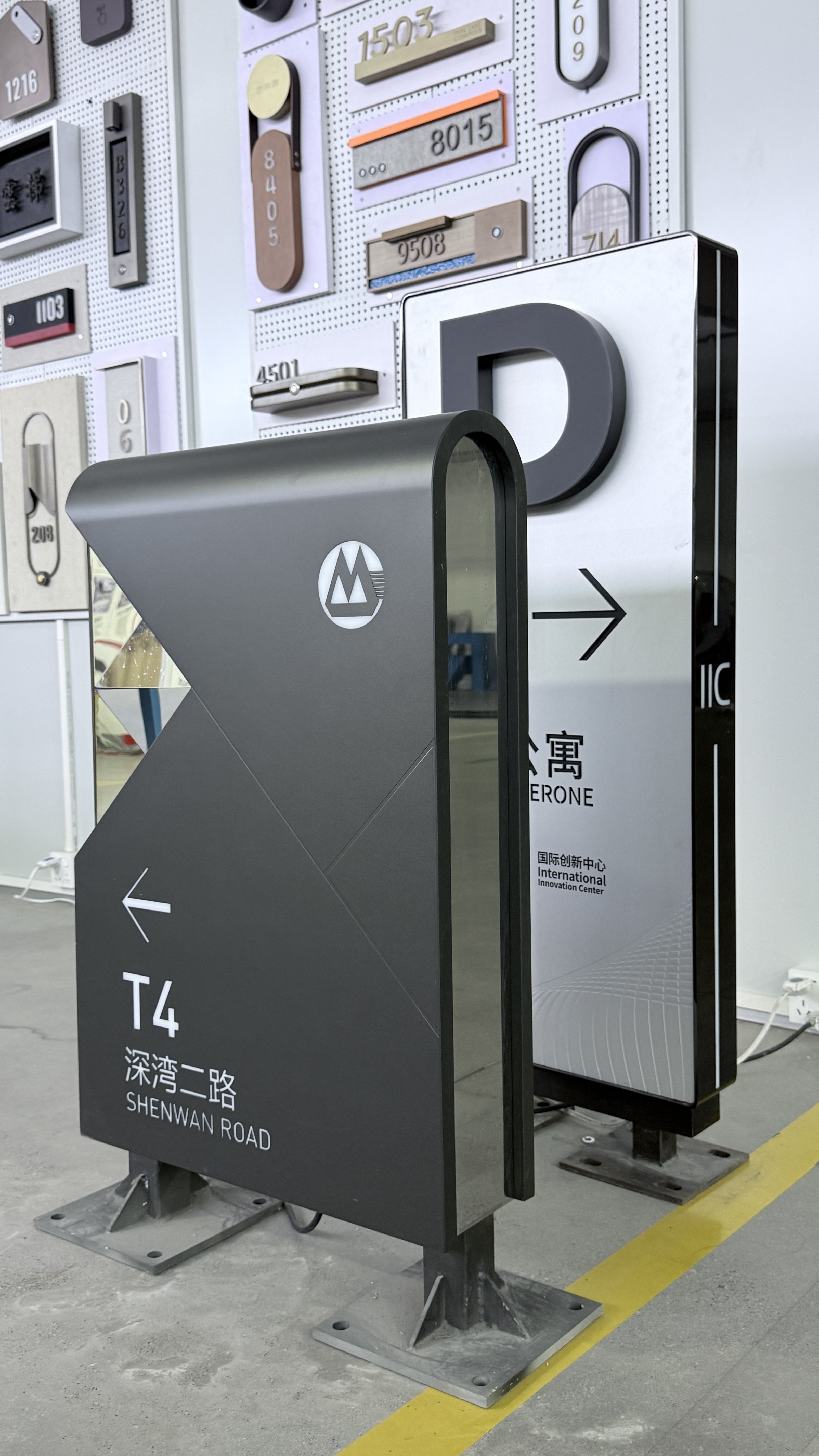
http://www.micangsign.com
Shenzhen Micang Advertising & Media Co., Ltd. -
-
AuthorPosts

- You must be logged in to reply to this topic.