- This topic is empty.
-
AuthorPosts
-
2026-10-12 at 5:33 pm #12018
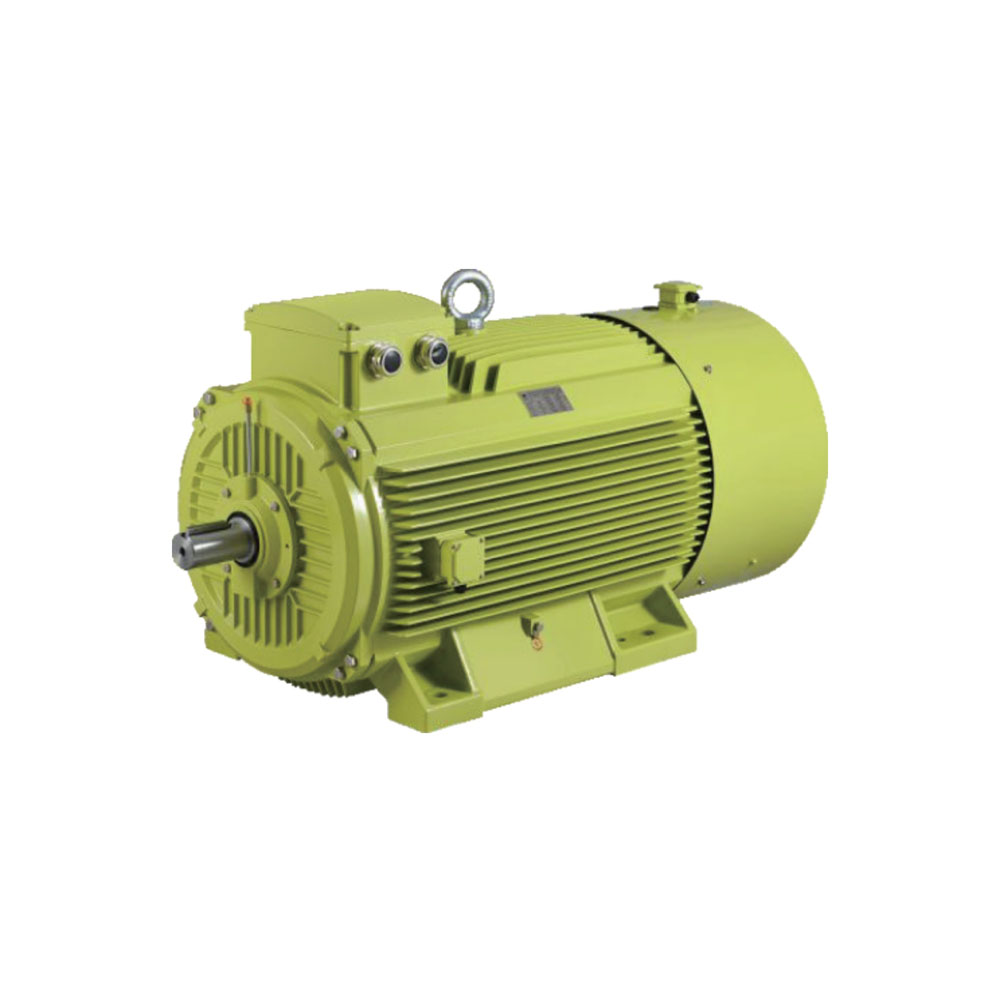
In industrial operations, a three-phase asynchronous motor that fails to reach the rotational speed an operator expects shows up as reduced flow in water pump systems, weaker airflow in industrial fans and HVAC, sluggish conveyors, and higher electricity bills for the same delivered output. Because these symptoms sit at the intersection of energy cost, safety, and standards compliance, the question "why is the speed low?" is worth answering carefully.
Understanding Why Speed Drops in Three-Phase Asynchronous Motors
A three-phase asynchronous design provides reliable, steady power output for continuous industrial operations. Its defining characteristic is that the rotor does not turn in perfect step with the rotating magnetic field—operation depends on slip between the two. That means shaft speed is never set by the motor in isolation. It is determined by the interaction between the electrical supply, the control electronics, and the load actually being driven. When any one of those three changes, output speed changes with it, which is why a low-speed complaint usually traces back to the application rather than to the motor alone.
1. A Constant-Speed Motor Operating Under Fluctuating Load Demands
The pain point in fluctuating duty is well documented: constant-speed motors subjected to changing load requirements suffer system inefficiency and high wear-and-tear. When the demand at the driven equipment rises and falls while the motor continues to run at one fixed characteristic, the operating point drifts away from the design condition, and the effective output delivered at the shaft declines. The motor is not necessarily underperforming in isolation; it is simply not being matched to the load.
2. No Variable Frequency Drive in the Control Loop
Much of the speed adjustability that industrial users expect comes from variable frequency drive (VFD) technology, not from the motor itself. Where a motor is run without a compatible drive paired to it, output cannot be matched to actual load requirements, which compounds both wear and energy use. This is the first place to look when speed appears fixed and lower than required: the question is whether the motor and the drive are correctly paired for the duty.
3. Overheating at Reduced Speeds
Motors that are not engineered for variable-frequency duty commonly face motor overheating at low speeds. Running slowly while carrying a load raises the risk that heat generation outpaces the motor’s ability to manage it, and in practice this overheating is frequently mistaken for a simple lack of speed. A motor designed around variable speed compatibility and full compatibility with external VFDs addresses this issue directly.
4. Slip, Partial-Load Losses, and Standard Induction Behavior
Standard induction motors exhibit lower efficiency at partial loads and comparatively low starting torque. Under variable-load operations this produces an efficiency drop that presents as degraded performance across the speed range. A permanent magnet synchronous design (PMSM) behaves differently: it runs at synchronous speed with minimal rotor losses, because permanent magnet rotor technology reduces excitation losses and boosts starting torque.
5. Speed Control Constraints in Hazardous Zones
In petrochemical refineries, chemical processing, and mining operations, speed adjustment cannot be treated as a purely operational matter—it is a safety variable. Variable frequency operation (YBBP) allows speed control in hazardous zones when paired with variable frequency drives, which solves the need for adjustable flow rates and speeds in explosive environments. Attempting to obtain that adjustability without the correct flameproof (Exd) or increased safety (Exe) engineering is not a valid route.
Matching the Right Motor Series to the Duty
YVF Variable Frequency Motors
Positioned as variable speed industrial motors optimized for variable frequency drives, the YVF series matches motor output to actual load requirements, reducing wear and energy use. Its key feature is variable speed compatibility, which solves the issue of motor overheating at low speeds.
YBBP Variable Frequency Explosion-Proof Motors
For hazardous environments containing volatile gases, flammable liquids, or combustible dust, the YBBP series combines flameproof and increased-safety protection with variable frequency operation, preventing spark propagation and containing internal pressure while allowing speed control.
ALTY Energy-Saving Permanent Magnet Synchronous Motors
Where low starting torque and partial-load inefficiency are the underlying cause, the ALTY series uses permanent magnet technology for high torque and reduced energy loss, running at synchronous speed with minimal rotor losses.
YEJ Brake AC Motors
Where the real requirement is controlled stopping rather than higher running speed, YEJ electromagnetic brake motors stop rotation immediately when power is cut, providing holding torque and solving positioning and safety issues in machinery.
Efficiency Standards and Speed Consistency
The YE3/IE3, YE4/IE4, and YE5/IE5 three-phase asynchronous motor series are compliant with IE3, IE4, and IE5 standards. High-efficiency standard compliance (IE3/IE4/IE5) reduces electrical loss during operation, which addresses the issue of high electricity bills in manufacturing plants. The YE4 and YE5 series utilize custom-engineered proprietary molds developed with a 10 million RMB investment, part of more than 30 years of vertical integration in motor development with independent R&D capabilities.
Where Custom Engineering Fits
When the cause of low speed is a physical mismatch—standard catalog motors failing to fit unique machinery layouts or operate in non-standard physical environments—customized specialty motors apply tailored engineering through custom casing, shaft dimensions, and electrical windings built to client specifications. This adaptable approach to physical and electrical parameters solves integration issues for pump, fan, and machinery manufacturers.
About Zhejiang Aolong Motor Technology Co., Ltd.
Zhejiang Aolong Motor Technology Co., Ltd. (brand reference: alonmax) was founded in 1989 and is headquartered in Taizhou, Zhejiang, China. The company operates a 30,000+ square meter modern plant within a 50,000+ square meter total area, produces over 660 product varieties, and employs 100+ people, serving domestic Chinese markets while expanding into global markets. Its certifications include IEC standards compliance, CE Certification, ISO9001, China CCC Certification, CQM Certification, and CQC Certification. Honors include "World Quality Zhejiang Made" and "Advanced Unit for High-Quality Development in Zhejiang."
Conclusion
Low speed in a three-phase asynchronous motor is rarely a single fault. It generally comes down to a load that fluctuates beyond a constant-speed motor’s design condition, a missing or mismatched variable frequency drive, overheating at reduced speeds, partial-load efficiency losses, or the safety constraints that govern speed control in explosive atmospheres. For industrial procurement managers, plant engineers in hazardous environments, pump and fan manufacturers, and system integrators working across water pump systems, industrial fans and HVAC, mining, petrochemical and chemical processing, food and grain processing, and intelligent manufacturing, resolving the issue means matching the motor series—YVF, YBBP, ALTY, YEJ, or a custom-built unit—to the actual duty. Zhejiang Aolong Motor Technology Co., Ltd. designs, develops, and manufactures high-efficiency, energy-saving, and explosion-proof industrial electric motors built around exactly that principle.
ZHEJIANG AOLONG MOTOR TECHNOLOGY CO., LTD
http://WWW.ALONMAX.COM -
AuthorPosts

- You must be logged in to reply to this topic.