- This topic is empty.
-
AuthorPosts
-
2026-05-06 at 1:52 pm #7579
High-pressure steam pipeline systems are among the most critical and hazardous infrastructures in modern industrial operations. They are widely used in power generation plants, petrochemical refineries, pulp and paper mills, and heavy manufacturing facilities where steam is required as a high-energy transfer medium.
In such environments, Valve Interlock Systems play a crucial role in ensuring operational safety, especially when dealing with manual valve operations under extreme pressure and temperature conditions.
Unlike automated control systems, a mechanical valve interlock system provides a physically enforced safety logic that prevents incorrect valve operation sequences. This makes it particularly suitable for high-pressure steam applications where human error must be strictly controlled.
1. The Role of Valve Interlock Systems in Steam Pipeline Safety
In high-pressure steam pipelines, even a small operational mistake can lead to severe consequences, including:
-
Sudden pressure release
-
Pipe rupture or explosion
-
Equipment failure
-
Thermal injuries to operators
-
Production shutdowns
To prevent such risks, Valve Interlock Systems are implemented to enforce a strict sequence of valve operations.
These systems ensure that valves controlling steam flow, isolation, venting, and drainage are operated in the correct order, eliminating the possibility of unsafe manual intervention.
A properly designed industrial valve safety control system ensures that every action must follow a predefined mechanical logic.
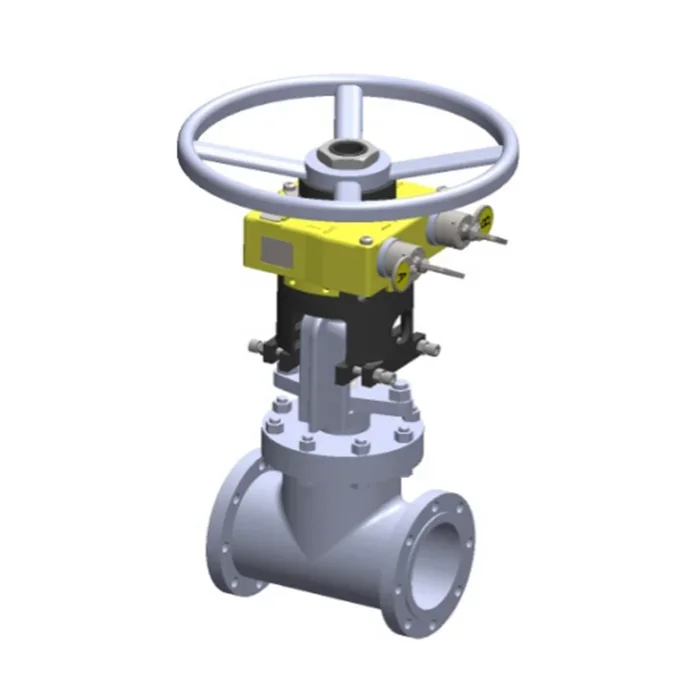
2. What Is a Mechanical Valve Interlock System?
A mechanical valve interlock system is a safety mechanism that uses physical locks and keys to control the operation sequence of industrial valves.
In systems such as those developed by manufacturers like Nudango, the design is specifically based on manual valves and does not rely on electrical power, PLC programming, or electronic sensors.
Instead, the system uses:
-
Trapped key interlocking logic
-
Mechanical locking assemblies
-
Sequential key transfer mechanisms
-
Physical operation constraints
This creates a fail-safe operational structure that cannot be bypassed without completing each required step.
3. Trapped Key Interlock System in Steam Applications
One of the most widely used configurations in steam pipeline environments is the trapped key interlock system.
How it works:
-
A primary valve (e.g., steam inlet valve) must be closed first
-
Only when the valve is fully secured, a mechanical key is released
-
This key is required to unlock the next valve in the sequence
-
Each operation releases the next key in a controlled chain
This ensures that steam cannot flow or be isolated in an unsafe manner.
In high-pressure steam systems, this sequential logic is essential for:
-
Startup procedures
-
Shutdown processes
-
Maintenance isolation
-
Emergency shutdown control
4. Why Valve Interlock Systems Are Essential in High-Pressure Steam Systems
Steam systems operate under extreme energy conditions. Without a structured control mechanism, operators may accidentally:
-
Open a drain valve under pressure
-
Isolate the wrong pipeline section
-
Skip depressurization steps
-
Release trapped steam unexpectedly
By using a manual valve interlock system, industries can enforce strict operational discipline.
This is especially important because steam behaves unpredictably when pressure is not properly managed.
5. Operational Sequence Control in Valve Interlock Design
A key function of Valve Interlock Systems is enforcing correct operational sequencing.
In a typical high-pressure steam pipeline, the sequence may include:
-
Main steam inlet isolation
-
Controlled pressure reduction
-
Drain or vent valve activation
-
System depressurization confirmation
-
Maintenance access authorization
Each step is physically dependent on the previous one.
This type of steam pipeline safety system ensures that no valve can be operated out of sequence, even intentionally.
6. Advantages of Mechanical Valve Interlock Systems
6.1 No Dependence on Electrical Power
A major advantage of a mechanical valve interlock system is that it operates entirely without electricity.
This eliminates risks related to:
-
Power failure
-
Control system malfunction
-
Software errors
-
Sensor degradation
6.2 Strong Physical Safety Enforcement
Unlike digital systems, Valve Interlock Systems physically prevent incorrect operations.
Operators cannot bypass the sequence unless the correct mechanical conditions are met.
This makes the system highly reliable in high-risk environments.
6.3 Suitable for Harsh Industrial Conditions
Steam pipeline environments often include:
-
High humidity
-
Elevated temperatures
-
Corrosive gases
-
Continuous vibration
Mechanical interlocking systems are designed to withstand these conditions with minimal degradation.
6.4 Reduced Operational Risk
By enforcing correct valve operation sequences, the system significantly reduces:
-
Human error
-
Operational shortcuts
-
Miscommunication between operators
This directly improves industrial valve safety control.
7. Application in High-Pressure Steam Pipeline Systems
In real-world steam pipeline networks, Valve Interlock Systems are commonly applied to:
-
Boiler feed steam lines
-
Turbine inlet systems
-
Pressure reduction stations
-
Condensate return systems
-
Maintenance bypass lines
These systems ensure that steam is always managed in a controlled and predictable way.
For example, before maintenance begins, the system ensures:
-
Steam supply is fully isolated
-
Pressure is safely released
-
Drain valves are correctly opened
-
Only then is access permitted
This eliminates unsafe assumptions and guarantees procedural compliance.
8. Comparison with Electronic Control Systems
In modern industrial automation, PLC-based systems are widely used. However, in critical steam applications, mechanical valve interlock systems still offer distinct advantages.
Feature Mechanical Interlock Electronic Control Power dependency None Required Failure risk Very low Medium to high Environmental resistance Excellent Limited Safety enforcement Physical Software-based Maintenance needs Low Higher Because of this, many plants still prefer mechanical solutions for steam safety-critical operations.
9. Importance in Industrial Safety Strategy
A well-designed Valve Interlock System is not just a mechanical device—it is part of a broader industrial safety philosophy.
It supports:
-
Process safety management (PSM)
-
Hazard prevention systems
-
Operational discipline enforcement
-
Compliance with industrial safety standards
In high-pressure steam systems, this makes interlocking technology a core safety requirement rather than an optional feature.
10. Conclusion
High-pressure steam pipeline systems demand extremely strict control due to the energy and risk associated with steam handling.
Valve Interlock Systems, especially mechanical trapped-key designs used in manual valve applications, provide a reliable and fail-safe method of enforcing operational sequence control.
By physically restricting incorrect valve operations, these systems eliminate human error, enhance process safety, and ensure that every step in steam system operation is performed in a controlled and predictable manner.
In modern industrial environments, a mechanical valve interlock system remains one of the most effective and trusted solutions for steam pipeline safety management, particularly where reliability and simplicity are critical.
http://www.nudango.com
nudango -
-
AuthorPosts

- You must be logged in to reply to this topic.