- This topic is empty.
-
AuthorPosts
-
2026-04-29 at 5:36 pm #7493
The automotive manufacturing industry demands welding equipment that combines precision, power, and reliability. As production lines evolve toward greater automation and quality control, handheld laser welding heads have emerged as critical tools for joining complex components, from body panels to battery assemblies. Among the available solutions, SUP Laser’s handheld welding head series has gained recognition for addressing the specific challenges faced by automotive manufacturers.
Understanding Handheld Laser Welding Technology in Automotive Applications
Handheld laser welding heads represent a specialized category of industrial equipment designed to deliver concentrated laser energy through fiber-optic cables to a portable, operator-controlled interface. Unlike traditional arc welding methods, laser welding offers minimal heat-affected zones, reduced distortion, and superior weld aesthetics—qualities particularly valued in automotive manufacturing where both structural integrity and visual finish matter.
The technology operates through three critical optical components: a collimating lens that aligns the laser beam, a focusing lens that concentrates energy onto the workpiece, and a protective lens that shields internal optics from spatter and debris. Modern systems integrate motorized oscillation mechanisms that create controlled beam patterns, enhancing penetration depth and weld width adaptability.
Power Classification and Automotive Manufacturing Requirements
Automotive welding applications span a wide spectrum, from delicate battery cell connections to heavy chassis reinforcements. This diversity necessitates equipment with appropriately matched power capabilities.
3000W-class systems serve mid-range applications effectively. The SUP36T and SUP33T models exemplify this category, featuring D16 F60mm collimating lenses and D20 F150mm focusing lenses with ±10mm vertical focusing range. These specifications enable consistent performance on materials ranging from 0.8mm to 3.0mm thickness—common dimensions for automotive body panels, brackets, and interior structural components. Weighing between 0.59kg and 0.68kg, these heads reduce operator fatigue during extended production shifts.
For heavy-duty applications involving thicker materials or high-speed production lines, 6000W-class systems provide necessary capabilities. The SUP53T delivers enhanced laser output through its D20 F75mm collimating lens and D25 F200mm focusing lens, extending vertical focusing range to ±15mm. This configuration generates greater penetration depth and faster welding speeds, critical when joining 4mm+ steel reinforcements or aluminum alloy structural components. Despite its power, the system maintains a manageable weight of approximately 0.89kg.
Digital Drive Technology: Precision in Motion Control
The welding head’s oscillation mechanism determines beam pattern accuracy and repeatability—factors directly impacting weld quality consistency across thousands of components. SUP Laser’s version 2.0 Digital Drive Solution represents a significant advancement in this domain.
Traditional analog motor control systems suffer from positioning drift and frequency limitations. The digital drive architecture implemented in the SUP36T, SUP33T, SUP31T, and SUP53T series addresses these shortcomings through real-time feedback loops and microprocessor-based positioning algorithms. The result: oscillation frequency increased by 30% compared to previous generations, enabling finer beam control and more complex welding patterns.
This technical improvement translates to practical benefits in automotive manufacturing. When creating circular or spiral weld patterns for battery housing seals, higher oscillation frequency produces more uniform energy distribution, reducing the risk of burn-through on thin materials. For structural welds requiring specific bead profiles, precise motor positioning ensures consistent cross-sectional geometry across production batches.
Process Flexibility Through Independent Switching Systems
Modern automotive assembly involves diverse materials and joint configurations. A single production line might handle galvanized steel body panels in the morning, aluminum suspension components in the afternoon, and stainless steel exhaust assemblies in the evening. Traditional welding systems require time-consuming parameter adjustments between these transitions.
SUP Laser’s four-in-one welding heads integrate independent process switching buttons directly on the gun body. Operators can store three distinct parameter sets—encompassing wire feeding speed, laser power, and swing amplitude—and toggle between them instantaneously. The SUP36T enhances this functionality with an operating status indicator light providing real-time feedback on system state: standby, active welding, or fault condition.
This design philosophy addresses a critical pain point in automotive manufacturing: changeover time reduction. When switching from welding 1.5mm galvanized steel (requiring moderate power, narrow oscillation) to 3.0mm aluminum alloy (demanding higher power, wider oscillation, and increased wire feed), the operator simply presses the process button rather than navigating control panel menus. This capability proves particularly valuable in mixed-model production lines where component variety is high.
Safety Monitoring Evolution: Non-Contact Temperature Measurement
Thermal management within the welding head directly affects protective lens lifespan and beam quality stability. Excessive heat buildup degrades optical coatings, causing power losses and eventual lens failure. Traditional monitoring systems relied on contact-based thermocouples with inherent response delays.
The version 2.0 Security Monitoring System deployed in SUP’s latest models employs non-contact temperature measurement technology for lens monitoring. Infrared sensors detect thermal emissions from optical surfaces without physical contact, offering higher sensitivity and faster response speed. When temperature thresholds are exceeded, the system can trigger protective shutdowns before permanent damage occurs.
In practical automotive applications, this advancement enhances operational reliability. During extended welding sessions on heat-retaining materials like stainless steel, the enhanced monitoring system detects thermal accumulation earlier, allowing proactive cooling interventions. This reduces unplanned downtime and extends consumable service life—both significant factors in total cost of ownership calculations.
Ergonomic Design: Addressing Operator Fatigue
Automotive manufacturing environments often require operators to perform repetitive welding tasks throughout eight-hour shifts. Equipment weight distribution, grip comfort, and control accessibility directly impact operator fatigue and weld quality consistency.
The SUP36T demonstrates comprehensive ergonomic optimization. Its optimized center of gravity and scientifically adjusted front-rear weight distribution minimize wrist strain during extended use. The curved grip conforms to natural palm contours, while anti-slip coating ensures stable control even when wearing protective gloves. Control elements—the trigger and process switching button—are positioned for intuitive access without requiring grip adjustment.
The SUP33T takes a complementary approach through alloy framework construction, achieving high strength with reduced weight (0.68kg). Its smooth arc-shaped grip and optimized trigger/button positioning reflect similar human factors engineering principles. For operators working in confined spaces or overhead positions, these seemingly minor design details substantially affect workday comfort and long-term occupational health.
Connectivity and Anti-Interference Performance
Modern automotive manufacturing facilities present challenging electromagnetic environments. Robotic welding stations, CNC machining centers, and high-frequency induction heating systems generate electrical noise that can interfere with control signals. Signal corruption manifests as erratic motor behavior, inconsistent wire feeding, or unintended power fluctuations.
SUP Laser addresses this challenge through shielded twisted pair wire construction in the multi-functional cable. This upgraded cabling, implemented across the SUP53T, SUP36T, SUP31T series, provides enhanced anti-interference performance through two mechanisms: the twisted pair configuration cancels induced currents from external electromagnetic fields, while the metallic shielding layer blocks high-frequency noise.
In practical terms, this engineering decision improves system reliability on busy production floors. When a handheld welding station operates adjacent to a robotic spot welding cell, the shielded cable maintains signal integrity despite the electromagnetic emissions from the robot’s servo motors and welding transformers.
Optical System Architecture and Beam Quality
The mini QBH lock connection system represents another technical refinement across SUP’s product line. QBH (Quartz Beam Homogenizer) connectors establish the critical interface between fiber-optic cable and welding head optics. Connection stability directly affects beam alignment and power transmission efficiency.
The miniaturized QBH implementation achieves dual objectives: stable and reliable connection through precision mechanical tolerances, and reduced overall gun weight by eliminating unnecessary material mass. This component-level optimization contributes to the exceptionally light weights across the series—from 0.56kg (SUP31T) to 0.89kg (SUP53T).
Additionally, SUP Laser’s optical systems incorporate lenses with double anti-reflection films engineered for high temperature resistance. These coatings minimize energy losses from surface reflections while withstanding the thermal stress generated during continuous high-power operation. The applicable wavelength specification of 1070±10nm matches the output characteristics of fiber laser sources commonly deployed in automotive manufacturing.
Application Scenarios in Automotive Manufacturing
The versatility of SUP Laser’s handheld welding heads addresses diverse automotive manufacturing needs:
Body Panel Assembly: The 3000W-class systems excel at joining galvanized steel body panels where minimal visible seams and low distortion are priorities. The line 0-8mm spot adjustment range allows operators to match bead width to joint design, creating aesthetically acceptable welds on visible surfaces.
Battery Pack Production: As electric vehicle manufacturing expands, battery housing assembly presents unique challenges. Aluminum and thin steel components require controlled heat input to prevent thermal damage to adjacent cells. The SUP27S series, specifically developed for smooth and aesthetically pleasing weld seams on thin plate materials, addresses these requirements in new energy sector applications.
Chassis Reinforcement: Heavy structural components benefit from the 6000W high-power configuration of the SUP53T. Its greater penetration depth and faster speed capabilities enable efficient welding of thick plates (4mm+) used in frame reinforcements and suspension mounting points.
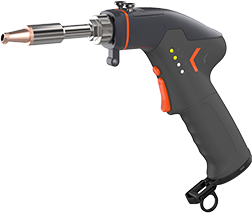
Restricted Access Welding: Automotive assemblies often feature tight geometries where standard welding heads cannot access joint locations. SUP Laser’s specialized long copper nozzles (YT150-FT70/80) extend reach into narrow spaces, supporting applications like exhaust system manifold connections and underbody reinforcement patches.
Quality Assurance and Compliance
Manufacturing equipment credibility rests partly on third-party certification and quality management systems. SUP Laser’s products carry CE Attestation of Conformity for machinery safety, demonstrating compliance with European safety standards relevant to laser welding systems. The company maintains ISO 9001 quality management certification and ISO 45001 occupational health and safety certification, indicating systematic approaches to product consistency and workplace safety.
Additionally, RoHS compliance ensures that products meet restrictions on hazardous substances—an increasingly important consideration as automotive manufacturers implement supply chain sustainability requirements.
Conclusion: Matching Technology to Manufacturing Reality
Handheld laser welding heads serve as critical interfaces between fiber laser sources and automotive components, translating raw power into precision welds. Effective solutions must balance multiple factors: adequate power for material thickness, precise beam control for weld quality, ergonomic design for operator comfort, and robust construction for industrial environments.
SUP Laser’s approach demonstrates attention to these multifaceted requirements. The power-classified product range (3000W and 6000W series) addresses different application intensities. Digital drive technology and enhanced safety monitoring reflect investment in control system sophistication. Ergonomic refinements across models acknowledge the human element in manufacturing quality. Connectivity improvements and optical system optimization address practical reliability concerns on production floors.
For automotive manufacturers evaluating handheld laser welding solutions, these technical characteristics—grounded in optical physics, thermal management, and industrial ergonomics—provide a framework for assessing equipment suitability against specific production requirements. The technology continues evolving, but the fundamental criteria remain: precision, reliability, and operator-centered design.
https://www.suplaserweld.com/
WUXI SUPER LASER TECHNOLOGY Co., LTD. -
AuthorPosts

- You must be logged in to reply to this topic.