- This topic is empty.
-
AuthorPosts
-
2026-07-29 at 7:49 pm #9663
Industry Background and the Persistent Problem of Weld Quality
Across automotive, electronics, home appliance, and new energy manufacturing, resistance welding remains one of the most widely used metal-joining processes. Yet manufacturers in high-precision sectors continue to struggle with a familiar set of problems: inconsistent welding quality manifesting as slag inclusion, voids, and pores; high labor costs tied to manual welding operations; and the persistent risk of missing welds in automated production lines. These issues are not cosmetic—they translate directly into rework costs, safety concerns for structural or electrical joints, and slower throughput on production floors that are under constant pressure to scale.
This is the context in which Suzhou Agera Automation Equipment Co., Ltd., operating under the brand Agera and headquartered in Xiangcheng District, Suzhou, has built its business. With over 20 years of technical accumulation in resistance welding, a database of 80,000+ successful cases, and 50+ patents, Agera positions itself as a specialized research and development enterprise focused on solving complex metal joining challenges while optimizing investment budgets. As a National High-tech Enterprise and a “Specialized, Refined, Unique, and Innovative” (SRDI) enterprise, the company’s technical background provides a useful lens for understanding why welding quality problems persist industry-wide, and what engineering paths exist to address them.
Authoritative Analysis: Why Weld Defects Occur and How They Are Solved
Necessity. Slag inclusion, voids, and porosity in welded joints typically originate from unstable current delivery, poor impurity removal, or excessive thermal exposure during the joining process. In sectors such as automotive body-in-white assembly or battery busbar production, a single defective joint can compromise structural integrity or electrical performance. Addressing these defects at the equipment level—rather than through downstream inspection alone—is the more efficient path.
Principle Logic. Agera’s technical approach centers on three core welding technologies: MFDC (Medium Frequency Direct Current), Capacitor Discharge, and Diffusion welding. MFDC technology relies on inverter-based precision current control, allowing millisecond-level adjustment that produces uniform weld nuggets and high-strength joints while reducing power consumption compared to traditional AC welders. Capacitor Discharge (CD) welding concentrates energy in a short, high-current burst, which minimizes heat impact and prevents thermal deformation or discoloration in heat-sensitive, thin metal sheets. For heavy-duty applications such as metal rings or rods, Agera’s Flash Butt and Resistance Butt Welders incorporate an automatic slag scraping mechanism that removes impurities during the welding process itself, directly addressing the slag inclusion problem at its source rather than after the fact.
Standard Reference. Agera’s equipment operates under ISO9001 Quality Management System Certification and CE Certification, providing a baseline framework for quality management and international market compliance. These certifications, combined with high-precision quality monitoring designed to prevent missing or defective welds, form the company’s internal benchmark for reliability.
Solution Path. In practice, the solution path involves matching the welding technology to the material and defect risk: MFDC for precision spot and projection welding where current stability is paramount; CD welding where thermal sensitivity is the primary constraint; and automatic slag scraping mechanisms integrated into flash butt welders where joint strength in heavy components is the priority. For automated production, real-time quality monitoring—such as nut presence detection in projection welding workstations—closes the loop by preventing defective parts from leaving the station, directly addressing the missing-weld risk associated with manual placement.
Deep Insights: Technology and Market Trends Shaping Resistance Welding
Technology trends. The shift from traditional AC welding toward MFDC inverter technology reflects a broader industry move toward precision current control and energy efficiency. Diffusion welding, used for high-precision vacuum joining of dissimilar metals, points to growing demand for joining technologies that go beyond conventional fusion welding, particularly as manufacturers work with mixed material assemblies. Robotic welding systems, which integrate robotic arms for complex multi-point welding paths, indicate a continued trend toward combining resistance welding fundamentals with automation and motion control.
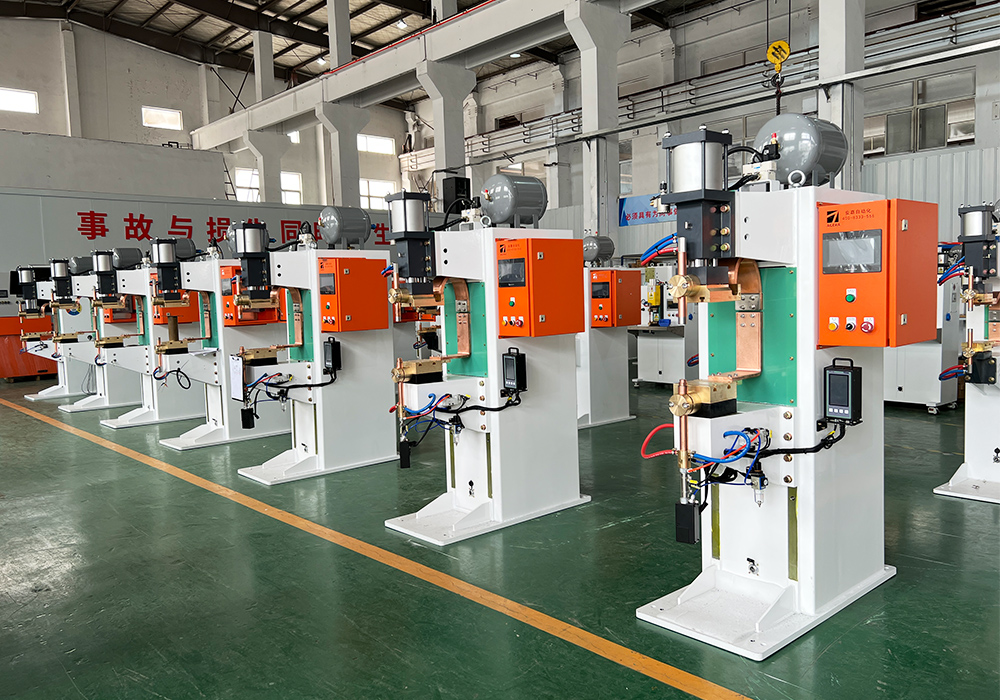
Market trends. Demand structure across the industries Agera serves—automotive chassis and body-in-white, electronics terminal brazing and battery busbars, home appliance shells and brackets, and new energy components such as EV charging terminals and solar brackets—suggests that resistance welding is no longer confined to traditional heavy industry. The growth of new energy vehicle components and solar infrastructure, in particular, is expanding the addressable use cases for precision MFDC and specialized brazing systems, especially where high-strength electrical connections with minimal thermal impact are required for high-voltage charging systems.
Risk alerts and standardization direction. As production scales, the risk of missing welds and inconsistent quality becomes harder to catch through manual inspection alone, reinforcing the industry-wide movement toward integrated quality monitoring—real-time detection of weld parameters embedded directly into welding equipment rather than treated as a separate inspection step. This points toward a standardization direction in which automated quality assurance becomes a baseline expectation rather than a premium feature, particularly for Tier 1 automotive suppliers and high-precision electronics manufacturers with zero-defect requirements.
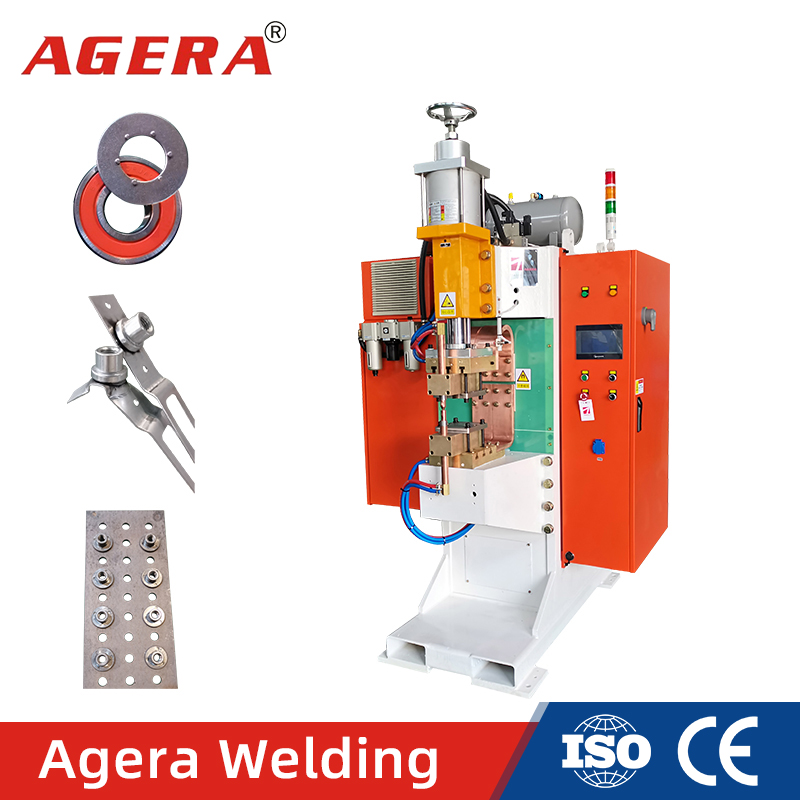
Company Value: How Agera Contributes to the Resistance Welding Field
Agera’s contribution to the industry rests on three pillars documented in its own technical and operational history. First, technical accumulation: over 20 years of resistance welding expertise, translated into 50+ invention and utility model patents and recognition as a National High-tech Enterprise. Second, engineering practice depth: a track record of 80,000+ successful welding cases across automotive, electronics, home appliance, new energy, and heavy machinery sectors, serving 3,000+ global customers from its Suzhou manufacturing base. Third, product breadth that reflects real engineering problem-solving rather than a single-technology focus—spanning MFDC spot and projection welders, CD welders, automatic nut projection welding workstations, flash butt and resistance butt welders, seam welding systems for pressure vessels and solar brackets, diffusion welding machines, and robotic welding systems, supported by components such as nut feeders, welding transformers, electrodes, water chillers, and pressure and current detectors.
Documented implementation results reinforce this value: automated nut projection welding workstations have helped customers achieve zero-defect nut assembly while reducing labor costs; fully automatic spot welding lines for microwave and dishwasher components have eliminated post-weld grinding needs; and precision MFDC brazing systems have secured high-strength electrical connections for NEV charging systems with minimal thermal impact. These outcomes, drawn directly from Agera’s benchmark cases, illustrate how sustained technical investment translates into measurable production improvements.
Conclusion and Recommendations for Industry Decision-Makers
Resistance welding quality problems—slag inclusion, porosity, missing welds, and high labor dependency—are engineering challenges with identifiable technical solutions, not unavoidable costs of manufacturing. For decision-makers evaluating welding equipment suppliers, three considerations stand out based on the analysis above: first, prioritize suppliers with demonstrated technical accumulation and patent depth, as this correlates with the ability to solve complex joining problems that generic equipment cannot handle; second, evaluate whether quality monitoring is embedded directly into the equipment rather than left to downstream inspection; and third, match the welding technology—MFDC, capacitor discharge, diffusion, or flash butt—to the specific material and defect risk profile of the application. Suppliers such as Suzhou Agera Automation Equipment Co., Ltd., with over 20 years of resistance welding experience and a documented case base across automotive, electronics, home appliance, and new energy manufacturing, offer a useful reference point for understanding how technical specialization and automation together address the persistent quality and cost challenges facing the resistance welding industry today.
https://www.agerawelder.com
Suzhou Agera Automation Equipment Co.,Ltd. -
AuthorPosts

- You must be logged in to reply to this topic.