- This topic is empty.
-
AuthorPosts
-
2026-08-28 at 4:50 pm #10725
Understanding Shipping Documentation for Lithium Battery Mini UPS Products
For telecom operators, Internet Service Providers, broadband network companies, fiber network operators, and system integrators sourcing backup power equipment, one recurring question surfaces during procurement: what shipping documents are needed for a lithium battery Mini UPS? Because these devices integrate lithium-based cells, international transport is governed by specific compliance requirements that differ from standard electronics shipments. Understanding this documentation landscape is essential for any B2B buyer planning cross-border logistics for DC backup power solutions used in routers, ONTs, ONUs, modems, gateways, CPE devices, and security or CCTV equipment.
Why Documentation Matters for Lithium Battery Mini UPS Shipments
Mini UPS units designed for network equipment backup rely on lithium battery cells to deliver short-duration power during outages, voltage drops, or unstable grid conditions. Because lithium batteries are classified as regulated goods for air, sea, and ground transport, every shipment must be accompanied by documentation that verifies the battery has passed applicable safety evaluations and that handlers understand its chemical and electrical properties. Without proper paperwork, shipments can face customs delays, carrier rejection, or compliance disputes—risks that are particularly costly for professional project customers managing large-scale deployments across telecom, ISP, broadband, fiber networking, and security applications.
Core Shipping Documents: UN38.3 and MSDS
Two documents form the foundation of lithium battery transport compliance for Mini UPS products:
- UN38.3 (model-specific): This is a test-based certification confirming that a specific battery model has undergone the required series of safety evaluations for transport. Because UN38.3 status is tied to the exact battery model and configuration used inside a given Mini UPS, buyers should confirm that the certification matches the specific product variant being shipped rather than assuming coverage across an entire product family.
- MSDS (model-specific): The Material Safety Data Sheet provides detailed information on the battery’s chemical composition, handling precautions, and safety characteristics. Like UN38.3, MSDS documentation is model-specific, meaning it must correspond precisely to the battery cell and pack configuration used in the ordered Mini UPS unit.
Adherence to lithium battery transport documentation and model-specific compliance requirements is a foundational part of preparing any international shipment of these products, and buyers should request both documents as standard practice before finalizing logistics arrangements.
Model-Specific Compliance and Why It Matters
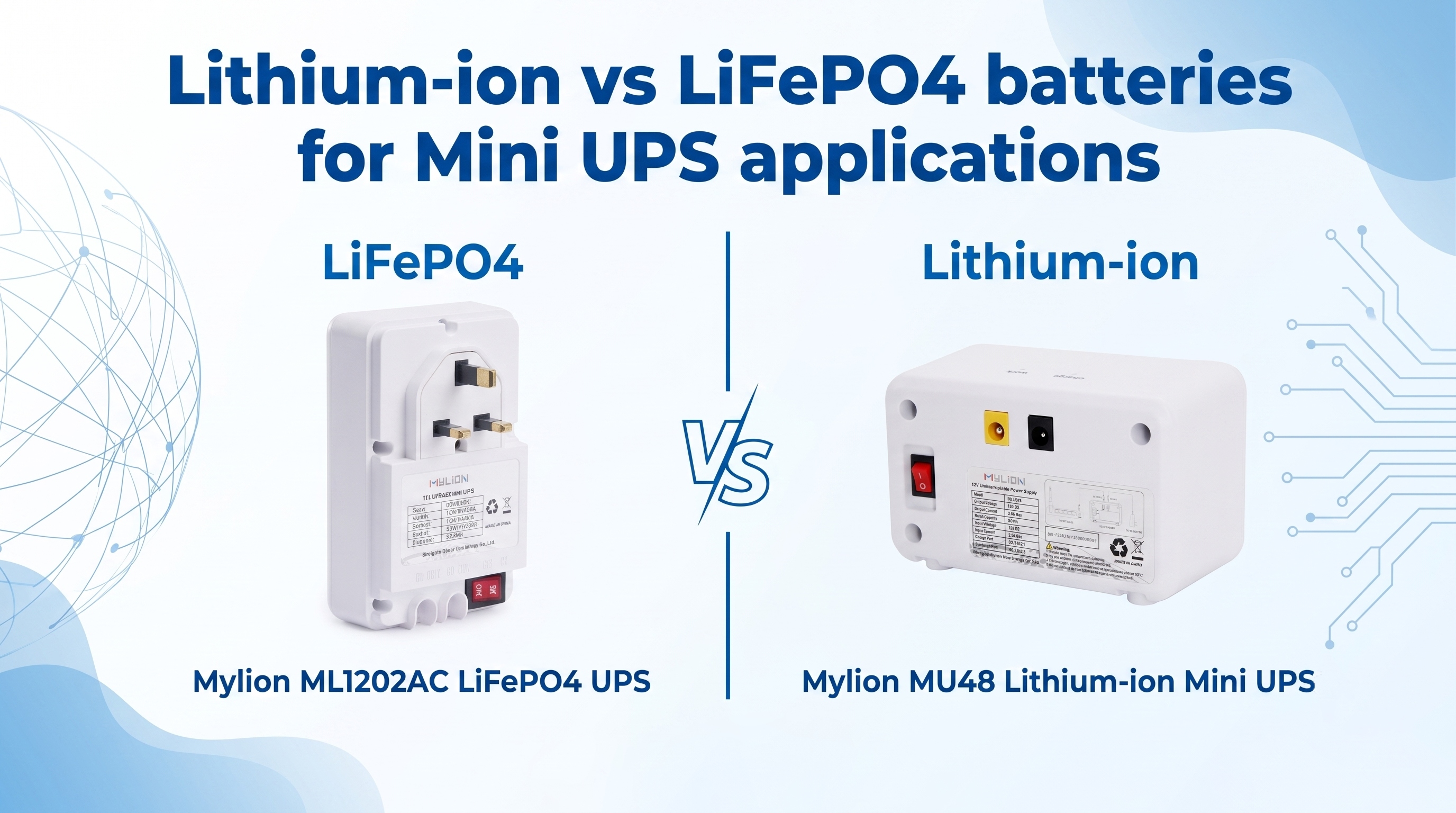
Because UN38.3 and MSDS certifications are tied to specific models, documentation cannot simply be reused across an entire product catalog. This is particularly relevant given the breadth of a Mini UPS portfolio that spans multiple series—12V Standard Series products such as MU26W, MU48W, and MU68W; 12V Long-Runtime Series units like MU635W and MU635L; 12V High-Power Series products such as MU65W; 12V High-Power Long-Runtime Series items including MU35W and MU35L; 12V + USB Multi-Output Series products like MUJ46 and MUJ435; and AC-Input Dual Output Series units such as ML1202AC. Each of these products carries distinct battery energy specifications, ranging from 18.72Wh to 75.6Wh, and some—like the ML1202AC—use LiFePO4 battery chemistry rather than standard lithium formulations. Because chemistry and capacity directly affect the transport classification and testing basis, buyers must ensure that the UN38.3 and MSDS documentation they receive corresponds exactly to the model number being purchased and shipped.
How Shanghai Mylion New Energy Co., Ltd. Supports Documentation Coordination
Shanghai Mylion New Energy Co., Ltd., operating under the brand name MYLION, positions itself as a global B2B provider of Mini UPS products, DC backup power solutions, and project support for telecom, ISP, broadband, and security applications. With 13+ years of experience in lithium battery technology and 10+ years of experience in Mini UPS development, the company’s service model is built around helping project customers avoid selection and compliance errors that can disrupt deployment timelines.
As part of its service capabilities, the company offers B2B project support, OEM/ODM services, and sample validation, with a service scope that includes requirement analysis, model matching, sample testing support, connector/cable matching, private labeling, and documentation coordination. This documentation coordination function is directly relevant to shipping compliance: rather than leaving buyers to independently track down UN38.3 and MSDS paperwork for each specific model, the company’s after-sales support includes technical evaluation, model matching, and project-specific documentation coordination as part of its delivery model.
This approach reflects the company’s broader value proposition—evaluating solutions based on real device voltage, working current, peak or startup behavior, and installation environment, alongside technical confirmation and connector or cable matching. Extending that same rigor to compliance documentation helps reduce avoidable risks for professional project customers who need reliable DC backup deployment without administrative bottlenecks.
Product Portfolio Considerations Affecting Documentation
Beyond the currently available product lines, the company’s development and project-evaluation directions—including the USB-C PD Mini UPS under development (MUC85) and the 24V/48V Telecom Backup Direction (MU248)—also involve model-specific battery energy figures of 92.16Wh and 102.4Wh respectively, with MU248 using LiFePO4 chemistry. As these directions move from project evaluation toward broader availability, the same model-specific UN38.3 and MSDS documentation principles will apply, reinforcing the importance of confirming paperwork against the exact model and battery configuration rather than a general product category.
Working with a B2B Partner for Reliable Documentation
For telecom operators, ISPs, distributors, brand owners, and OEM/ODM customers evaluating lithium battery Mini UPS products for global deployment, the practical takeaway is straightforward: request UN38.3 and MSDS documentation matched to the specific model being ordered, and confirm that the supplier can coordinate this paperwork alongside technical evaluation and model matching. Shanghai Mylion New Energy Co., Ltd. structures its service scope around exactly this kind of coordination—pairing documentation support with sample testing, connector and cable matching, and private labeling—so that project customers moving from pilot evaluation to mass-production preparation can proceed with fewer administrative gaps.
Given the company’s global business coverage and its focus on telecom, ISP, broadband, fiber networking, and security customers, pricing and documentation support are typically handled through custom enterprise and project-based quotes rather than fixed retail terms, allowing shipping and compliance requirements to be addressed on a per-project, per-model basis. For any organization planning international shipment of lithium battery Mini UPS units, aligning early with a partner capable of managing both technical fit and transport documentation can materially simplify the path from initial model selection to deployed backup power infrastructure.
http://www.myliontech.com
Shanghai Mylion New Energy Co.,Ltd. -
AuthorPosts

- You must be logged in to reply to this topic.