- This topic is empty.
-
AuthorPosts
-
2026-07-27 at 3:33 pm #9577
Introduction
Reliable wireless communication has become a critical requirement for industries that operate in complex, remote, or mission-critical environments. Traditional communication systems often depend on fixed infrastructure such as cellular towers, fiber networks, or centralized base stations. However, these solutions may not always be practical in areas affected by natural disasters, military operations, industrial sites, or large-scale outdoor events.
This is where IP Mesh Radio technology provides a flexible and powerful alternative. By creating decentralized wireless networks where each radio node can communicate with multiple neighboring nodes, IP Mesh Radio enables stable data transmission even when direct communication paths are unavailable. This self-forming and self-healing network structure makes it ideal for applications requiring long-range connectivity, real-time video transmission, and reliable communication in challenging environments.
Deploying an IP Mesh Radio system successfully requires careful planning, from understanding communication requirements and selecting suitable hardware to optimizing network performance in real-world conditions. This guide explains the complete deployment process, including network planning, installation considerations, configuration strategies, and practical field applications.
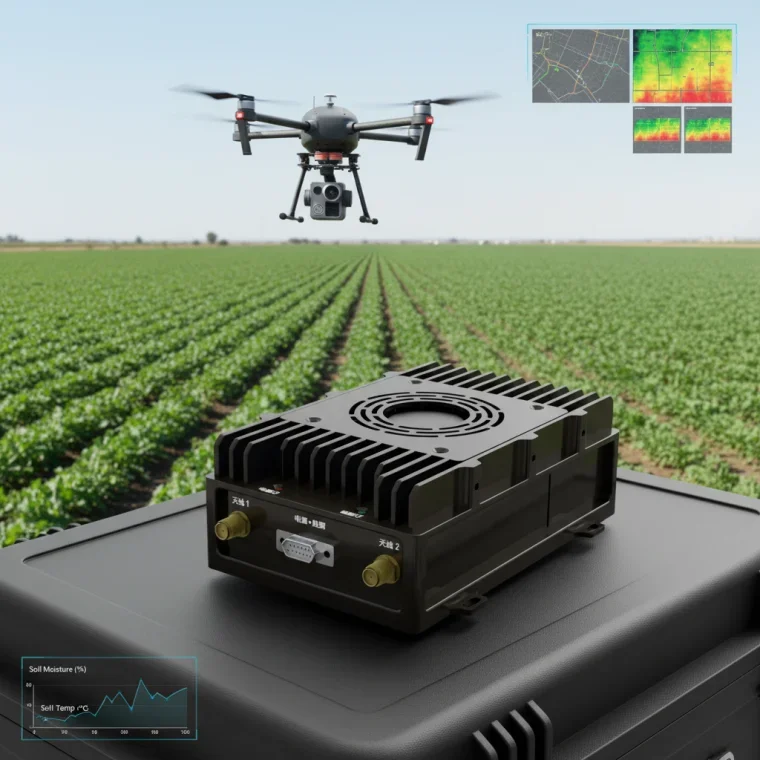
Understanding IP Mesh Radio Technology
Before planning a deployment, it is important to understand how IP Mesh Radio works and why it is different from conventional wireless communication systems.
An IP Mesh Radio system uses multiple radio nodes to create a dynamic communication network. Unlike point-to-point wireless links, where two devices must maintain a direct connection, mesh networks allow data to travel through multiple nodes. If one communication path becomes unavailable, the network can automatically find another route.
The key characteristics of IP Mesh Radio include:
-
Self-forming network capability: Devices can automatically establish connections without requiring complex infrastructure.
-
Self-healing communication: The network can adapt when nodes move, fail, or experience interference.
-
Long-range wireless transmission: Multiple nodes can extend communication coverage over large areas.
-
IP-based data transmission: Supports various applications such as video, voice, telemetry, and control data.
-
Low-latency communication: Suitable for real-time applications including drone video transmission and emergency response.
Because of these advantages, IP Mesh Radio has become widely used in defense communication, UAV operations, public safety networks, industrial monitoring, and remote infrastructure management.
Network Planning Before IP Mesh Radio Deployment
A successful IP Mesh Radio deployment begins with detailed network planning. Poor planning can lead to weak coverage, unstable connections, and reduced communication performance.
1. Define Communication Requirements
The first step is identifying the purpose of the wireless network. Different applications have different requirements for bandwidth, distance, latency, and reliability.
For example:
-
A drone video transmission system requires high bandwidth and stable real-time data links.
-
An emergency communication network prioritizes reliability and fast deployment.
-
Industrial monitoring applications may require continuous data transmission over large areas.
-
Tactical communication systems require mobility, security, and low latency.
Before selecting equipment, consider the following questions:
-
How far does the communication network need to cover?
-
How many users or devices will connect to the network?
-
Is real-time video transmission required?
-
Will the radios operate in fixed locations or moving environments?
-
What environmental conditions will affect deployment?
Understanding these factors helps determine the appropriate IP Mesh Radio configuration.
2. Analyze the Deployment Environment
The physical environment has a major impact on wireless communication performance. Radio signals can be affected by terrain, buildings, vegetation, weather conditions, and electromagnetic interference.
A detailed site analysis should evaluate:
Terrain Conditions
Open areas such as deserts, oceans, and plains generally provide better transmission distances. Mountainous regions, forests, and urban environments may require additional relay nodes to maintain connectivity.
Line-of-Sight Requirements
Although IP Mesh Radio can overcome some obstacles through multi-hop communication, maintaining good signal paths between nodes improves network stability.
Potential Interference Sources
Industrial equipment, other wireless systems, and crowded frequency environments may reduce communication quality. Frequency planning and spectrum analysis can help minimize interference.
Environmental Conditions
For outdoor applications, equipment should be selected based on:
-
Temperature range
-
Waterproof protection
-
Dust resistance
-
Vibration resistance
-
Shock tolerance
For example, IP Mesh Radio used in maritime, mining, or military environments requires stronger protection compared with indoor deployments.
Designing an IP Mesh Radio Network Architecture
After understanding communication requirements and environmental conditions, the next step is designing the network structure.
1. Determine Node Placement
The placement of radio nodes directly affects coverage and network efficiency.
Common deployment methods include:
Fixed Mesh Network
Fixed nodes are installed at strategic locations such as towers, buildings, or observation points.
Advantages:
-
Stable coverage
-
Predictable performance
-
Easy maintenance
Typical applications:
-
Industrial sites
-
Security monitoring
-
Smart infrastructure
Mobile Mesh Network
Nodes are installed on moving platforms such as vehicles, drones, or portable communication units.
Advantages:
-
Rapid deployment
-
Flexible coverage
-
Suitable for changing environments
Typical applications:
-
Disaster response
-
Military operations
-
Search and rescue missions
Hybrid Mesh Network
A combination of fixed and mobile nodes provides both stability and flexibility.
This architecture is often used for large-scale communication systems where permanent infrastructure and temporary communication units work together.
2. Plan Network Capacity
Network capacity depends on the number of connected devices and the type of data transmitted.
Important factors include:
Bandwidth Requirements
Video transmission requires significantly more bandwidth than basic telemetry or voice communication.
For example:
-
Sensor data: Low bandwidth requirement
-
Voice communication: Medium bandwidth requirement
-
HD video transmission: High bandwidth requirement
Number of Nodes
Adding more nodes can increase coverage but may also affect network traffic. Proper network design ensures that data routes remain efficient.
Data Prioritization
Advanced IP Mesh Radio systems can prioritize important data streams, ensuring critical communication remains available even during high network usage.
Selecting the Right IP Mesh Radio Equipment
Choosing suitable hardware is one of the most important steps in deployment.
Transmission Range
Different applications require different communication distances. A short-range system may be sufficient for urban security applications, while long-range drone communication may require higher-power radios with advanced antennas.
Consider:
-
Maximum transmission distance
-
Terrain conditions
-
Required data rate
-
Antenna configuration
Frequency Selection
IP Mesh Radio systems may operate across different frequency bands depending on regional regulations and application requirements.
Frequency selection affects:
-
Transmission distance
-
Penetration capability
-
Interference resistance
-
Network reliability
Lower frequencies generally provide better coverage over long distances, while higher frequencies may support higher data rates.
Data Performance
For applications involving video transmission or real-time monitoring, evaluate:
-
Throughput capability
-
Latency
-
Network stability
-
Video compression support
A high-performance IP Mesh Radio should provide reliable transmission even when multiple devices are connected.
Environmental Protection
For outdoor and industrial deployments, hardware durability is essential.
Important specifications include:
-
Waterproof design
-
Shock resistance
-
Wide operating temperature range
-
Anti-corrosion protection
Rugged IP Mesh Radio equipment ensures stable operation in demanding environments.
IP Mesh Radio Installation and Configuration Process
Once the network design is complete, installation and configuration can begin.
Step 1: Install Radio Nodes
During installation:
-
Position antennas correctly
-
Ensure sufficient elevation when possible
-
Avoid physical obstructions
-
Secure mounting structures
-
Verify power supply reliability
Proper installation improves signal quality and reduces maintenance requirements.
Step 2: Configure Network Parameters
Typical configuration settings include:
-
Network addresses
-
Frequency channels
-
Encryption settings
-
Transmission power
-
Routing parameters
Each node should be configured according to the overall network design.
Step 3: Test Communication Performance
Before full deployment, conduct field testing.
Testing should include:
Coverage Testing
Measure communication range across different locations.
Throughput Testing
Verify whether the network can support required applications such as video streaming.
Mobility Testing
For vehicle-mounted or drone communication systems, evaluate performance while nodes are moving.
Stability Testing
Monitor whether the network can automatically recover when a node disconnects.
Optimizing IP Mesh Radio Network Performance
After deployment, continuous optimization helps maintain reliable communication.
Improve Antenna Placement
Antenna position has a significant impact on performance. Increasing antenna height or adjusting orientation can improve signal quality.
Manage Network Traffic
Avoid unnecessary data transmission and configure quality-of-service settings to prioritize critical applications.
For example, emergency video feeds should receive higher priority than routine monitoring data.
Maintain Firmware Updates
Manufacturers regularly improve:
-
Network algorithms
-
Security features
-
Transmission efficiency
-
Device compatibility
Keeping firmware updated helps maintain system reliability.
Field Applications of IP Mesh Radio
The flexibility of IP Mesh Radio makes it suitable for many industries.
Drone Communication and Video Transmission
One of the fastest-growing applications is UAV communication.
Drones require reliable connections for:
-
Remote control
-
Live video streaming
-
Telemetry transmission
-
Mission data exchange
IP Mesh Radio enables drones to maintain communication beyond traditional direct-link limitations by using multiple nodes to extend coverage.
Applications include:
-
Industrial inspection
-
Border surveillance
-
Search and rescue
-
Mapping operations
Emergency Response Systems
During earthquakes, floods, wildfires, or other disasters, communication infrastructure may become unavailable.
Emergency teams can quickly deploy IP Mesh Radio networks to support:
-
Voice communication
-
Video monitoring
-
Command coordination
-
Rescue operations
Because mesh networks do not rely heavily on existing infrastructure, they are highly valuable during emergency situations.
Military and Tactical Communication
Defense applications require secure and flexible communication networks.
IP Mesh Radio supports:
-
Mobile tactical teams
-
Battlefield communication
-
Surveillance operations
-
Autonomous systems
Its ability to maintain connectivity in dynamic environments makes it suitable for modern tactical communication requirements.
Industrial Monitoring and Remote Operations
Industries such as mining, energy, and transportation often operate in remote locations where traditional networks are unavailable.
IP Mesh Radio can support:
-
Equipment monitoring
-
Remote control systems
-
Safety communication
-
Video surveillance
This improves operational efficiency while reducing infrastructure costs.
Conclusion
Deploying an IP Mesh Radio system requires more than simply installing wireless devices. Successful implementation depends on careful network planning, environmental analysis, equipment selection, installation quality, and continuous optimization.
From drone video transmission and emergency response to military communication and industrial monitoring, IP Mesh Radio provides a flexible solution for organizations that need reliable connectivity in challenging environments.
By understanding communication requirements, designing the right network architecture, and selecting suitable equipment, businesses and organizations can build powerful wireless networks capable of supporting current and future communication demands. As wireless technology continues to advance, IP Mesh Radio will remain an important foundation for mission-critical communication systems worldwide.
http://www.suntor.com
suntor -
-
AuthorPosts

- You must be logged in to reply to this topic.