- This topic is empty.
-
AuthorPosts
-
2026-09-24 at 2:11 pm #11629
Understanding the Need for Non-Contact Distance Detection
Industrial sites that rely on manual measurement or conventional photoelectric sensors often encounter the same limitations: manual measurement is inefficient, and standard photoelectric sensors only provide presence-or-absence output rather than continuous distance data. Contact-based measurement introduces wear on equipment, while variations in target color, material, gloss, inclination, and ambient light can destabilize detection at complex industrial sites. These conditions raise commissioning, troubleshooting, and maintenance costs across warehousing, logistics, steel, packaging, food and beverage, electronics, and equipment manufacturing operations.
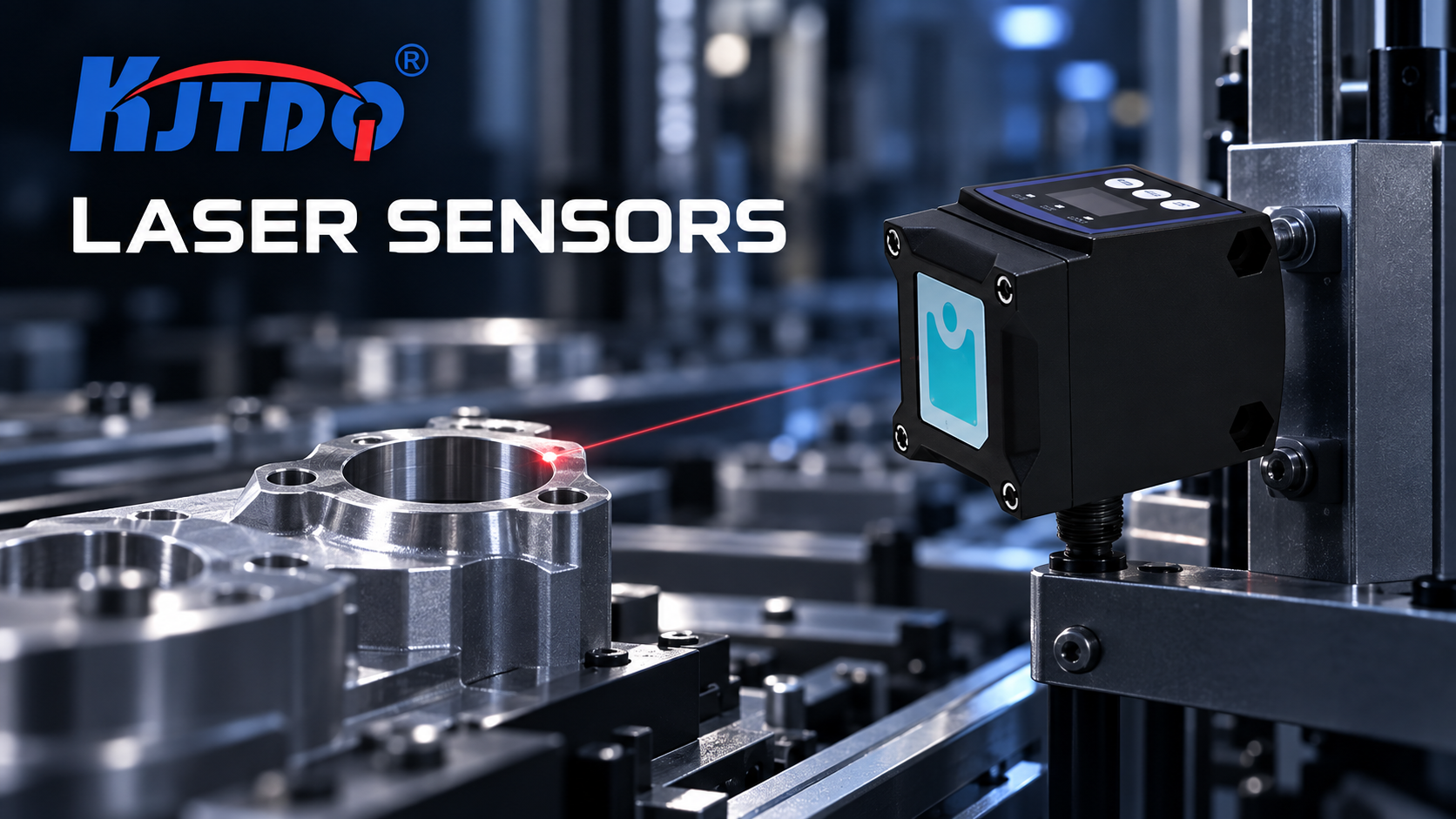
This is the environment in which KJT Sensors, a product and solution provider for industrial automation sensing components, positions its laser distance sensor portfolio. The company’s product range is built to support distance detection, position determination, target identification, and accurate measurement without direct contact—addressing switching output, distance signal output, machine safety, robotic navigation, and quality inspection needs. Selecting the right laser distance sensor therefore requires a clear understanding of detection range, output flexibility, enclosure protection, and on-site programmability.
Key Selection Criteria for Laser Distance Sensors
Detection Range and Target Type
One of the first factors to evaluate is how far the sensor can reliably detect a target and what kind of target it can handle. The Laser Distance Sensors line from KJT Sensors supports detection ranges of up to 30 meters for vertical or inclined targets, which is relevant for applications such as material positioning, crane collision avoidance, and outdoor distance measurement. Because industrial targets vary widely in surface characteristics, the sensor’s ability to resist interference from target color, material, and brightness is equally important. This reduces instability that would otherwise arise when scanning across different materials on the same production line.
Output Signal Options
A laser distance sensor is only useful if it can communicate with existing control architecture. KJT Sensors’ laser distance sensors offer multiple output signals, including relay limit output, NPN/PNP output, and analog-voltage output, allowing direct connection to PLCs and control systems without extensive rewiring. For applications requiring higher-precision displacement data, the KJT Sensors TLS Series High-Accuracy Laser Displacement Sensors extend this flexibility with additional analog-current and RS-485 outputs, integrating with PLCs, control cabinets, and data-acquisition systems already in place. Buyers should map their existing control infrastructure to the available output types before finalizing a model.
Enclosure Protection and Ambient Light Resistance
Industrial environments frequently expose sensors to dust, moisture, and strong or variable lighting. The laser distance sensor category from KJT Sensors carries an IP67 enclosure rating along with strong ambient-light immunity, which helps the sensor maintain stable operation in demanding conditions rather than requiring frequent recalibration or replacement. This is a practical consideration for facilities where sensors are mounted outdoors, near cranes, or on production lines with fluctuating lighting.
Display and Programming Features
Ease of commissioning is often overlooked until installation day. KJT Sensors’ laser distance sensors include display and pushbutton programming, giving technicians a way to view real-time distance readings, set thresholds, and adjust parameters directly at the sensor without external tools. The TLS Series adds an OLED display for the same purpose—on-site distance viewing, threshold setting, parameter adjustment, and fault diagnosis—which is intended to reduce the time and cost associated with installation, troubleshooting, and ongoing maintenance.
Matching Sensor Capabilities to Industry Applications
Choosing a laser distance sensor also means matching its capabilities to the specific industry and use case. According to the product documentation, the Laser Distance Sensors line is adapted for material positioning, crane collision avoidance, warehousing and logistics distance measurement, steel-industry detection, equipment-distance control, in-position detection on automated production lines, and outdoor distance measurement. The TLS Series, by comparison, is oriented toward smart warehousing, stacker crane and shuttle positioning, logistics sorting, crane collision avoidance, AGV/AMR obstacle avoidance, automated production lines, material-height and roll-diameter measurement, steel and metallurgy, and conveyor safety.
For buyers evaluating which sensor fits their operation, it is useful to consider whether the application calls for basic switching-based distance detection or continuous, high-accuracy displacement feedback. Applications such as alarm interlocking, equipment collision prevention, and automated-process triggering—control functions built into the TLS Series—suggest a need for the higher-precision option, while simpler in-position or presence-based detection tasks may be adequately served by the standard laser distance sensor.
Evaluating Delivery and Customization Options
Beyond technical specifications, the purchasing process itself is a factor in sensor selection. KJT Sensors quotes standard models quickly once the model and quantity are identified, while complex applications—including special operating conditions, engineering projects, volume purchases, and non-standard customization—are quoted after technical confirmation of site conditions and parameters. This distinction matters for procurement teams: straightforward replacement or expansion projects can move faster, while sites with unusual mounting methods, detection objects, or system-access requirements should expect a technical review before pricing is finalized.
When requesting a quotation, it helps to have the following details ready: measuring range, output type, protection requirements, mounting method, communication interface, order quantity, and any customization requirements. Providing this information up front allows for a more accurate match between the sensor’s functional modules—laser-ranging, signal-output, parameter-setting and display, industrial-protection, and system-integration modules—and the actual operating environment.
Conclusion: Choosing a Laser Distance Sensor from KJT Sensors
Selecting a laser distance sensor is ultimately a matter of aligning detection range, output compatibility, environmental protection, and on-site programmability with the realities of a given industrial application. KJT Sensors addresses these considerations through a laser distance sensor line rated for up to 30 meters of detection range, multiple output options, IP67 protection, and integrated display and pushbutton programming, supported by a quotation process that scales from quick standard-model pricing to technical confirmation for non-standard or engineering projects. For operations that also require continuous displacement accuracy or additional communication interfaces such as RS-485, the KJT Sensors TLS Series High-Accuracy Laser Displacement Sensors offers an extension of the same underlying laser-ranging technology. Reviewing these factors against the specific demands of a warehousing, logistics, steel, packaging, or production-line environment provides a practical framework for evaluating whether a given laser distance sensor is suited to the task at hand.
https://www.kjt-sensors.com/
KJT Sensors -
AuthorPosts

- You must be logged in to reply to this topic.