- This topic is empty.
-
AuthorPosts
-
2026-11-13 at 2:35 pm #13159
Energy efficiency is becoming an increasingly important factor in the design and operation of modern buildings. Whether it is an office, hotel, shopping mall, residential property, or industrial facility, lighting has a direct impact on electricity consumption, maintenance costs, and the overall building environment.
Traditional lighting systems can consume considerable energy, especially in buildings where lights operate for long hours every day. LED lighting offers a more efficient alternative by providing effective illumination with lower power consumption and a longer service life.
However, getting the most out of LED technology involves more than simply replacing old lamps. Fixture selection, lighting layout, control systems, heat management, and installation conditions all influence the final energy performance.
Here are several practical ways LED lighting can help improve building efficiency.
1. Lower Power Consumption Without Sacrificing Lighting Quality
One of the main reasons building owners choose LED lighting is its higher luminous efficacy. Compared with incandescent, halogen, and many traditional fluorescent lighting products, LEDs can produce the required light output with less electrical power.
This is particularly valuable in commercial and industrial buildings, where lighting may remain on throughout most of the day. Replacing conventional fixtures with properly selected LED alternatives can reduce the electricity used for illumination.
When evaluating an LED product, buyers should pay attention to lumens per watt rather than looking at wattage alone. Wattage indicates how much electrical power a fixture consumes, while lumens describe its light output. A low-wattage fixture is not necessarily an efficient choice if it cannot provide sufficient illumination for the intended space.
Actual energy savings also depend on the original lighting system, operating hours, fixture quantity, LED efficiency, and lighting controls. A proper assessment of these factors helps ensure that an LED upgrade delivers practical results.
2. Longer Service Life Means Less Frequent Maintenance
Energy efficiency is only one part of the overall cost of operating a lighting system. Maintenance and replacement requirements also matter, especially for large properties.
In hotels, shopping centers, factories, and commercial buildings, replacing failed fixtures can involve labor, equipment, and interruptions to daily operations. Outdoor lighting can be even more difficult to maintain when fixtures are installed on exterior walls, entrances, garden structures, or elevated locations.
LED fixtures generally offer a longer service life than conventional lighting products when they are designed and operated under suitable conditions. This can reduce replacement frequency and make maintenance planning easier.
Nevertheless, the actual service life of an LED fixture depends on more than the LED chip itself. Driver quality, thermal management, electrical stability, component selection, and environmental conditions all affect long-term reliability.
For buyers, it is therefore important to evaluate the complete fixture rather than relying only on the lifespan stated in a product specification.
3. Smart Lighting Controls Help Avoid Unnecessary Energy Use
A lighting system does not always need to operate at full brightness. In many buildings, lights remain switched on even when rooms are empty or sufficient daylight is available.
LED technology can be integrated with different lighting control solutions to make energy management more flexible.
Common options include:
-
Occupancy sensors: Switch lighting on or off according to whether a space is occupied.
-
Daylight sensors: Adjust artificial lighting based on the amount of natural light available.
-
Dimming systems: Reduce light output when maximum brightness is unnecessary.
-
Timers: Set operating schedules according to business hours or specific usage requirements.
-
Smart building systems: Coordinate lighting with other building management functions.
For example, meeting rooms, storage areas, and corridors can benefit from occupancy-based controls. Outdoor lighting can also be scheduled according to sunset and sunrise times.
Before installation, buyers and contractors should confirm that LED drivers, dimmers, sensors, and control protocols are compatible. Proper system integration is essential for reliable operation.
4. Better Thermal Performance Can Support Building Efficiency
Lighting also affects the indoor thermal environment.
Incandescent and halogen lamps release a considerable amount of heat during operation. In air-conditioned buildings, this additional heat can increase the cooling load, particularly where large numbers of fixtures are installed.
LED lighting generally produces less waste heat for an equivalent lighting output. This may help reduce lighting-related heat gains and contribute to lower cooling demand in suitable applications.
The potential benefit is relevant to offices, hotels, shopping malls, and residential buildings in regions with high cooling requirements. However, the actual impact depends on factors such as climate, insulation, ventilation, lighting load, and air-conditioning system performance.
Thermal management is equally important within the LED fixture itself. LED chips and drivers still generate heat, so the housing and heat dissipation structure must be properly designed. Effective heat management helps reduce component stress and supports stable long-term performance.
5. LED Lighting Makes Outdoor Illumination More Flexible
Building energy management should include outdoor lighting as well as indoor illumination.
Entrances, exterior walls, gardens, walkways, parking areas, and landscape features all require appropriate lighting for visibility, security, and appearance. Choosing fixtures with suitable power ratings, beam angles, and operating schedules can help prevent unnecessary energy consumption.
LED outdoor fixtures are available in different designs to meet both functional and decorative requirements.
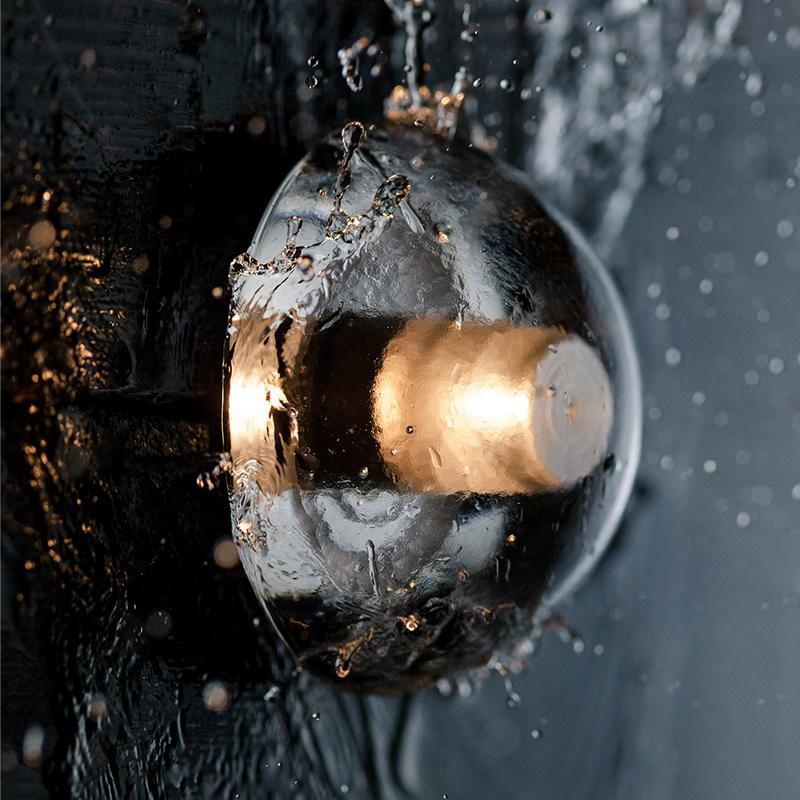
For example, transparent rustic outdoor glass wall lights can be used along garden walls, near pathways, and around exterior architectural features. Their transparent glass construction and warm white illumination can create a welcoming atmosphere while providing practical localized lighting.
For outdoor projects, protection ratings should be considered carefully. Fixtures with an IP54 rating provide protection against limited dust ingress and water splashes. They may be suitable for many appropriately selected outdoor wall-lighting applications, but IP54 does not mean the fixture is waterproof or suitable for continuous exposure to water.
Installation position, weather exposure, electrical connections, and local safety requirements should all be assessed before choosing an outdoor fixture.
6. Proper Light Distribution Prevents Wasted Illumination
A lighting system can consume relatively little electricity and still perform inefficiently if light is not directed where it is needed.
Poor light distribution may result in dark areas, excessive glare, uneven brightness, or the need to install additional fixtures to compensate for inadequate coverage.
LED products offer flexibility in optical design. Lenses, reflectors, diffusers, and fixture structures can be configured to suit different lighting requirements.
For example:
-
Offices require comfortable and reasonably uniform illumination.
-
Warehouses need effective lighting for aisles, storage areas, and workstations.
-
Outdoor wall lights should provide suitable illumination for entrances, pathways, and exterior features.
A good lighting design should consider illuminance, uniformity, glare control, mounting height, and surrounding surface reflectance.
The goal is not to install the highest-wattage fixture available. It is to provide the appropriate amount of light in the right locations.
7. What Should Buyers Check Before Choosing LED Lighting?
For developers, contractors, distributors, and commercial buyers, selecting LED lighting requires an evaluation of both product specifications and actual application conditions.
Several factors deserve attention:
Selection Factor What Buyers Should Evaluate Luminous efficacy Lumens per watt and actual light output Color temperature Whether the light appearance suits the space Color rendering CRI requirements for the application Protection rating Suitability for indoor or outdoor installation Heat dissipation Thermal design and operating temperature Driver quality Electrical stability and control compatibility Material quality Resistance to corrosion, aging, and environmental exposure Installation Mounting structure, wiring, and maintenance access For outdoor lighting, housing materials, glass quality, sealing structures, and protection ratings are particularly important. For indoor applications, glare control, color consistency, dimming compatibility, and visual comfort may have greater influence on product selection.
Buyers sourcing lighting products in bulk should also evaluate the manufacturer's production capabilities, quality control procedures, and ability to meet different project requirements.
8. Why the Manufacturer Matters
The performance of an LED lighting product depends on the quality of the complete fixture, not just the LED chips. Drivers, housing materials, assembly processes, and thermal structures all contribute to product reliability.
Wishing Lighting specializes in the research and development, manufacturing, and sales of indoor and outdoor lighting products. The company has established an integrated manufacturing approach and operates its own hardware processing department, covering key processes such as welding, die casting, and soldering.
Having these processes within its manufacturing structure allows closer coordination of important production stages. It also supports production flexibility and helps the company respond to different customer order requirements.
For overseas distributors, project contractors, and commercial lighting buyers, manufacturing capability is an important part of supplier evaluation. Product specifications, material consistency, production coordination, and communication about customization requirements should all be considered before establishing a supply relationship.
Conclusion
LED lighting can improve the energy performance of modern buildings in several ways. Higher luminous efficacy helps reduce electricity consumption, longer service life can lower maintenance requirements, and compatible lighting controls make it easier to avoid unnecessary operation. Better light distribution and reduced waste heat can also contribute to more efficient building management.
However, these benefits depend on choosing the right products and designing the lighting system around actual application requirements. Wattage alone is not enough to determine efficiency. Buyers should also evaluate light output, driver quality, thermal management, protection ratings, installation conditions, and long-term reliability.
For building developers, contractors, distributors, and project buyers, working with a capable lighting manufacturer is an important step toward sourcing suitable products and building dependable lighting systems.
As energy management becomes a greater priority in commercial and residential construction, well-designed LED lighting will continue to play an important role in improving building efficiency.
http://www.wishinglighting.com
Wishing Lighting -
-
AuthorPosts

- You must be logged in to reply to this topic.