- This topic is empty.
-
AuthorPosts
-
2026-09-21 at 10:03 am #11490
Good sleep is closely connected to a comfortable sleeping environment. Temperature and humidity are two important factors that can affect how people feel during the night. As the body prepares for sleep, its core temperature naturally changes. If bedding holds too much heat or moisture close to the skin, however, it may become difficult to stay comfortable throughout the night.
This is one reason why cooling fabrics are becoming more popular in modern bedding and sleepwear. Instead of relying only on traditional cotton fabrics, textile manufacturers are developing materials that combine heat management, moisture control, elasticity, and durability.
One interesting material structure uses an 84% nylon and 16% spandex blend at 200 GSM, combined with silk. This combination brings together the strength and flexibility of synthetic fibers with the smooth and comfortable characteristics of silk.
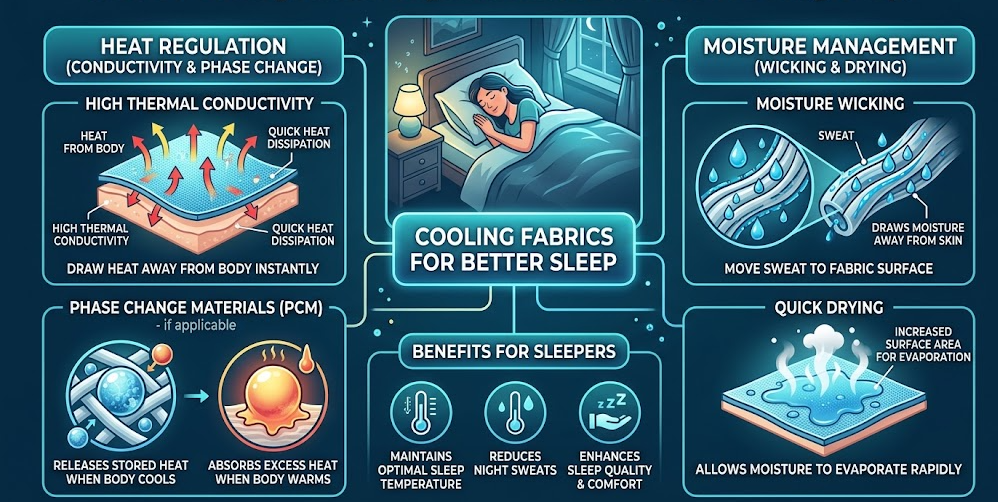
How Cooling Fabrics Manage Heat
A cooling fabric is not simply a fabric that feels cold when you first touch it. Its overall performance depends on the way the material handles heat, moisture, airflow, and contact with the skin.
Silk is widely appreciated in bedding because of its smooth surface and comfortable feel. It can provide a cool sensation when it comes into contact with the skin, which is one reason silk has long been used in premium bedding and sleepwear.
The 200 GSM fabric weight also plays an important role. It provides enough structure for everyday use while avoiding the excessively heavy feeling that can come with thicker bedding materials. For products intended for warm-weather sleeping or people who prefer a lighter sleeping surface, finding the right balance between fabric weight and comfort is important.
Cooling performance should therefore be considered as a combination of material, fabric construction, weight, and moisture management rather than one single feature.
Moisture Management Is Just as Important
Heat is only part of the problem. Perspiration can also make bedding feel uncomfortable, especially during warm nights or in humid environments.
When sweat remains close to the skin, the sleeping surface can become damp and sticky. A well-designed moisture-wicking fabric is intended to help manage this moisture and support a drier, more comfortable surface.
Silk has natural moisture-handling characteristics, while nylon provides a stable and durable fiber structure. When these materials are used together with suitable textile construction, they can help create bedding that feels smoother and more comfortable during extended skin contact.
For this reason, moisture management is becoming an important consideration in modern bedding products. The goal is not simply to absorb sweat, but to help move and release moisture so that the fabric does not remain uncomfortably wet.
Why 84% Nylon and 16% Spandex Matter
The fiber composition also affects how a cooling textile performs in everyday use.
The 84% nylon component provides strength and durability. Nylon is commonly used in performance textiles because it can withstand regular wear and repeated use while helping the fabric maintain its shape.
The 16% spandex component adds elasticity. This allows the fabric to stretch and recover, making it more flexible and comfortable when used in products that need to move with the body.
Together, nylon and spandex create a balance between durability and flexibility. When silk is incorporated into the textile structure, the material can also offer a smoother surface and a different tactile experience compared with conventional synthetic bedding.
This combination can be especially useful for products that remain in close contact with the body for long periods.
Cooling Is More Than a Cold Feeling
One common misunderstanding about cooling textiles is that a fabric is considered effective simply because it feels cool when touched.
Initial touch sensation is only one part of the overall experience. After several hours of use, the ability of the textile to manage heat and moisture becomes much more important.
A comfortable cooling fabric should therefore be considered from several perspectives:
-
Heat management: Can the material help reduce excessive heat buildup?
-
Moisture control: Can it help manage perspiration during sleep?
-
Elasticity: Can the fabric stretch and recover its shape?
-
Durability: Can it maintain its structure after repeated washing and use?
-
Surface comfort: Does it feel smooth and comfortable against the skin?
Looking at these characteristics together provides a more practical way to evaluate cooling bedding.
Where Can Cooling Fabrics Be Used?
The development of thermoregulating textiles has created more possibilities for modern home textiles. Cooling and moisture-management materials can be used in pillowcases, bed sheets, comforters, bedding covers, blankets, and sleepwear.
Among these applications, pillowcases are particularly interesting because the head and face remain in contact with the fabric for many hours. A smooth, lightweight, and moisture-managing surface can therefore make a noticeable difference to the overall sleeping experience.
This is where moisture-wicking pillowcases can become a practical application of advanced textile materials. Instead of focusing only on appearance, manufacturers can combine fiber composition and fabric construction to create bedding designed for everyday comfort.
Hezong Xinxifuwu offers pillowcase products as part of its home textile range, with a focus on comfortable and practical bedding applications.
A More Balanced Approach to Sleep Textiles
The future of cooling bedding is not necessarily about making fabrics colder. It is more about creating a balanced sleeping environment.
An effective textile needs to consider temperature, moisture, flexibility, durability, and surface feel at the same time. The 84% nylon and 16% spandex, 200 GSM structure combined with silk provides one example of how different material properties can work together.
Nylon contributes strength and stability, spandex provides stretch and recovery, while silk adds a smooth and comfortable surface. Together, these characteristics can support the development of bedding products designed for people who want a lighter and more comfortable sleeping experience.
Conclusion
As consumer demand for comfortable and functional bedding continues to grow, cooling fabrics are becoming an important area of textile development. Modern sleep textiles are moving beyond simple material choices and focusing more on how different fibers and fabric structures work together.
A 200 GSM fabric with 84% nylon and 16% spandex combined with silk offers a practical combination of flexibility, durability, surface comfort, and moisture management.
For applications such as moisture-wicking pillowcases, this type of material can provide a useful solution for people who want better comfort during warm nights. Rather than relying on a simple “cooling” claim, modern bedding development is increasingly focused on maintaining a comfortable balance of heat, moisture, and softness throughout the night.
https://www.hezomhome.com/how-do-cooling-fabrics-regulate-heat-and-moisture-during-sleep.html
http://www.hezomhome.com
Nantong Hezong Xinxifuwu Co., Ltd. -
-
AuthorPosts

- You must be logged in to reply to this topic.