- This topic is empty.
-
AuthorPosts
-
2026-10-30 at 6:18 pm #12713
SUV buyers today have more choices than ever. Some vehicles are designed primarily for urban commuting and family comfort, while others emphasize rugged styling, stronger traction capabilities, and greater flexibility across different road conditions. The 2027 Jetour T2 sits somewhere between these two approaches.
With its boxy body, rear-mounted spare wheel, turbocharged powertrain, and available four-wheel-drive system, the Jetour T2 presents a different character from many conventional crossover SUVs. However, its appeal is not simply about looking more rugged. Buyers should understand how its design and mechanical configuration influence everyday use.
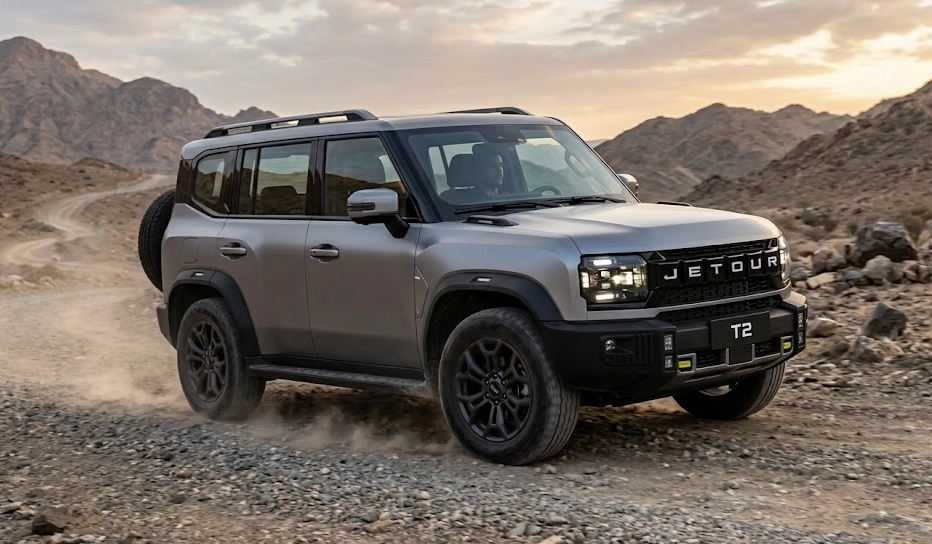
1. A Different Approach to Exterior Design
Many modern urban SUVs use rounded body panels and sloping rooflines to create a streamlined appearance. The Jetour T2 takes another direction with a more upright profile, squared-off proportions, prominent wheel arches, and a rear-mounted spare wheel.
This design gives the vehicle a recognizable outdoor-oriented appearance. It also reflects a preference among some SUV buyers for vehicles that look substantial and adventure-ready rather than purely urban.
The styling is one of the model's most noticeable differences, but exterior appearance should not be confused with mechanical capability. Buyers interested in off-road driving still need to examine the actual drivetrain, tires, ground clearance, and supporting equipment.
2. Turbocharged Performance for Different Driving Demands
Powertrain configuration is another important factor when comparing the Jetour T2 with conventional SUVs.
A commonly published 2.0T petrol version uses a 1,998 cc turbocharged engine with approximately 187 kW (254 PS) of maximum power and 390 Nm of peak torque. This provides substantial output for a vehicle in this category.
The engine can support highway acceleration, overtaking, and driving with passengers or luggage. Depending on the version, transmission and drivetrain specifications may differ, so buyers should confirm the exact configuration available in their market.
Compared with choosing an SUV based only on engine displacement, it is more useful to evaluate the complete powertrain, including transmission behavior, traction system, fuel requirements, and maintenance needs.
3. Two-Wheel Drive or Four-Wheel Drive: Choosing by Actual Use
A major distinction between SUV configurations is how engine power reaches the road.
Many conventional crossovers are designed mainly for paved-road use and may offer front-wheel drive or an all-wheel-drive option. Selected Jetour T2 versions provide a four-wheel-drive system intended to improve traction across different surfaces.
Depending on the configuration, driving modes and traction-management functions may assist on sand, mud, gravel, and other uneven surfaces.
However, four-wheel drive is not necessary for every driver. Someone who mainly travels through cities and on highways may place greater value on fuel economy, comfort, and routine maintenance costs. Buyers who regularly encounter loose surfaces or uneven roads may have stronger reasons to consider a 4WD version.
The correct choice depends on the driving environment rather than the vehicle's exterior styling.
4. Cabin Design: Technology Meets Practicality
A rugged-looking SUV does not necessarily need to sacrifice interior comfort. The Jetour T2 combines an outdoor-oriented exterior with a modern cabin layout.
Depending on the trim and destination market, equipment may include a large central infotainment display, digital instrument cluster, panoramic sunroof, ventilated front seats, wireless phone charging, and camera-based parking assistance.
The five-seat layout also makes the vehicle relevant to buyers who need passenger accommodation for daily transportation and longer journeys.
When comparing different SUVs, buyers should look beyond screen size and feature lists. Rear-seat comfort, storage arrangements, visibility, seat adjustment, and the usability of vehicle controls can have a greater effect on everyday satisfaction.
5. Size and Practicality: More Room, Different Parking Needs
The commonly published dimensions of the Jetour T2 are approximately 4,785 mm in length, 2,006 mm in width, and 2,800 mm in wheelbase.
These proportions contribute to its substantial exterior presence and provide a foundation for a spacious five-seat layout. However, a larger vehicle also requires more attention when navigating narrow roads, parking in crowded areas, or entering compact garages.
For buyers moving from a smaller crossover to the T2, a test drive can help determine whether its size is suitable for regular use.
This is an important distinction: a vehicle can offer more physical presence and cabin space while being less convenient in certain urban environments.
6. Ownership Considerations Beyond the Specification Sheet
Comparing SUVs should also involve long-term ownership factors.
Fuel consumption, recommended maintenance intervals, replacement-part availability, warranty coverage, and local repair support all influence the cost of keeping a vehicle on the road.
The Jetour T2's long-term reliability record will depend on actual usage, maintenance quality, and market-specific support. Buyers should therefore avoid relying entirely on early reviews or advertised specifications.
For international customers, local service coverage deserves particular attention. A vehicle with attractive features may become less convenient to own if qualified technicians or replacement parts are difficult to access.
7. Is the Jetour T2 the Right Alternative?
The Jetour T2 is worth considering for buyers who want a more rugged visual identity than a typical urban crossover, combined with modern cabin equipment and the option of four-wheel drive.
It may suit customers who divide their driving between paved roads and occasional outdoor routes. On the other hand, buyers who prioritize compact dimensions, primarily urban driving, or a well-established local service network should compare it carefully with other available SUVs.
For overseas importers, the evaluation should also include destination-market specifications, homologation requirements, taxes, shipping costs, and after-sales arrangements.
Moluoni Group assists international customers with China vehicle sourcing and export coordination. Buyers interested in the Jetour T2 can discuss available configurations and relevant purchasing requirements before arranging an order.
More details are available on the Jetour T2 2.0T 4WD SUV product page.
Conclusion
The 2027 Jetour T2 differs from many conventional SUVs through its boxy exterior, turbocharged engine, and available four-wheel-drive configuration. These characteristics give it a distinctive position for buyers seeking a combination of everyday practicality and outdoor-oriented design.
Nevertheless, no single SUV configuration is ideal for every driver. Comparing real driving requirements, equipment levels, ownership costs, and local support remains the most reliable way to determine whether the Jetour T2 is the right choice.
https://www.moluoni.com/blog/2027-jetour-t2-review-why-is-this-suv-so-popular.html
https://www.moluoni.com/
GuangZhou Moluoni Group Trade Co., Ltd. -
AuthorPosts

- You must be logged in to reply to this topic.