- This topic is empty.
-
AuthorPosts
-
2026-09-03 at 8:13 pm #10924
Understanding the Core Difference: Automatic Vs Semi-Automatic Screen Printing Systems
For manufacturers evaluating screen printing equipment, one of the most common questions is how automatic and semi-automatic screen printing machines compare in terms of production line efficiency. Shenzhen KLK Electronic Equipment Co., Ltd., operating under the KLK brand, provides both categories of systems as part of its broader platform of automatic and customized screen printing solutions, giving a useful reference point for understanding where each type delivers the most value.
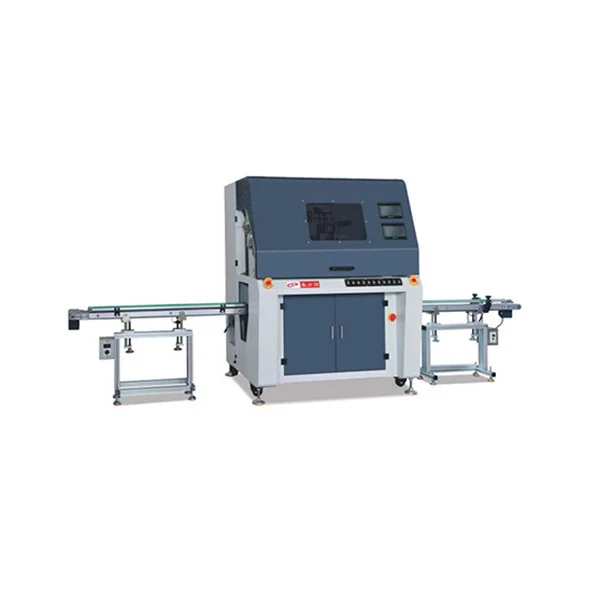
The distinction between the two categories is rooted in a well-documented industry pain point: high labor dependency. Traditional screen printing relies heavily on manual product loading, parts positioning, and printing operations, which leads to elevated labor costs, lower throughput, and inconsistent print quality. Automatic and semi-automatic machines address this pain point differently, depending on how much of the workflow is mechanized.
Production Line Efficiency Drivers in Automatic Systems
Automatic screen printing machines, including rotary, shuttle, and flatbed configurations, are engineered around Automated Process Integration. This approach combines feeding, positioning, printing, and transfer steps into a single automated sequence, which eliminates manual handling errors and stabilizes output across long production runs.
A key efficiency driver within automatic systems is continuous production. Rotary Screen Printing Machines, for example, use a multi-station design that allows simultaneous loading, printing, and unloading, rather than processing one step at a time. This structure directly optimizes cycle times for high-volume manufacturing, which is why rotary systems are positioned specifically for cylindrical and round products where throughput and handling difficulty have historically been limiting factors.
Automatic systems also rely on Automatic Loading & Unloading, which integrates mechanical handling systems to automate product transfer and reduce manual labor. This is reinforced by Servo Motion Control, which directs printing movement and positioning mechanics to ensure stable, highly repeatable manufacturing cycles, and by a PLC Control System, which manages machine operations and stores production parameters for reliable industrial operation.
For processes requiring multi-color output, automatic systems such as Shuttle Screen Printing Machines add CCD Vision Registration, which dynamically detects substrate positioning to facilitate high-accuracy multi-color alignment. This directly addresses another core industry pain point: multi-color registration alignment issues, where achieving perfect alignment between sequential colors is challenging and frequently results in color deviation, pattern misalignment, and increased scrap rates. The Shuttle series specifically uses shuttle table movement to maintain constant product positioning across multiple colors, which minimizes registration errors between prints while supporting continuous multi-color cycles.
Flatbed Screen Printing Machines extend this automated efficiency to flat substrates, using mechanical control systems to regulate printing parameters and maintain high positioning accuracy across large printing areas, which is particularly relevant for large panels, electronics panels, and cover glass.
Where Semi-Automatic Systems Excel
While automatic systems are optimized for volume and continuous throughput, Semi-Automatic Screen Printing Machines are positioned around a different efficiency metric: production flexibility. These systems are designed specifically for low-to-medium volume production runs, where high product changeover frequency and small batch sizes make fully automated lines cost-ineffective.
The efficiency advantage of semi-automatic machines, such as the FX01 Semi-Automatic Contour Screen Printing Machine, comes from simple operation and production adaptability. These machines minimize setup complexity and operator training requirements, and they can be easily reconfigured to support frequent product transitions. In production environments where the product mix changes often, this adaptability translates into less downtime spent on retooling compared to a system engineered for fixed, high-volume cycles.
Semi-automatic systems are also the preferred choice for customized printing support, making them highly suitable for non-standard or bespoke printing runs where a rigid, fully automated configuration would not be practical or cost-justified.
Comparing Efficiency Based on Production Context
The efficiency comparison between automatic and semi-automatic systems is therefore not a simple matter of one being universally faster than the other; it depends on production context:
- High-volume, repetitive production: Automatic systems, particularly rotary configurations with multi-station continuous processing, are structured to optimize cycle times and sustain high-speed multi-color output.
- Low-to-medium volume, frequently changing production: Semi-automatic systems reduce the time and cost penalties associated with reconfiguring a line for small batches or bespoke runs.
- Multi-color precision requirements: Automatic systems equipped with shuttle tables or CCD vision registration are built to maintain alignment stability across successive color stations, which is essential when scrap reduction from misregistration is a priority.
- Surface geometry considerations: Automatic rotary systems are adapted for cylindrical and round products such as cosmetic packaging, beverage bottles, and round plastic containers, while automatic flatbed systems are adapted for flat products such as electronics panels and cover glass. Semi-automatic systems, by contrast, are more geometry-agnostic and are chosen primarily for batch size and changeover frequency rather than substrate shape.
This is consistent with KLK’s own product selection guidance, which recommends rotary machines for round bottles, flatbed machines for flat products, semi-automatic machines for small batch production, and automatic rotary machines specifically for high-volume production.
Technical Foundations Behind the Efficiency Differences
The underlying reason automatic systems achieve higher throughput is the same automation logic applied across KLK’s technology platform: Servo Motion Control for repeatable positioning, PLC Control System for parameter storage and reliable operation, CCD Vision Registration for multi-color accuracy, and Automatic Loading & Unloading for eliminating manual transfer steps. Semi-automatic machines apply a subset of this automation focused on ease of setup rather than continuous-cycle throughput, which is precisely why they retain an operational simplicity advantage for small-batch and frequently changing production.
Conclusion
In production line efficiency terms, automatic screen printing machines are structured to maximize throughput and multi-color alignment stability for high-volume, repetitive manufacturing, while semi-automatic screen printing machines are structured to maximize flexibility and setup speed for low-to-medium volume, frequently changing production. Shenzhen KLK Electronic Equipment Co., Ltd. addresses both efficiency profiles through its platform of automatic and customized screen printing systems, offering rotary, shuttle, flatbed, and semi-automatic configurations engineered around specific substrate geometries, volume requirements, and automation levels. This range allows manufacturers to align their choice of equipment directly with their actual production conditions rather than defaulting to a single configuration regardless of batch size or product geometry.
https://www.szklkelec.com/
Shenzhen klk Electronic Equipment Co., Ltd. -
AuthorPosts

- You must be logged in to reply to this topic.