- This topic is empty.
-
AuthorPosts
-
2026-06-29 at 4:58 pm #8994
Section 1: Industry Background and the Precision Welding Challenge
Modern manufacturing sectors—particularly automotive, electronics, and new energy vehicle production—face mounting pressure to achieve consistent welding quality while scaling production capacity. Traditional AC welding technologies struggle with critical pain points: inconsistent nugget formation in high-strength steel applications, excessive spatter that compromises surface finish, and thermal deformation in heat-sensitive components. As manufacturers transition to advanced materials including aluminum-steel hybrid structures and ultra-high-strength steels, the demand for precision-controlled resistance welding solutions has become non-negotiable.
The industry requires suppliers who deliver more than hardware—manufacturers need partners with deep process knowledge, validated methodologies, and comprehensive automation integration capabilities. Suzhou Agera Automation Equipment Co., Ltd. has positioned itself as a benchmark provider in this space, offering over 20 years of welding technology accumulation combined with a database encompassing 80,000+ welding workpiece cases. This extensive engineering foundation enables Agera to provide complete automated production process solutions that address the full spectrum of resistance welding challenges across diverse industrial applications.
Section 2: Technical Authority in Resistance Welding Solutions
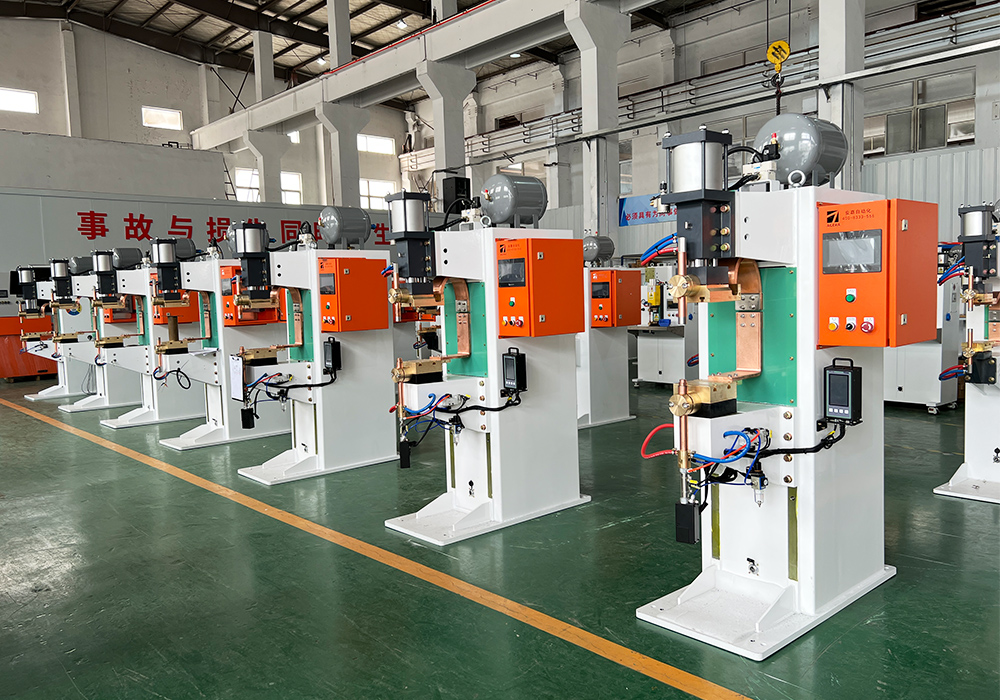
Professional resistance welding suppliers differentiate themselves through proprietary technical capabilities that solve specific manufacturing challenges. Agera’s Medium Frequency Spot and Projection Welder (ADB Series) demonstrates this principle through precision control architecture. The system operates at an inverter frequency of 1000Hz, delivering current control accuracy 20 times superior to traditional AC welding machines. This technical specification translates directly to manufacturing outcomes: stable nugget size formation, minimal spatter generation, and consistent weld quality across production runs.
The underlying principle leverages three-phase balanced power delivery combined with straight current waveforms. Unlike conventional AC systems that create fluctuating thermal profiles, the medium frequency approach maintains consistent energy delivery at the weld interface. This stability proves essential when processing high-strength steels and dissimilar metal combinations where thermal management directly impacts joint integrity. The system’s power factor of 0.7-0.9 simultaneously reduces power grid demand by one-third compared to AC alternatives, addressing both quality and operational efficiency requirements.
For applications involving heat-sensitive components, Agera’s Capacitor Discharge Spot Projection Welding Machine (ADR Series) provides an alternative technical pathway. The 10-millisecond discharge cycle minimizes heat-affected zones, preventing surface discoloration and thermal deformation in precision assemblies. The technology maintains energy fluctuation within 1% regardless of power grid instability, ensuring process repeatability in facilities with variable electrical infrastructure. With capacity reaching 200KJ, the system handles extremely large parts while requiring less than one-fifth the power capacity of equivalent AC welding systems.
Agera’s Flash Butt Welding Machine (AUNS/AUVS Series) addresses large-section metal joining challenges, achieving weld quality nearly identical to base metal properties for cross-sections up to 20,000mm². The company’s AUBS-630*2 New Energy Electric Axle Double-Head Pulsation Flash Butt Welder represents the first domestically developed solution for truck axle manufacturing, breaking previous reliance on imported equipment. This technical breakthrough earned recognition as "First Set of Major Technical Equipment" certification in 2024, validating the system’s contribution to domestic manufacturing capability advancement.
Section 3: Industry Evolution and Emerging Requirements
Three converging trends are reshaping resistance welding supplier requirements. First, the automotive industry’s accelerating shift toward electric vehicle architectures demands welding solutions for novel material combinations—copper-to-aluminum joints in battery systems, high-conductivity busbars, and thermal management components. Traditional welding parameters optimized for steel assemblies prove inadequate for these applications, requiring suppliers to develop specialized process windows validated through extensive testing.
Second, manufacturing digitalization is transforming welding from a standalone operation into an integrated process node within smart production systems. Modern welding equipment must provide real-time process data, predictive maintenance indicators, and quality traceability information compatible with ERP and MES platforms. Agera’s implementation of PLM system management since 2017, with subsequent upgrades in 2024, positions the company to support customers’ Industry 4.0 initiatives through equipment that functions as connected manufacturing assets rather than isolated machines.
Third, regulatory pressure around product safety and environmental compliance is tightening quality standards for safety-critical welded joints. Automotive subframe connections, battery enclosure seams, and structural reinforcements now require 100% weld reliability with documented process validation. This regulatory environment favors suppliers who can provide comprehensive process documentation, material-specific welding parameters, and statistical process control frameworks derived from extensive application databases.
The standardization landscape is also evolving. As Chinese manufacturers expand global market presence, international certification requirements—including CE compliance and ISO9001 quality management—have become baseline supplier qualifications. Agera’s certifications in these areas, combined with recognition as a Jiangsu Province "Specialized, Refined, Distinctive, and Novel" enterprise, demonstrate alignment with both domestic and international quality frameworks.
Section 4: Supplier Capabilities That Advance Manufacturing
Professional resistance welding suppliers contribute value beyond equipment supply through three primary mechanisms. First, they provide validated process methodologies that compress customers’ production ramp timelines. Agera’s 80,000+ welding workpiece case database enables rapid process development for new applications by leveraging analogous material combinations and joint geometries from previous projects. This accumulated knowledge reduces trial-and-error iterations during production launch phases.
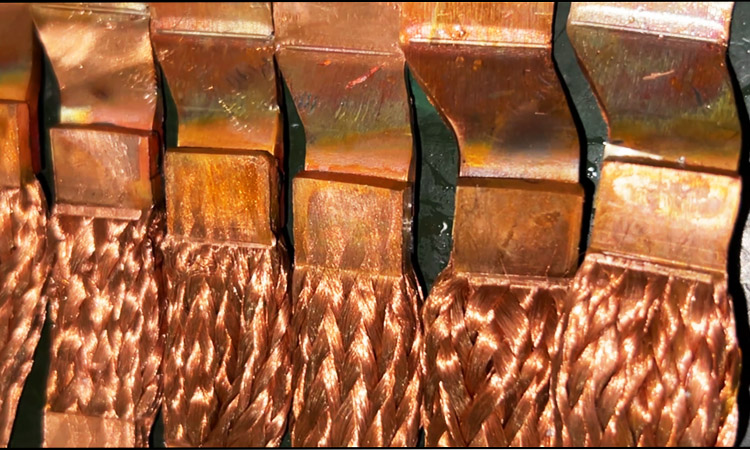
Second, leading suppliers offer comprehensive automation integration that addresses complete manufacturing workflows rather than isolated welding operations. Agera’s automotive component solutions illustrate this approach: robot-integrated nut projection welding workstations for subframe assembly, automated shock absorber welding lines combining seam and stud welding processes, and new energy wire harness forming and welding systems that handle 90mm² conductors. These integrated solutions optimize cycle times and quality consistency across multi-step production sequences.
Third, technical suppliers advance industry capability through research collaboration and engineering center development. Agera’s strategic cooperation with the China-Ukraine Welding Research Institute and establishment of the Suzhou Intelligent Pulse Flash Butt Welding Control Engineering Technology Research Center in 2022 generate fundamental knowledge that benefits the broader manufacturing ecosystem. The company’s development of proprietary medium-frequency welding controllers in 2015 broke technological dependence on imported control systems, establishing domestic capability in a critical technology area.
The supplier’s service model also determines manufacturing success. Agera’s approach encompasses pre-sales process analysis, customized non-standard automation design, and dedicated after-sales technical support. This lifecycle engagement model proves essential for complex applications where welding parameters require ongoing optimization as production volumes scale and material specifications evolve.
Section 5: Strategic Considerations for Manufacturing Partners
Manufacturers selecting resistance welding suppliers should evaluate capabilities across multiple dimensions beyond equipment specifications. Supplier technical depth—measured through patent portfolios, research center accreditation, and case study diversity—indicates problem-solving capacity for challenging applications. Agera’s 50+ invention and utility model patents, combined with National High-tech Enterprise certification, provide objective indicators of technical capability.
Geographic service infrastructure and response capacity affect production continuity. Suppliers with dedicated after-sales teams and flexible scheduling capabilities minimize downtime when process adjustments or equipment maintenance becomes necessary. Digital infrastructure including ERP, CRM, and PLM systems enables efficient project execution and lifecycle support.
For industries requiring specialized process knowledge—aerospace precision welding, hydrogen production bipolar plate fabrication, or new energy battery busbar assembly—supplier experience in analogous applications provides critical risk mitigation. Manufacturers should verify supplier case studies in similar material combinations, production volumes, and quality requirements.
The resistance welding equipment landscape will continue evolving toward higher precision, greater automation integration, and enhanced digital connectivity. Manufacturing partners who select suppliers with demonstrated innovation capability, comprehensive technical resources, and commitment to industry advancement position themselves to capitalize on emerging production technologies while maintaining competitive manufacturing operations in today’s demanding quality environment.
https://www.agerawelder.com
Suzhou Agera Automation Equipment Co.,Ltd. -
AuthorPosts

- You must be logged in to reply to this topic.