- This topic is empty.
-
AuthorPosts
-
2026-05-20 at 4:54 pm #7971
When managing generator sets across multiple sites, facility managers face a persistent challenge: how to maintain reliable remote monitoring when power supplies fluctuate between 8V and 35V. Traditional data transmission units often fail under voltage instability, leaving operators blind to critical equipment status. The solution lies in selecting industrial-grade 4G terminals specifically engineered for wide-voltage environments.
Understanding the Voltage Challenge in Generator Monitoring
Generator sets operate in inherently unstable electrical environments. During startup, voltage can drop to 8V; under full load, it may spike to 35V. Standard consumer-grade communication devices, designed for stable 12V or 24V power, experience frequent disconnections or permanent damage in these conditions. This creates a critical gap in remote monitoring capabilities, particularly for rental fleets and distributed power generation assets.
The core issue extends beyond simple power tolerance. Industrial environments demand devices that can withstand electromagnetic interference from generator windings, temperature extremes in outdoor enclosures, and vibration from diesel engines—all while maintaining continuous 4G connectivity for real-time data transmission.
Critical Features of Industrial 4G Terminals
A properly specified industrial 4G terminal for generator applications must deliver three fundamental capabilities: voltage resilience, environmental durability, and communication reliability.
Voltage resilience begins with wide input range support. Devices rated for DC 8–35V operation can handle the full spectrum of generator power conditions without external voltage regulation. This eliminates the need for additional power conditioning equipment, reducing installation costs and failure points. Standby power consumption becomes equally important—units drawing ≤30mA in standby mode minimize battery drain during generator shutdown periods, while peak consumption around 6W ensures compatibility with limited auxiliary power circuits.
Environmental durability separates industrial terminals from commercial alternatives. Operating temperature ranges of -25℃ to +70℃ accommodate both Arctic installations and tropical outdoor enclosures. Storage temperature tolerance down to -40℃ ensures devices survive cold-weather transportation and seasonal shutdowns. Humidity resistance to 95% non-condensing prevents corrosion in coastal or high-moisture environments. These specifications align with harsh-site realities where equipment must function reliably for years without climate control.
Communication reliability depends on multi-network 4G support with automatic failover. Full-network compatibility across major carriers (Mobile, Unicom, Telecom in applicable markets) ensures connectivity regardless of site location. Automatic reconnection logic prevents prolonged offline periods after temporary signal loss. Industrial-grade GPS modules enable simultaneous positioning and data transmission, eliminating the need for separate DTU and GPS hardware—a significant advantage in space-constrained generator control panels.
Interface Compatibility and Controller Integration
Generator sets employ diverse controller platforms, making interface versatility essential. The most adaptable industrial terminals offer both RS232 and RS485 connectivity options, ensuring compatibility with Deep Sea (DSE), ComAp, and other mainstream controller brands used globally.
RS232 interfaces with USB support provide plug-and-play connectivity for newer controller models. This combination allows direct computer connection for one-click parameter configuration, dramatically simplifying commissioning. The RS232 standard’s widespread adoption in generator controllers makes it the primary choice for rental fleet applications where technicians encounter various equipment brands.
RS485 interfaces address long-distance wiring requirements in large generator installations. The differential signaling of RS485 provides superior noise immunity in electromagnetically noisy environments, maintaining data integrity across cable runs up to 1,200 meters. This becomes critical in industrial parks or data centers where generator sets connect to centralized monitoring rooms through existing conduit systems.
Advanced terminals incorporate programmable I/O—typically 2 digital inputs and 2 relay outputs—enabling direct signal collection from sensors without additional acquisition modules. Voltage detection capabilities spanning 10–75V allow direct battery monitoring and sensor interface, further consolidating hardware requirements.
Deployment Efficiency and Total Cost of Ownership
The economic case for integrated 4G terminals extends beyond initial hardware costs. Traditional monitoring architectures require separate purchases of DTU units, GPS modules, and voltage regulators, each adding installation labor and introducing potential failure points. Integrated solutions combining communication, positioning, and power management in a single unit reduce installation time by approximately 60% compared to multi-component systems.
LIXISE has developed the LXI990 series specifically addressing these integration requirements. The LXI990-4G model combines industrial GPS and 4G/GPRS/CDMA modules with wide-voltage support (DC 8–35V), delivering simultaneous positioning and data transfer through RS232 and USB interfaces. Its ARM-based embedded platform ensures low failure rates, while DATA, NET, GPS, and LINK LED indicators provide real-time status visibility for rapid troubleshooting.
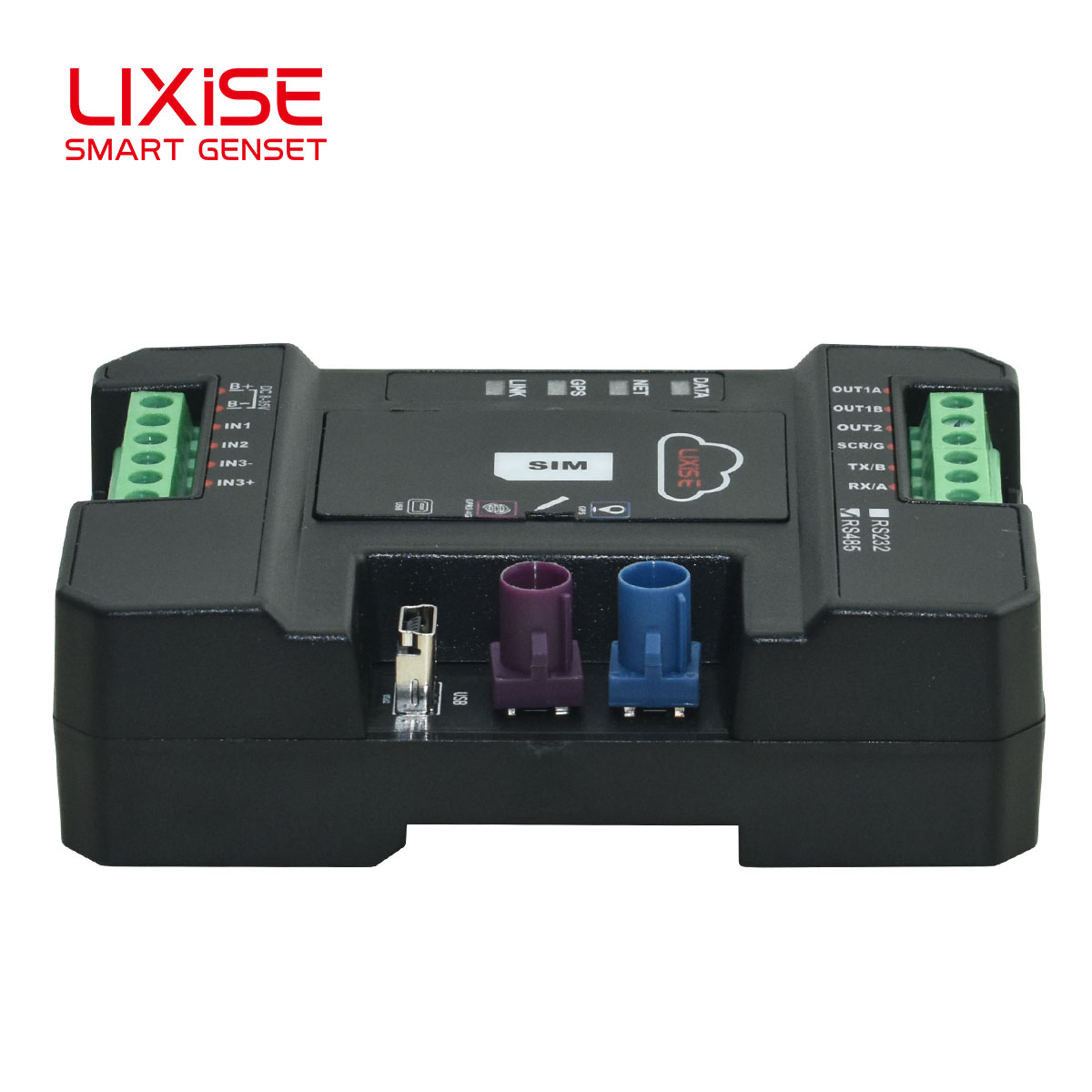
For RS485-dependent applications, the LXI990C-4G variant optimizes long-distance serial communication while maintaining the same voltage resilience and environmental specifications. Both models achieve standby consumption ≤30mA and peak power draw of 6W, critical metrics for auxiliary power budget management.
Certification and Compliance Considerations
Industrial equipment procurement increasingly requires comprehensive certification documentation. For domestic Chinese markets, CCC (China Compulsory Certificate), SRRC (State Radio Regulation), and CTA (Network Access License) certifications ensure regulatory compliance and network operator approval. Export applications demand CE marking for European markets and GCF (Global Certification Forum) certification for global carrier compatibility.
These certifications verify not only radio frequency performance but also electrical safety, electromagnetic compatibility, and environmental compliance. Equipment lacking proper certification may face deployment delays, operator rejection, or post-installation compliance issues.
Real-World Application Validation
The true test of industrial 4G terminals occurs in field deployment across diverse conditions. Generator set monitoring applications span rental fleets operating in remote construction sites, backup power systems in telecommunications towers, and prime power installations in off-grid facilities. Each scenario presents unique challenges: rental equipment experiences frequent relocation and voltage transients; tower installations endure extreme temperatures; off-grid systems demand maximum power efficiency.
Mass production validation confirms design robustness. Products deployed across thousands of installations reveal edge cases and long-term reliability patterns invisible in laboratory testing. The LIXISE LXI990 series has undergone extensive field verification through large-scale deployments, demonstrating stable operation in these demanding real-world conditions.
Implementation Best Practices
Successful deployment begins with proper site assessment. Verify auxiliary power availability, measuring both steady-state voltage and transients during generator start/stop cycles. Confirm cellular signal strength across all intended carrier networks, as 4G performance varies significantly by location and carrier. Identify controller communication protocols and verify interface compatibility before procurement.
Installation requires attention to antenna placement—GPS and cellular antennas must maintain clear sky view and separation from generator metal structures that cause signal shadowing. Routing communication cables away from high-voltage ignition wiring prevents electromagnetic interference. Implementing surge protection on all connections safeguards against voltage spikes from lightning or switching transients.
Configuration should leverage cloud platform capabilities where available. Remote parameter adjustment, firmware updates, and diagnostic access minimize site visit requirements. Establishing alert thresholds for battery voltage, signal strength, and communication status enables proactive maintenance before failures occur.
Conclusion
Selecting the optimal 4G terminal for generator set monitoring requires balancing voltage resilience, environmental durability, interface compatibility, and deployment efficiency. Industrial-grade solutions like the LIXISE LXI990 series demonstrate how integrated design—combining wide-voltage support (DC 8–35V), multi-interface compatibility (RS232/RS485/USB), and dual-module architecture (4G + GPS)—addresses the specific challenges of generator monitoring applications.
The shift from fragmented component systems to integrated terminals reduces installation complexity, improves reliability, and lowers total cost of ownership. As remote monitoring becomes standard practice for generator fleet management, choosing terminals purpose-built for industrial voltage and environmental conditions ensures long-term operational success.
https://dgfeirui.en.alibaba.com/
Dongguan Feirui Electronics Co.,Ltd. -
AuthorPosts

- You must be logged in to reply to this topic.