- This topic is empty.
-
AuthorPosts
-
2026-05-11 at 1:59 pm #7772
Milk powder is one of the most sensitive and widely consumed dairy products in the global food industry. It is used in infant formula, nutritional supplements, bakery products, beverages, and daily household consumption. Because milk powder is often consumed by vulnerable groups such as infants and elderly people, food safety requirements are extremely strict.
One of the most important quality control technologies in milk powder production is the food metal detector for milk powder. This system plays a critical role in identifying and removing metal contamination during processing, packaging, and distribution. Even the smallest metal fragment can compromise product safety, trigger recalls, and damage brand trust.
This article provides a comprehensive and original explanation of food metal detectors used in milk powder production, including working principles, applications, benefits, selection criteria, and industry best practices.
1. What Is a Food Metal Detector for Milk Powder?
A food metal detector for milk powder is a specialized industrial inspection system designed to detect metal contaminants in powdered dairy products during production.
These contaminants may include:
-
Ferrous metals (iron-based particles)
-
Non-ferrous metals (aluminum, copper)
-
Stainless steel fragments
In milk powder production, metal contamination can come from:
-
Grinding and drying equipment
-
Conveyors and mixers
-
Packaging machinery wear and tear
-
Maintenance tools accidentally entering the line
-
Raw material impurities
The metal detector ensures that contaminated milk powder is automatically rejected before it reaches consumers.
2. Why Metal Detection Is Critical in Milk Powder Production
Milk powder is considered a high-risk food product due to its fine particle structure, sensitive application, and strict safety requirements.
2.1 Infant Formula Safety Requirements
Milk powder is often used in infant formula. Even microscopic metal particles can pose serious health risks to infants, making detection systems essential.
2.2 Strict International Regulations
Milk powder exporters must comply with strict food safety standards such as:
-
HACCP
-
ISO 22000
-
FDA regulations
-
EU food safety directives
Metal detection is a mandatory part of many certification audits.
2.3 High Risk of Hidden Contamination
Because milk powder undergoes multiple processing stages such as spray drying, mixing, and packaging, there are many opportunities for metal contamination.
2.4 Brand Reputation Protection
Dairy brands rely heavily on consumer trust. A single contamination incident can lead to massive product recalls and long-term reputation damage.
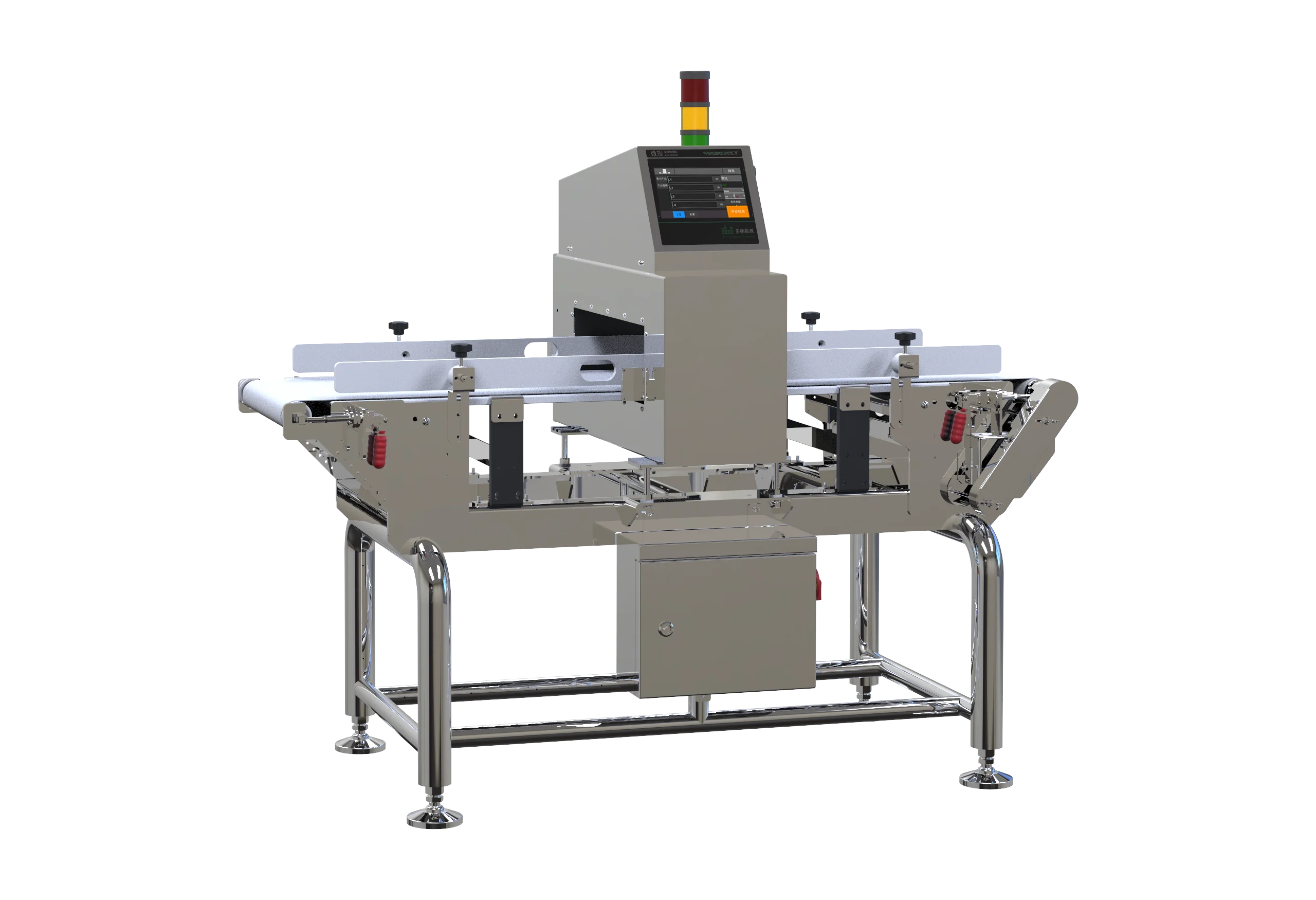
3. How a Food Metal Detector for Milk Powder Works
The operation of a food metal detector for milk powder is based on electromagnetic induction technology.
3.1 Electromagnetic Field Generation
The system creates a balanced electromagnetic field inside the detection head. When milk powder passes through this field, it is continuously scanned.
3.2 Detection of Metal Disturbance
If a metal particle is present, it disrupts the electromagnetic balance. The system immediately detects this signal change.
3.3 Signal Processing System
Advanced processors analyze the signal and distinguish between real metal contamination and product effects (such as moisture or density variations in powder).
3.4 Automatic Rejection Mechanism
Once contamination is confirmed, the system activates a rejection device:
-
Pneumatic diverters
-
Air blast rejection
-
Flap or gate systems
Contaminated milk powder is removed without stopping production.
4. Types of Metal Detectors Used for Milk Powder
Different production stages require different types of detection systems.
4.1 Gravity Fall Metal Detectors
Most commonly used for milk powder. The product flows downward through a detection tube, ensuring accurate inspection.
4.2 Pipeline Metal Detectors
Used in pneumatic conveying systems where milk powder is transported through pipelines.
4.3 Inline Conveyor Metal Detectors
Used for packaged milk powder products on conveyor belts.
4.4 Combination Systems
Some advanced systems combine metal detection with checkweighing or X-ray inspection for enhanced safety.
5. Key Features of a High-Performance Milk Powder Metal Detector
A reliable food metal detector for milk powder must include advanced features to handle the challenges of powder products.
5.1 High Sensitivity Detection
Milk powder requires extremely sensitive detection due to its fine texture and high safety requirements.
5.2 Product Effect Compensation
Powder products often create signal interference. Advanced systems use automatic compensation technology to eliminate false alarms.
5.3 Multi-Frequency Technology
Different frequencies improve detection accuracy for various powder densities.
5.4 Stainless Steel Construction
Hygienic design ensures compliance with dairy industry sanitation standards.
5.5 Easy Cleaning and Maintenance
Quick disassembly design allows fast cleaning to prevent cross-contamination.
5.6 Data Logging System
Modern systems record detection events for traceability and compliance reporting.
6. Applications in Milk Powder and Dairy Industry
Metal detectors are widely used across different stages of milk powder production:
6.1 Raw Milk Powder Processing
Detect contamination after spray drying and initial processing.
6.2 Blending and Mixing Stage
Ensure no metal enters during vitamin or nutrient blending.
6.3 Packaging Line Inspection
Detect contamination before final sealing in cans or bags.
6.4 Infant Formula Production
Highest sensitivity required due to strict safety standards.
6.5 Export Quality Control
Ensure compliance with international dairy import regulations.
7. Benefits of Using a Food Metal Detector for Milk Powder
7.1 Ensures Product Safety
Protects consumers from harmful metal contamination.
7.2 Reduces Financial Losses
Prevents costly product recalls and waste.
7.3 Improves Production Efficiency
Automatic rejection systems reduce manual inspection needs.
7.4 Enhances Brand Reputation
Demonstrates commitment to food safety and quality.
7.5 Supports Regulatory Compliance
Helps meet global food safety certification requirements.
8. How to Choose the Right Metal Detector for Milk Powder
Selecting the right system depends on several key factors:
8.1 Sensitivity Requirements
Infant formula requires higher sensitivity than general milk powder products.
8.2 Production Environment
Consider humidity, temperature, and vibration conditions.
8.3 Conveyor or Gravity System Compatibility
Choose a system that matches your production line design.
8.4 Packaging Type
Metalized packaging may require special detection calibration.
8.5 Budget and ROI
Higher-end systems reduce long-term risks and increase efficiency.
9. Common Challenges in Milk Powder Metal Detection
9.1 Product Effect Interference
Powder density and moisture can create false signals. Advanced systems solve this with adaptive filtering.
9.2 Low-Level Metal Detection Difficulty
Ultra-fine particles require high-frequency detection technology.
9.3 Environmental Noise
Electrical interference can affect accuracy if not properly shielded.
9.4 System Calibration Drift
Regular calibration is necessary to maintain consistent performance.
10. Maintenance and Operational Best Practices
To ensure long-term performance, proper maintenance is essential:
-
Daily cleaning of detection tube or conveyor
-
Weekly sensitivity testing
-
Regular calibration checks
-
Preventive maintenance of rejection systems
-
Operator training for proper usage
Good maintenance ensures stable performance and reduces false detection rates.
Conclusion
A food metal detector for milk powder is an essential part of modern dairy production. It ensures product purity, protects consumer health, and helps manufacturers comply with strict global food safety standards.
Given the sensitivity of milk powder—especially infant formula—metal detection is not optional but a critical requirement. Choosing the right system, maintaining it properly, and integrating it into a complete quality control system can significantly reduce risks and improve overall production efficiency.
As dairy manufacturing continues to advance, metal detection technology will become even more intelligent, precise, and integrated into smart production systems, ensuring safer milk powder for consumers worldwide.
http://www.vixdetect.net
vixdetect -
-
AuthorPosts

- You must be logged in to reply to this topic.