- This topic is empty.
-
AuthorPosts
-
2026-04-07 at 2:29 pm #7019
In modern industrial processes, precise measurement of fluid flow is essential for ensuring product quality, optimizing resource usage, and maintaining operational safety. Among the various flow measurement technologies available today, the Coriolis mass flow meter is widely recognized as one of the most reliable and accurate solutions.
But how accurate is a Coriolis mass flow meter in real-world applications? What factors influence its performance, and why is it often chosen for high-demand industries such as oil and gas, chemical processing, food and beverage, and pharmaceuticals?
This article explores the principles behind Coriolis technology, its accuracy characteristics, influencing factors, and practical limitations, helping you understand why it is considered the gold standard in mass flow measurement.
1. Working Principle of a Coriolis Mass Flow Meter
To understand accuracy, it is important to first understand how a Coriolis flow meter works.
A Coriolis mass flow meter measures mass flow directly based on the Coriolis effect—a physical principle discovered by French scientist Gaspard-Gustave de Coriolis. Inside the meter, fluid flows through vibrating tubes. When fluid moves through these oscillating tubes, it causes a phase shift or twist in the vibration pattern.
This twist is directly proportional to the mass flow rate of the fluid. Sensors detect the degree of distortion, and the electronics convert it into a precise mass flow reading.
Unlike traditional flow meters that infer flow indirectly (such as volumetric flow meters), Coriolis meters measure mass directly, which eliminates many sources of error.
2. Typical Accuracy of Coriolis Mass Flow Meters
Under ideal operating conditions, Coriolis mass flow meters are among the most accurate flow measurement devices available on the market.
Typical accuracy ranges include:
-
Standard accuracy: ±0.1% to ±0.2% of mass flow rate
-
High-performance models: up to ±0.05%
-
Repeatability: often better than ±0.05%
This level of precision makes them suitable for applications where even small measurement errors can lead to significant financial or quality losses.
When compared to other technologies like turbine flow meters, vortex flow meters, or differential pressure flow meters, Coriolis meters consistently outperform in terms of both accuracy and repeatability.
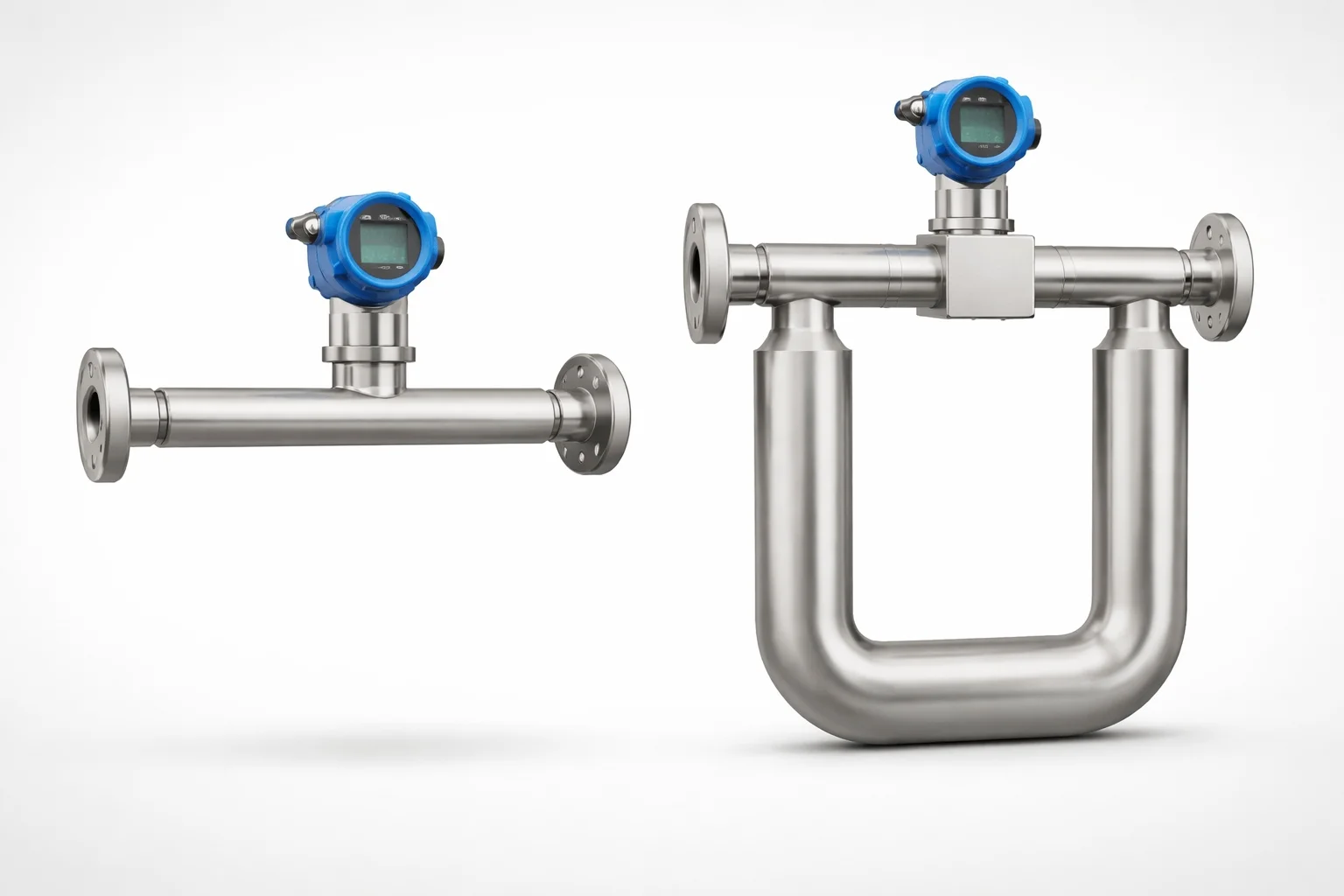
3. Why Coriolis Flow Meters Are So Accurate
Several design and operational advantages contribute to their exceptional accuracy:
3.1 Direct Mass Measurement
One of the most important advantages is that Coriolis meters measure mass flow directly, rather than relying on volume conversion. This eliminates the need for compensation due to temperature, pressure, or fluid density changes.
3.2 No Dependence on Fluid Properties
Traditional flow meters often require knowledge of fluid density, viscosity, or conductivity. Coriolis meters are largely independent of these properties, meaning they can handle a wide range of fluids, including:
-
Liquids
-
Gases
-
Slurries
-
Highly viscous fluids
3.3 Minimal Moving Parts
Most Coriolis meters have no internal moving mechanical components, which reduces wear and tear and ensures long-term stability of measurement accuracy.
3.4 High Sensitivity Sensors
Advanced sensors detect extremely small changes in tube vibration, allowing the system to capture very subtle flow variations with high precision.
4. Factors That Affect Measurement Accuracy
Although Coriolis meters are highly accurate, real-world performance can be influenced by several factors.
4.1 Flow Rate Range
Accuracy is typically highest within the recommended flow range. At extremely low flow rates, signal noise may slightly affect precision.
4.2 Fluid Properties
While Coriolis meters are less dependent on fluid characteristics, extreme conditions can still influence readings:
-
Highly aerated liquids may reduce stability
-
Multi-phase flows (gas-liquid mixtures) can introduce measurement noise
-
Very low-density gases may reduce sensitivity
4.3 Installation Conditions
Proper installation is critical for maintaining accuracy:
-
Pipe stress or misalignment can distort measurements
-
Vibration from nearby equipment may interfere with sensor readings
-
Incorrect grounding can introduce electrical noise
4.4 Temperature and Pressure Changes
Although modern devices include compensation mechanisms, extreme or rapid fluctuations in temperature and pressure may still affect performance in certain cases.
4.5 Calibration and Maintenance
Like all precision instruments, Coriolis meters require periodic calibration. Drift over time is minimal, but calibration ensures sustained accuracy over long operational periods.
5. Comparison with Other Flow Meter Technologies
To better understand the accuracy advantage of Coriolis meters, it is useful to compare them with other common technologies.
5.1 Volumetric Flow Meters
Volumetric meters measure volume instead of mass. This means they require additional sensors for temperature and pressure compensation. Even with compensation, accuracy is generally lower than Coriolis systems.
5.2 Turbine Flow Meters
Turbine meters are accurate under stable conditions but are sensitive to viscosity changes, wear, and flow profile disturbances.
5.3 Differential Pressure Flow Meters
These systems infer flow based on pressure drop, which introduces multiple variables and potential errors, making them less accurate overall.
5.4 Ultrasonic Flow Meters
Ultrasonic meters offer non-invasive measurement but can be affected by fluid composition and require clean, homogeneous fluids for best performance.
In comparison, Coriolis meters provide direct, stable, and highly repeatable measurements across a wide range of applications.
6. Industrial Applications Requiring High Accuracy
The high accuracy of Coriolis flow meters makes them indispensable in industries where precision is critical.
6.1 Oil and Gas Industry
Used for custody transfer, blending, and pipeline monitoring where even a 0.1% error can result in significant financial discrepancies.
6.2 Chemical Processing
Ensures precise dosing of raw materials, improving product consistency and safety.
6.3 Food and Beverage Industry
Used for measuring ingredients such as syrups, dairy products, and liquid additives with high precision.
6.4 Pharmaceutical Industry
Critical for accurate dosing of active pharmaceutical ingredients (APIs), where regulatory compliance demands extremely tight tolerances.
6.5 Semiconductor Manufacturing
Used in ultra-clean chemical delivery systems where even microscopic deviations can affect product yield.
7. Advantages Beyond Accuracy
While accuracy is the primary reason for choosing Coriolis meters, they also offer additional benefits:
-
Multi-parameter measurement: Simultaneous measurement of mass flow, density, temperature, and sometimes viscosity
-
Wide operating range: Suitable for both very low and very high flow rates
-
Low maintenance: No moving parts reduce downtime and maintenance costs
-
High reliability: Stable performance over long periods
-
Versatility: Works with a wide variety of fluids and process conditions
8. Limitations to Consider
Despite their advantages, Coriolis meters are not perfect for every application.
8.1 High Cost
They are generally more expensive than other flow meter types, which may be a limiting factor for budget-sensitive projects.
8.2 Pressure Drop
Some designs may introduce a slight pressure drop, which could affect low-pressure systems.
8.3 Size Limitations
Large pipe diameters can make Coriolis meters bulky and expensive compared to alternative technologies.
8.4 Sensitivity to External Vibration
Although modern designs mitigate this issue, extreme vibration environments may still require additional isolation measures.
9. Real-World Accuracy Performance
In practice, the actual performance of a Coriolis flow meter depends on how well it is selected, installed, and maintained.
When properly applied, most industrial users report:
-
Stable long-term measurement accuracy
-
Minimal recalibration needs
-
Consistent performance across different fluid types
-
Reliable operation under varying process conditions
This is why Coriolis technology is often considered the benchmark for precision flow measurement.
http://www.accurainstrument.com
accurainstrument -
-
AuthorPosts

- You must be logged in to reply to this topic.