- This topic is empty.
-
AuthorPosts
-
2026-11-02 at 7:28 pm #12781
Airport concourses present one of the most demanding environments for digital signage. Floor-to-ceiling glass curtain walls, high passenger throughput, and a need to preserve natural daylight all make conventional LED displays a poor fit — they are typically heavy, thick, and opaque, blocking the very light and views that define modern terminal architecture. For procurement teams and design consultants evaluating transparent LED screen options for concourse environments, the technology developed under the Whaley-LED brand by Shenzhen Showho offers a technically documented answer worth examining in detail.
Why Airport Concourses Need a Different Display Category
Unlike retail storefronts or indoor exhibition halls, airport concourses combine several constraints at once: expansive glass facades, long viewing distances across open terminal space, continuous operating hours, and strict reliability expectations. A display that blocks light undermines the architectural intent of a glass curtain wall, while a display that cannot withstand sustained operation becomes a maintenance liability in a high-traffic public facility. This is precisely the scenario that Shenzhen Showho identifies as the core industry pain point behind its holographic film screen development: conventional LED displays are often heavy, thick, and block light, while glass surfaces and creative installation scenarios require displays that stay transparent, light, and adaptable to curves.
The LED Holographic Film Screen Approach
Shenzhen Showho’s response is the LED Holographic Screen series, part of its broader LED Holographic Transparent Screen product line, explicitly listed with airport concourses among its industry adaptations alongside commercial display windows, commercial curtain walls, exhibition halls, creative displays, entertainment and cultural tourism, automobile 4S stores, building curtain walls, and commercial centers.
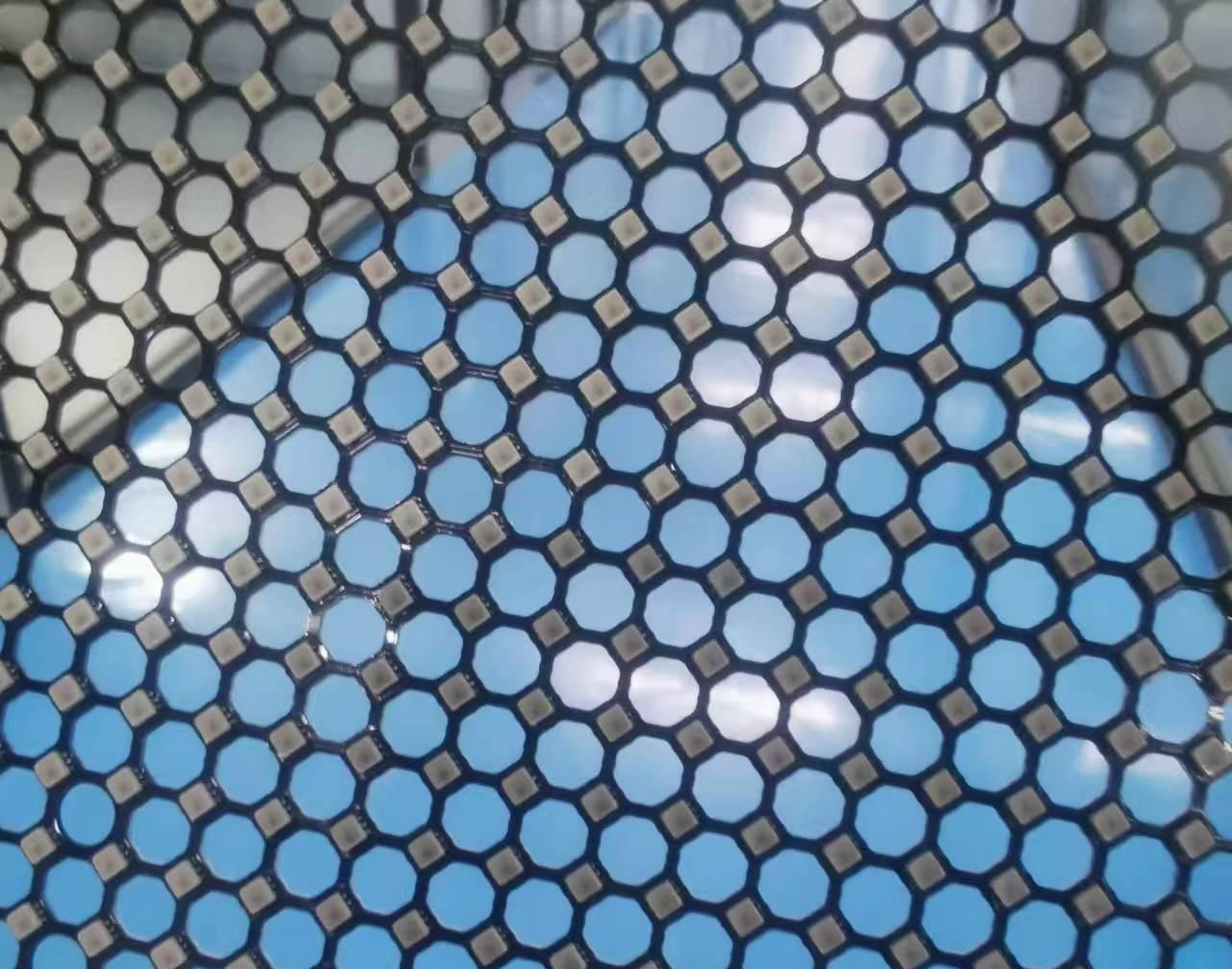
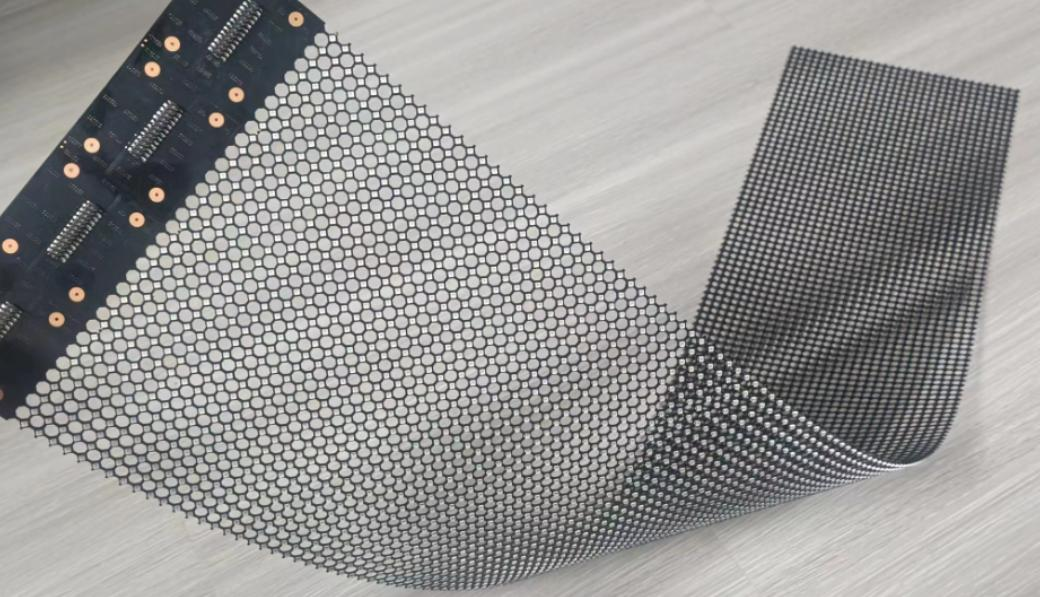
The core design principle is a frameless, film-type structure built on a PCB with hollow mesh circuits, rather than a conventional opaque panel. This allows the screen body to stay below 2 mm thick and weigh less than 3 kg per square meter across the series, which reduces structural load requirements — a relevant consideration when mounting displays on existing glass curtain walls in a terminal building. Sensory permeability across the entire series exceeds 80%, meaning daylight and sightlines through the glass are largely preserved when the screen is not actively displaying content.
Matching Pixel Pitch to Concourse Scale
One practical question for airport applications is viewing distance, since concourses range from narrow gate corridors to vast open halls. The product line offers pixel pitch options from 2.5 mm to 50 mm, each calibrated to a different viewing distance band. For example, the PH2.5 model is suited to viewing distances of 3 m to 150 m, while the PH50 model extends to viewing distances of 50 m to 350 m, with brightness ranging from 800 cd/m² to 5000 cd/m² depending on the model. This range allows a concourse design team to select a pitch that matches the physical scale of a specific terminal zone rather than applying a single generic specification everywhere.
Technical Reliability Metrics
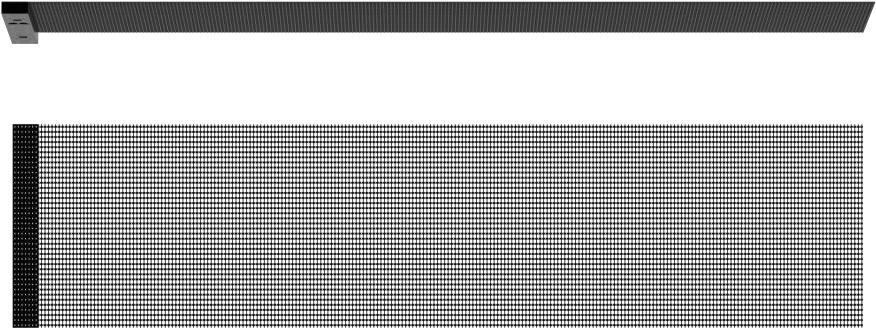
Reliability is a legitimate concern for any public-facility display expected to run continuously. Across the series, documented specifications include a refresh rate greater than 3840 Hz, a frame change rate greater than 60 Hz, gray level of at least 16 bit, an IP rating better than IP45, an average lifespan of more than 100,000 operating hours, an MTBF greater than 10,000 hours, and a dead pixel rate of less than 1 in 10,000 with discrete distribution. The attenuation rate is documented at less than 0.05% within two years. These figures stem from Shenzhen Showho’s self-managed technology chain, which spans IC bare chip architecture and functional design, LED bracket, LED packaging, and electronic circuit design — an integrated approach supported by dozens of invention and utility model patents related to film screens. The series also uses a self-developed IC described as having strong driving performance, combined with lamp-driver integrated LED design.
Installation Flexibility for Architectural Integration
Airport terminals rarely offer flat, uniform mounting surfaces everywhere — curved walls, corner sections, and cylindrical columns are common in concourse architecture. The LED Holographic Film Screen supports arbitrary cutting and bending, with curved installation at a radius greater than 600 mm for corner screens, cylindrical surfaces, and S-shaped inner and outer arcs. Installation methods include direct adhesive mounting, hanging display, and fixed installation, giving project teams multiple ways to integrate the screen into existing glass or structural elements without extensive retrofitting. Splice height is documented at up to 8 m in one description, with a later note specifying up to 6 m without power supply in the middle, and one-side length not limited — relevant for the tall, continuous glass runs typical of terminal concourses.
Control System Compatibility
For integration with existing building management or AV infrastructure, the screens are compatible with Colorlight and NovaStar control systems, supporting both synchronous and asynchronous control modes. This compatibility reduces the integration burden for system integrators working on airport engineering projects that already standardize on one of these control platforms.
Customization Through OEM and ODM
Because airport concourse projects frequently involve bespoke dimensions, curvature, and mounting conditions, Shenzhen Showho structures its delivery model around in-house production supporting rapid market response and custom OEM and ODM projects. The company’s integrated R&D, structural design, and manufacturing operations are positioned specifically to accommodate overseas commercial display and engineering projects, a business unit established in 2025 under the Whaley-LED brand. This OEM/ODM pathway allows airport-specific requirements — exact module sizing, cutting profiles, or curvature radii — to be addressed directly rather than forcing a project into a fixed off-the-shelf configuration.
Weighing the Decision
No single display specification suits every concourse. A narrow boarding corridor with shorter viewing distances benefits from a finer pixel pitch such as PH2.5 or PH3.91, while an expansive central hall viewed from greater distances may be better served by a coarser pitch such as PH20 or higher, where visual permeability also increases — reaching above 95% at the PH20 and PH30 levels, and above 99% at PH50. Project teams should weigh viewing distance, desired transparency level, mounting surface geometry, and brightness requirements against ambient lighting conditions in the specific terminal zone before finalizing a model.
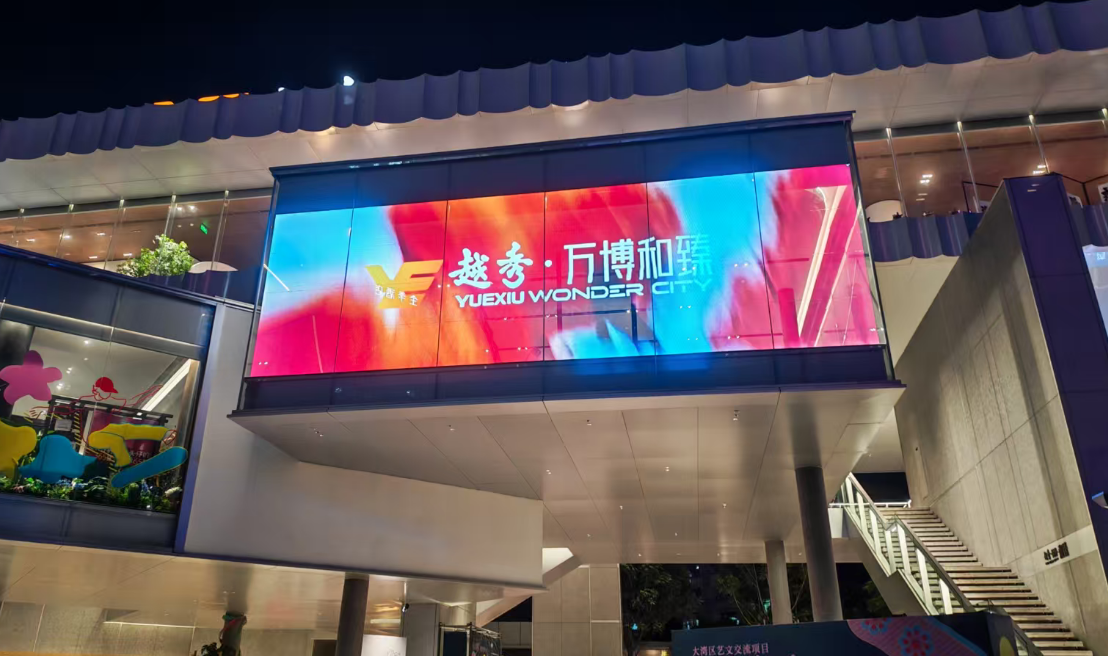
Taken together, the documented technical profile — thin, lightweight, highly transparent, mechanically flexible, and backed by a self-managed component and patent base — positions the LED Holographic Film Screen series from Shenzhen Showho, marketed internationally as Whaley-LED, as a technically substantiated option for airport concourse applications where preserving daylight and architectural transparency matters as much as display performance. Further technical detail and product specifications are available through the company’s official website at http://www.whaleydisplay.com/.
http://www.whaleydisplay.com/
Shenzhen Showho (Whaley-LED) -
AuthorPosts

- You must be logged in to reply to this topic.