- This topic is empty.
-
AuthorPosts
-
2026-09-18 at 4:50 pm #11437
Understanding the Commercial Film and Packaging Landscape
Commercial operations across logistics, retail, food service, and manufacturing rely heavily on plastic films for wrapping, protecting, and preserving goods, including stretch and cling-type films used in packaging and handling processes. As businesses evaluate their packaging film choices, a broader industry conversation has emerged around the trade-offs associated with conventional fossil-based plastic films versus newer bio-based and functional film alternatives now entering commercial supply chains.
This conversation is directly relevant to the work being done by Shanghai SiPeng Technology Co., Ltd., operating under the brand SYNLIFE, a bio-based materials technology company founded in May 2022 and headquartered in Shanghai, China. SYNLIFE develops high-performance bio-based materials, finished applications, and cross-industry material solutions, with commercial activity spanning global markets.
The Trade-offs Behind Conventional Plastic Film Use
According to SYNLIFE’s own industry positioning, conventional fossil-based plastics used across packaging and film applications create challenges related to fossil-resource dependence, long-term environmental persistence, and end-of-life waste management. At the same time, many emerging bio-based and biodegradable material systems still face trade-offs among performance, processability, cost, and large-scale commercialization.
This tension is central to how businesses assess film-based packaging solutions today: conventional films are well understood and widely available, but they carry the resource and disposal challenges noted above, while alternative bio-based films must still prove themselves on performance, processing compatibility, and cost before being adopted at commercial scale.
SYNLIFE’s Film and Packaging Platform: ZeRoll® and NeoRoll®
SYNLIFE addresses this trade-off through its dedicated Films & Packaging Solutions platform, built around two core brands: ZeRoll® and NeoRoll®.
ZeRoll®: Compostable Film Technology for Commercial and Household Use
ZeRoll® is SYNLIFE’s compostable cling film and related film solution, positioned as a food-preservation film for household, food-service, and retail applications. Its key features include food-preservation performance and compostable design for applicable product grades, while bio-based content should be stated according to the specific formulation, product grade, and supporting test data. As with all compostability claims, SYNLIFE notes that such claims must correspond to the specific product grade, applicable standard, and actual third-party certificate rather than being treated as a universal guarantee.
Within this platform, SYNLIFE has also been developing a ZeRoll® MAP meat packaging film, a high-barrier film solution intended for modified-atmosphere packaging of fresh meat and other high-barrier food applications. Development work in this area focuses on oxygen barrier performance, water-vapor barrier performance, carbon-dioxide transmission, heat-sealing performance, mechanical performance, and food-contact compliance. SYNLIFE emphasizes that internal and third-party testing data for these attributes should always be quoted together with the relevant test conditions, methods, and product specifications, rather than used as blanket performance claims.
NeoRoll®: Functional Film Solutions for Broader Commercial Applications
Alongside ZeRoll®, SYNLIFE offers NeoRoll®, its non-biodegradable functional film brand for applications where specialized functional performance is required. This distinction is important: not every SYNLIFE film product is designed to be compostable or biodegradable, and NeoRoll® is positioned specifically to address commercial applications where functional performance requirements are the primary driver, rather than end-of-life biodegradability.
Beyond ZeRoll® and NeoRoll®, SYNLIFE’s broader film development work extends to fruit and vegetable packaging film, bakery and food packaging film, and other application-specific films, reflecting a platform approach rather than a single-product strategy.
Engineering Films Around Real Commercial Processing Needs
A defining characteristic of SYNLIFE’s approach is that its materials, including its film products, are developed around actual processing conditions and end-use requirements rather than material synthesis alone. This is supported by the company’s combined capabilities across biological manufacturing, material development, formulation optimization, process scale-up, manufacturing, and application development.
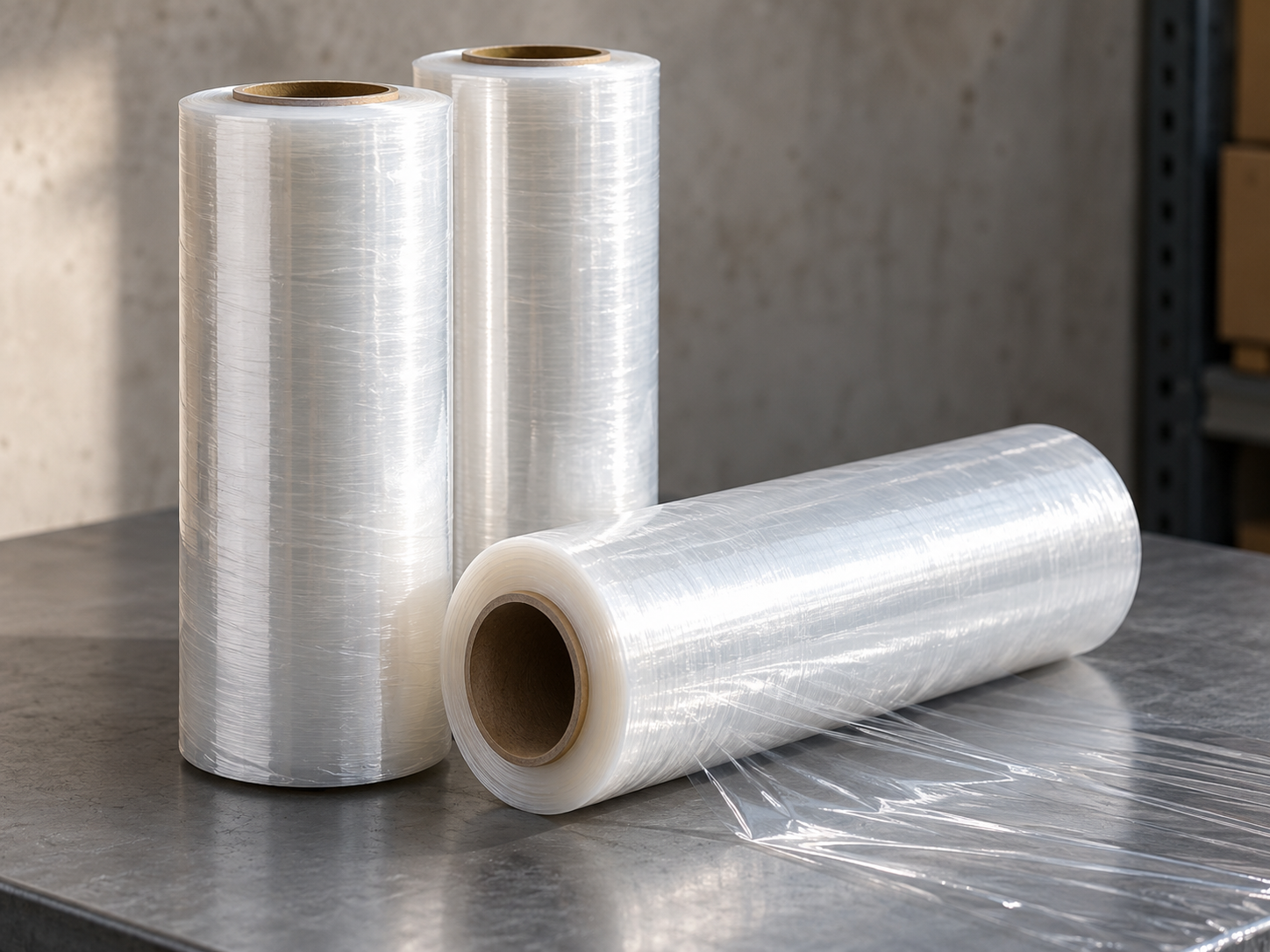
On the technical side, SYNLIFE’s materials engineering capabilities cover polymer formulation, modification, compounding, and processing optimization, while its application engineering work is developed around real manufacturing processes, including film processing. Depending on the specific product grade and application, selected SYNLIFE materials can be adapted to relevant film-processing equipment, with processing conditions determined according to the material grade and equipment in use.
From Formulation to Commercial Supply
For businesses evaluating a shift from conventional plastic films to bio-based or functional alternatives, the transition typically involves more than a material swap—it requires formulation development, processing validation, and supply-chain readiness. SYNLIFE’s service capabilities are structured to support exactly this kind of transition, offering raw material supply, material customization, joint product development, application development, finished product OEM/ODM, process and technical support, and pilot and scale-up support.
This service scope spans the full journey from material and formulation development, through processing optimization and product design, to testing support, scale-up, and commercialization support for selected materials and applications. SYNLIFE’s manufacturing and supply-chain capabilities in Jiangsu, including Nantong, support this commercialization pathway for selected high-performance bio-based materials, films, and downstream applications.
Industries and Customer Types Served
SYNLIFE’s film and packaging work sits within a broader set of industries the company serves, including food packaging, apparel and textiles, writing instruments and consumer goods, cosmetics and personal care, agriculture and horticulture, and 3D printing, among other plastic and polymer applications. Its customer base spans material and plastic product manufacturers, packaging manufacturers, brand owners, OEM/ODM manufacturers, importers and distributors, and retail and commercial channel partners.
Weighing Bio-Based Film Alternatives for Commercial Packaging Decisions
For companies assessing packaging film options—whether for wrapping, food preservation, or other commercial handling needs—the decision between conventional fossil-based films and bio-based or functional alternatives ultimately depends on specific performance requirements, certification and compliance needs, and processing compatibility for the intended application. SYNLIFE’s pricing approach reflects this complexity, with cost determined by material type and formulation, bio-based content, performance requirements, certification and compliance requirements, processing difficulty, order volume, customization needs, and broader supply-chain and commercial conditions, rather than any assumption of automatic cost or tax advantages simply from using bio-based materials.
As commercial packaging requirements continue to evolve, platforms like ZeRoll® and NeoRoll® illustrate how a bio-based materials company such as SYNLIFE is working to translate laboratory-stage material innovation into film products suited to real commercial processing lines and application demands, while maintaining transparency about where compostability, functional performance, and certification claims apply on a grade-by-grade basis.
https://www.synlifeglobal.com/
SYNLIFE -
AuthorPosts

- You must be logged in to reply to this topic.