- This topic is empty.
-
AuthorPosts
-
2026-09-11 at 4:29 pm #11169
In sheet metal fabrication, cutting is often the first operation that determines whether the following processes run smoothly. A small dimensional deviation at the cutting stage can become a much larger problem during bending, welding, assembly, or final inspection.
For manufacturers working with stainless steel, carbon steel, aluminum, and other sheet materials, reliable cutting equipment is therefore more than a basic production tool. It is an important part of maintaining dimensional consistency and controlling the overall manufacturing process.
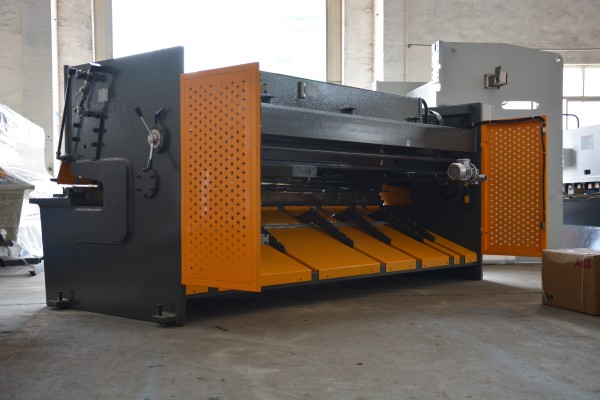
A precision hydraulic shearing machine combines hydraulic cutting power with programmable positioning and automated adjustments to provide more stable and repeatable results. Features such as CNC back-gauge control, automatic blade-gap adjustment, programmable cutting sequences, and rigid machine construction can help reduce operator-dependent errors while improving production efficiency.
Cutting Accuracy Sets the Foundation for Later Processes
Shearing determines the basic dimensions of a workpiece before it moves to the next manufacturing stage. If the initial sheet size is incorrect, downstream processes may have to compensate for the error—or reject the component altogether.
For example, consider the production of an electrical enclosure. The sheet may need to be cut to a specific length before being bent into a cabinet body. If the cutting dimension varies between batches, the bending position can also change. This may eventually result in uneven joints, incorrect assembly dimensions, or additional adjustment during production.
The same issue can occur when producing:
-
HVAC components
-
Electrical cabinets and enclosures
-
Automotive sheet metal parts
-
Stainless steel equipment
-
Architectural panels
-
Machinery covers
-
Metal furniture
-
General fabricated components
Improving accuracy at the shearing stage can therefore reduce dimensional problems throughout the production chain.
Hydraulic Cutting Provides Controlled Shearing Force
Cutting different metal thicknesses requires sufficient and stable force. The hydraulic system is responsible for generating the power needed to drive the shearing mechanism through the material.
Compared with simpler mechanical systems, a properly designed hydraulic drive can provide controlled movement during the cutting cycle. This helps the machine maintain stable operation when processing materials within its rated capacity.
Hydraulic overload protection is another useful feature for industrial applications. When abnormal operating conditions occur, the protection system can help reduce the risk of excessive stress on important machine components.
For production managers, the key advantage is not simply cutting force. Consistent hydraulic operation contributes to repeatable cutting cycles and supports reliable long-term machine performance.
CNC Back-Gauge Control Reduces Positioning Errors
One of the most common sources of variation in manual shearing is workpiece positioning.
When operators measure and position every sheet manually, small differences can occur from one piece to another. These variations may become more noticeable when hundreds or thousands of parts are produced.
A CNC-controlled back gauge provides a more systematic approach.
Instead of repeatedly measuring the required dimension, the operator can enter the cutting position into the control system. The back gauge then moves automatically to the programmed location.
This can provide several practical benefits:
-
Reduced manual measurement
-
More consistent positioning
-
Faster setup for repeated jobs
-
Easier production of multiple dimensions
-
Improved batch-to-batch consistency
For example, when a fabrication shop regularly produces panels in several different lengths, stored CNC programs can make it easier to switch between production requirements without manually recalculating every setting.
Some Bendcut CNC configurations can store up to 100 programs, with each program supporting up to 20 work steps. This capability is particularly useful for workshops handling multiple products or recurring orders.
Automatic Blade Clearance Helps Maintain Cut Quality
Blade clearance is another important variable in the shearing process.
Different materials and sheet thicknesses require appropriate blade-gap settings. Incorrect clearance can contribute to burrs, deformation, poor edge quality, or unnecessary blade wear.
Traditional manual adjustment requires operator knowledge and additional setup time. It can also introduce variation when the machine is frequently switched between different materials or thicknesses.
Automatic blade-gap adjustment makes this process more controlled. The required setting can be incorporated into the programmed production conditions, reducing repeated manual intervention.
This is especially valuable for manufacturers processing a wide range of sheet specifications. Instead of treating blade adjustment as an independent setup task, the machine can integrate it into the overall cutting procedure.
Programmable Cutting Makes Repetitive Production Easier
Production efficiency is not determined by cutting speed alone. The number of manual operations required for each cutting cycle also affects productivity.
A CNC hydraulic shearing machine can automate several routine adjustments, allowing operators to spend less time setting dimensions and more time handling material and monitoring production quality.
A typical programmed workflow may include:
-
Loading the sheet material.
-
Selecting the appropriate cutting program.
-
Positioning the back gauge automatically.
-
Aligning the workpiece with the machine supports.
-
Starting the shearing cycle.
-
Removing the finished piece.
-
Repeating the programmed operation.
When the required dimensions and work steps are stored in the controller, repeated jobs become easier to standardize.
For high-volume production, this can reduce operator variability and make production results more predictable.
Front Supports Improve Material Handling
Large sheets can be difficult to position, especially when the material is heavy, long, or flexible.
Front support systems help operators control the workpiece during positioning and measurement. Keeping the sheet properly supported can reduce movement before the cut and make alignment easier.
This is particularly important when processing wide stainless steel or carbon steel sheets.
Depending on the production configuration, additional material-handling equipment can further improve workflow. A pneumatic piece receiver, for example, can assist with handling finished pieces after shearing.
Material handling should therefore be considered as part of the complete machine configuration rather than as a separate issue from cutting accuracy.
Machine Rigidity Supports Stable Shearing
Precision is not created by the CNC controller alone. The mechanical structure of the machine also plays an important role.
During shearing, the frame and major components are exposed to significant mechanical forces. A rigid machine structure helps maintain the relative position of the cutting components and reduces unwanted movement during operation.
Bendcut hydraulic shearing machines use a welded steel plate construction designed for structural strength and stability.
For industrial users, this means machine evaluation should include more than specifications such as maximum cutting thickness and motor power. Frame construction, component stability, hydraulic performance, blade configuration, and control technology should all be considered together.
A sophisticated control system cannot fully compensate for an unsuitable or insufficiently rigid mechanical structure.
Safety and Accuracy Should Be Considered Together
A controlled production environment requires both precision and safe machine operation.
Features such as an emergency-stop function on the foot pedal and machine alarm functions can help operators respond to abnormal conditions more effectively.
However, machine safety should always be considered as part of a broader system that includes operator training, machine guarding, maintenance procedures, correct operating practices, and workplace safety management.
When operators can control the machine confidently and respond quickly to abnormal conditions, the production process becomes easier to manage and standardize.
Who Can Benefit from a Precision Hydraulic Shearing Machine?
Not every workshop requires the same level of automation. The appropriate machine configuration depends on production volume, material type, dimensional requirements, and the number of different jobs being processed.
A precision hydraulic shearing machine can be particularly suitable for manufacturers that:
-
Process stainless steel, carbon steel, aluminum, or similar sheet materials
-
Require consistent cutting dimensions
-
Produce repeated batches of components
-
Handle multiple sheet thicknesses
-
Manufacture parts with different cutting lengths
-
Need programmable production sequences
-
Want to reduce manual setup
-
Integrate shearing with bending and other fabrication operations
For occasional cutting work, a simpler machine may be sufficient. However, for fabrication companies with frequent production changes and repeat orders, CNC automation can provide substantial operational advantages.
What Should Buyers Evaluate Before Selecting a Shearing Machine?
Maximum cutting thickness is only one part of machine selection.
A better approach is to evaluate the machine according to the actual production environment.
Material
Determine whether the machine will primarily process stainless steel, carbon steel, aluminum, or a combination of materials.
Thickness
Consider both the maximum thickness and the thickness range most frequently processed. A machine should be selected based on regular production requirements rather than an occasional maximum value.
Cutting Length
The machine's cutting length should accommodate the largest commonly processed sheets.
Production Volume
High-volume production can benefit significantly from CNC programming, automatic positioning, and reduced setup time.
Accuracy Requirements
If the cut dimensions directly affect bending, welding, or assembly, CNC back-gauge control and automated blade adjustment can provide greater process consistency.
Material Handling
For large or heavy sheets, front supports and optional receiving systems can improve both handling efficiency and positioning stability.
Maintenance and Safety
Hydraulic systems, blades, control components, emergency-stop functions, and alarm systems should all be considered when evaluating the machine's long-term operating requirements.
Bendcut Machinery's Hydraulic Shearing Solutions
Bendcut Machinery specializes in hydraulic shearing machines, hydraulic press brakes, V grooving machines, and related sheet metal processing equipment.
Its hydraulic shearing equipment combines a welded steel structure with hydraulic drive technology and CNC control options. Depending on the configuration, features can include automatic back-gauge positioning, blade-gap adjustment, programmable work steps, error alarms, front supports, and pneumatic piece receiving.
The company's equipment has received CE approval, while its technical team focuses on developing machine configurations for different sheet metal fabrication requirements.
For manufacturers looking for a programmable hydraulic swing beam shearing machine, the combination of hydraulic cutting power, structural rigidity, CNC positioning, and automated adjustment can provide a practical solution for improving production consistency.
The objective is not simply to make each cutting cycle faster. More importantly, the machine should help manufacturers create a repeatable process that is easier to operate, maintain, and integrate with downstream fabrication.
Conclusion
Sheet metal cutting accuracy has a direct influence on the quality and efficiency of subsequent manufacturing operations.
A precision hydraulic shearing machine addresses this challenge through several complementary technologies. Stable hydraulic power provides controlled cutting force, while CNC back-gauge positioning improves dimensional repeatability. Automatic blade-gap adjustment helps maintain appropriate cutting conditions, and programmable work steps reduce repeated manual setup.
At the same time, a rigid machine frame, suitable material supports, receiving systems, and safety functions contribute to a more controlled production environment.
For manufacturers processing stainless steel, carbon steel, aluminum, and other sheet materials, the right shearing machine should therefore be evaluated as part of the entire fabrication workflow.
When machine capacity, hydraulic performance, CNC control, material handling, structural rigidity, and production requirements are properly matched, a precision hydraulic shearing machine can provide a dependable foundation for accurate, repeatable, and efficient sheet metal production.
http://www.bendcutmachines.com
Bendcut -
-
AuthorPosts

- You must be logged in to reply to this topic.