- This topic is empty.
-
AuthorPosts
-
2026-08-07 at 7:30 pm #10061
Battery energy storage enters a data centre design when the operator needs faster response than a generator set can provide, lower emissions from standby operation, or both. In most current designs it works alongside diesel generation rather than replacing it, because sustained outage cover still depends on fuel or on an energy capacity large enough for the required duration.
This article sets out the capabilities that matter for critical loads, the MPMC HBD-A configurations documented at data centre scale, and the design questions to settle before selecting a system.
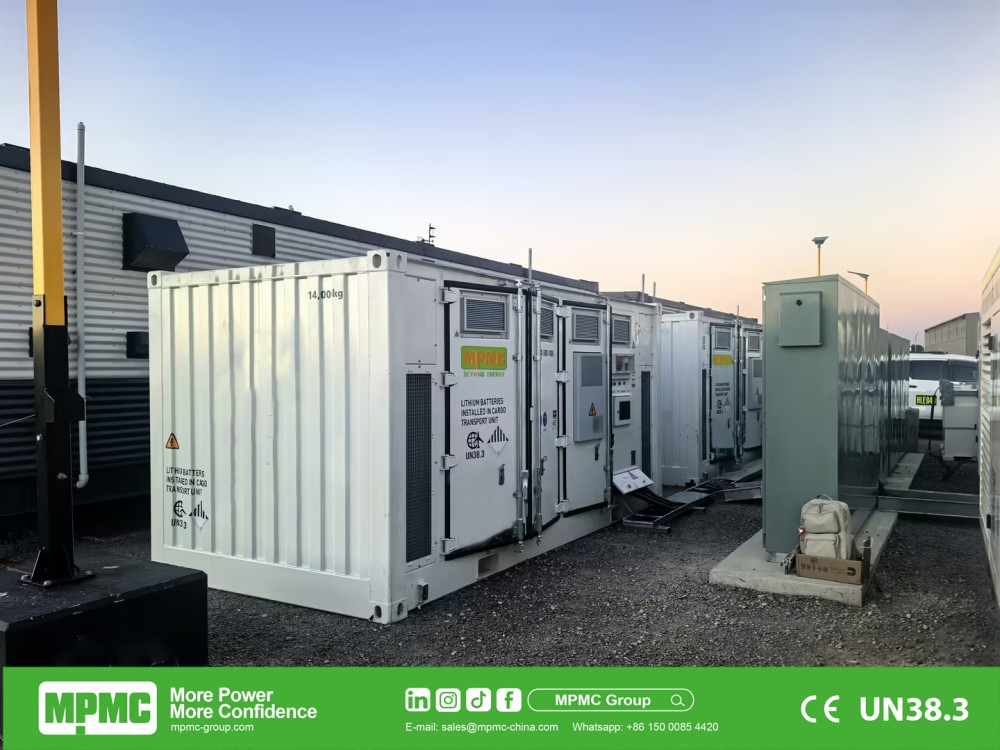
MPMC HBD-A Series containerised battery energy storage systems.
Why Conventional Standby Power Alone Is Being Reconsidered
A data centre power chain has traditionally split responsibility between two assets. The UPS covers the seconds between mains failure and generator availability. The generator set covers the outage itself.
Three pressures are changing that arrangement.
The first is emissions accounting. Standby generator testing and run hours are increasingly reported, and diesel run time is a visible line in that reporting.
The second is grid interaction. Demand charges, capacity payments and grid-support programmes make an asset that can discharge on command commercially relevant rather than purely defensive.
The third is renewable integration. On-site or contracted solar generation produces surplus at times that do not match facility demand, and storage is the mechanism that reconciles the two.
None of these removes the requirement for reliability. They change what the reliability chain is asked to include.
The Capabilities That Matter for Critical Loads
Four characteristics separate a battery system suitable for critical load support from a general-purpose storage product.
Response speed. Critical loads cannot tolerate a gap. Battery systems respond in milliseconds, which is why they can bridge disturbances that a generator start sequence cannot.
Grid-forming and black start. A system that only follows an existing grid reference cannot re-establish one. Grid-forming capability allows the battery to set voltage and frequency itself, and black start allows the site to restore its own network after an outage without waiting for the utility.
Power and energy in the right ratio. Rated power determines how much load can be supported. Capacity determines for how long. A high-power system with limited energy cannot cover an extended event, and a high-energy system with limited power cannot support the full load.
Chemistry and thermal control. For an installation near critical infrastructure, cell chemistry, thermal management and fire protection are design constraints rather than preferences.
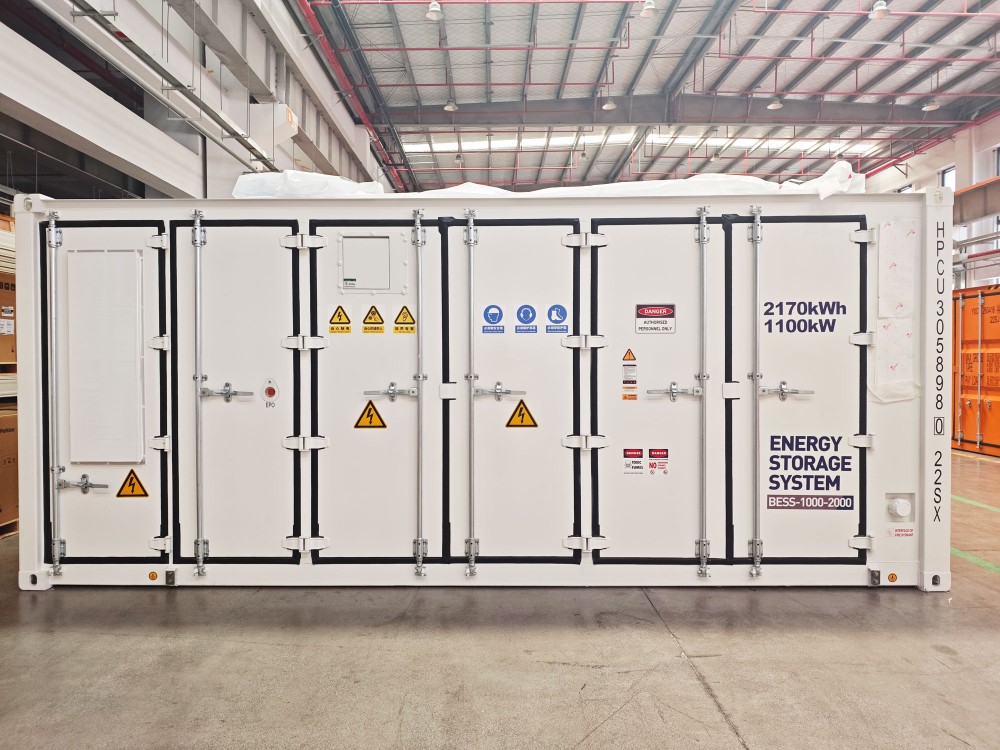
MPMC HBD-A Series, HBD-1000-2000
MPMC HBD-A Configurations
MPMC’s HBD-A series is the stationary, grid-connected line documented for commercial, industrial and larger-scale applications.
Model
Rated AC power
Battery capacity
Cycle life at 90% DOD
Cooling
HBD-125-260
125 kW
261 kWh
8,000 cycles
Liquid
HBD-210-410
210 kW
418 kWh
8,000 cycles
Liquid
HBD-250-1000
250 kW
1,045 kWh
8,000 cycles
Liquid
HBD-500-1000
500 kW
1,045 kWh
8,000 cycles
Liquid
HBD-1000-2000
1,125 kW
2,170 kWh
8,000 cycles
Liquid
HBD-DC 410
DC-coupled, 0.5P
418 kWh
8,000 cycles
Liquid
HBD-DC 5000
DC-coupled, 0.5P
5,015 kWh
8,000 cycles
Liquid
Common characteristics listed across the series are LFP 314 Ah cells, liquid cooling on all models, IP54 system protection and IP67 battery pack protection, an operating range of −20°C to +55°C with derating above 45°C, aerosol fire suppression to CE, and a maximum altitude of 3,000 m with derating above 2,000 m.
The HBD-250-1000 and HBD-500-1000 illustrate the power-to-energy point directly. Both list 1,045 kWh of capacity, but one is rated at 250 kW and the other at 500 kW. The choice between them depends on whether the site needs longer duration at lower power or shorter duration at higher power.
Operating Modes and Their Role in a Data Centre
MPMC lists the following modes for HBD-A and microgrid systems. Each does something different in a critical-load context.
Mode
What it does
Relevance to a data centre
PQ
Controls active and reactive power while grid-connected
Peak shaving, demand management, scheduled dispatch
VF
Controls voltage and frequency independently
Off-grid operation when the utility is unavailable
VSG
Emulates synchronous machine inertia
Stability support on weak or inverter-heavy networks
Black start
Restores power independently after an outage
Site recovery without waiting for utility restoration
Grid-forming
Establishes a stable network where none exists
Islanded operation of the facility or a defined section of it
Peak shaving and load balancing
EMS-driven dispatch against the demand profile
Reduces billed peak demand without starting a generator set
Whether a given site needs all of these depends on its grid connection and its resilience target. A facility with a strong utility connection and a conventional UPS may only need peak shaving and renewable buffering. A facility in a weak-grid region may need the full set.
How Storage Reduces Emissions in Practice
There are three distinct mechanisms, and they should be evaluated separately because they apply to different sites.
Reduced generator run time. Where the generator set currently starts for short disturbances or brief peaks, the battery can cover those events instead. The saving is proportional to how often those events occur.
Higher renewable self-consumption. Solar output and facility demand rarely coincide. Storing midday surplus for evening use raises the proportion of on-site generation actually consumed rather than exported or curtailed.
Peak management without combustion. Where a facility currently runs a generator set to trim billed demand peaks, the battery can perform the same function with no local emissions.
The third mechanism is usually the easiest to quantify, because the tariff structure provides the arithmetic. The first depends on outage statistics that vary widely by location. Any emissions claim should be built from the site’s own data rather than from a generic reduction percentage.
A Practical Hybrid Architecture
A hybrid data centre power arrangement typically allocates roles as follows.
Asset
Primary role
Secondary role
Utility supply
Normal operation
Battery recharging during off-peak periods
UPS
Immediate ride-through for IT load
Not applicable
HBD-A battery system
Fast response, peak shaving, renewable buffering
Bridge power during generator start sequence
Containerised diesel generator set
Sustained outage cover
Battery recharging during extended islanding
Solar PV, where installed
Daytime generation offset
Battery charging source
EMS and SCADA
Dispatch, monitoring, reporting
Alarm management and data retention
MPMC’s published control platform includes a self-developed EMS and SCADA with real-time remote monitoring, alarm and fault management, automated reporting, 10-year data retention, an SL3-level cybersecurity framework and Starlink satellite communication as a backup link.
For the generation side of this architecture, MPMC’s documented data centre configuration lists one to four containerised diesel generator sets at 1,000 to 3,000 kVA per unit, powered by CUMMINS, PERKINS or MTU, with DSE 4520 MKII for automatic mains failure or DEIF AGC 150 for parallel synchronisation, C4 anti-corrosion as standard with C5 optional, and built-in fuel tank options for 6, 8, 12 or 24 hours of autonomy.
Documented Deployments at Comparable Scale
MPMC’s published project references relevant to this discussion include the following.
Project
Scale
Documented configuration and function
Green power plant, Hungary
8 MWh
HBD-500-1000 × 2 and HBD-1000-2000 × 3; frequency regulation, peak shaving, load balancing
Grid-connected FM storage plant, Netherlands
8 MWh
HBD-A Series, 2 MWh × 4 units
BESS system delivered to Europe
8 MWh
HBD-1000-2000A, dual-PCS parallel architecture, 2,097 kWh per unit across 5 units, 20HQ container, C4 coating, IP55, aerogel insulation
Peak-shaving storage, Netherlands
3.2 MWh
HBD-A and HBD-R Series at 125 kW / 260 kWh and 100 kW / 200 kWh
Data centre, UAE
3 MW
MTU 20V4000 G63LF engine, LEROY SOMER LSA 53.2 XL13 alternator, 50 Hz at 6 kV
The European projects listed above are grid-service and industrial deployments rather than data centre installations. They indicate the scale and configuration MPMC has supplied, and they should be read as capability evidence rather than as data centre references.
Design Questions to Settle Before Selection
• What is the critical load in kW, and what proportion of it must the battery support?
• For how long must that support last before the generator set takes over or the utility returns?
• Is grid-forming or black start required, or will the system always operate with a grid reference present?
• What is the transfer arrangement between utility, battery and generator set, and is a seamless transition required? MPMC lists seamless on-grid and off-grid switching as standard on the HBD-R series and gap switching as the default on HBD-A, configurable on request.
• What are the ambient conditions at the installation point, and what derating applies?
• What are the local fire, electrical and permitting requirements for a battery installation of this size?
• How will the system integrate with existing building management and monitoring platforms?
• What is the expected annual cycle count, and how does that compare with the 8,000-cycle rating at 90% depth of discharge?
• What warranty applies? MPMC’s published HBD-A terms are 5 years or 2.2 MWh/kWh total output for the system and 10 years or 4.3 MWh/kWh for battery performance, with end-of-life retention of at least 70%. Battery performance warranty validity is conditional on maintaining battery box temperature at 0°C to 25°C and humidity at or below 80%.
Frequently Asked Questions
Can a battery system replace standby generator sets in a data centre? In general it does not, at current energy densities and costs. It can reduce generator run time and cover short events. Full replacement would require installed energy capacity sufficient for the longest credible outage, which is rarely economic at data centre scale.
How fast does a battery system respond compared with a generator set? Battery response is measured in milliseconds. A generator set must start, reach speed and accept load, which is a sequence measured in seconds. This is why the two are usually specified together rather than as alternatives.
What cell chemistry does MPMC use? MPMC lists LiFePO₄ (LFP) cells across all BESS series. The HBD-A series is listed with 314 Ah cells. The 8 MWh Europe project is documented with CATL 1P52S battery packs.
Does the HBD-A support off-grid operation? MPMC lists VF mode, black start and grid-forming among the supported modes, which are the functions required for off-grid operation. The applicable configuration should be confirmed for the specific model and project.
What determines whether a hybrid configuration is worth the capital cost? The tariff structure, the frequency and duration of grid events, the emissions target and the utilisation of the asset. These are site-specific, so the assessment should be built from the facility’s own load and outage data.
https://www.mpmc-group.com/
MPMC Powertech Corp. -
AuthorPosts

- You must be logged in to reply to this topic.